
马 到 功 成. Success is when the horses come. Success goes only to those who dare and act, it seldom goes to the timid. The pessimist complains about the wind; the optimist expects it to change; the realist adjusts the sails.
Saturday, May 09, 2009
Wednesday, May 06, 2009
Ginger - the wonder herb

Ginger is well known as a culinary spice and flavoring agent all over the world. It is also used as a herb to treat:
stomach upset, diarrhea, nausea, colic, motion sickness, headaches, common cold and other ailments.
In Bentong at Bukit Tinggi, ginger is widely planted. Malaysian use ginger everyday in their cuisine.
Ginger roots (zingiber officinale) has been used as a folk medicine for thousand of years.
Do not take ginger if you have a bleeding disorder or if you are taking blood-thinning medications, including aspirin.


Tuesday, May 05, 2009
Security Is The First Priority
No place is a good place to stay if security there is a problem. If Malaysia are serious about imaging the country as a second home for foreigners or a tourist attraction, they must first and foremost tighten their security.
The recent rounding up of Mat Rempit is a good start. This operation should continue for some time to root out the undesirable activities of Mat Rempit who have become very brave indeed. They fight the police, rob citizens and create lots of violence. What's next? Rape, daylight robbery, road bullying, etc. may be on their agendas if left unchecked.
Perhaps the government should construct a special track for them to do their racing. There, they can race to their hearts" content without causing danger to other people.
Corruption is the root of many evils. Many people contribute to corruption without realizing it. Do you know that if you buy illegal lotteries, pirated goods, stolen goods or get yourself involved in illegal organized gambling, you are actually contributing to corruption?
Here in Malaysia, you can easily buy illegal lotteries. This is a sign that corruption is at a high level.
You can easily judge whether corruption is on the rise or otherwise by looking at organized crimes such as drug abuse, prostitution, illegal gambling or the like.
Once corruption is weeded out, a clean image of the country will emerge. This will be a great boost to tourism. Security will be much better and people can go about their daily chores without fear.
My vote for the next election will definitely depend on how well the present government weed out corruption.
The recent rounding up of Mat Rempit is a good start. This operation should continue for some time to root out the undesirable activities of Mat Rempit who have become very brave indeed. They fight the police, rob citizens and create lots of violence. What's next? Rape, daylight robbery, road bullying, etc. may be on their agendas if left unchecked.
Perhaps the government should construct a special track for them to do their racing. There, they can race to their hearts" content without causing danger to other people.
Corruption is the root of many evils. Many people contribute to corruption without realizing it. Do you know that if you buy illegal lotteries, pirated goods, stolen goods or get yourself involved in illegal organized gambling, you are actually contributing to corruption?
Here in Malaysia, you can easily buy illegal lotteries. This is a sign that corruption is at a high level.
You can easily judge whether corruption is on the rise or otherwise by looking at organized crimes such as drug abuse, prostitution, illegal gambling or the like.
Once corruption is weeded out, a clean image of the country will emerge. This will be a great boost to tourism. Security will be much better and people can go about their daily chores without fear.
My vote for the next election will definitely depend on how well the present government weed out corruption.
Monday, May 04, 2009
World No. 2 Happiest Country

No. 2: Puerto Rico
Population: 3,958,128
Life Expectancy: 79
GDP Per Capita: $19,600
With the U.S. rated at a disappointing 16th on the list of happiest countries, the World Values Survey saw fit to separate Puerto Rico, an American territory that's culturally closer to its Latin American cousins. The result: The self-described "Island of Enchantment" ranked No. 2 in the world, despite having per capita income lower than Mississippi and receiving less than 15% of the Medicaid funding it would be allotted as a state. But Puerto Ricans, who enjoy permanent summer weather, a vibrant musical heritage, and idyllic emerald beaches, pay no federal income taxes.
Sunday, May 03, 2009
My Prostate Operation
Probably about a month prior to Feb 28, 2009, I was having urinary infection. I went to a local clinic at Bandar Puteri for treatment. My urine was checked and I was given antibiotic to combat the illness. For the one month, while I was on antibiotic, I was okay. But when I stopped taking the medicine, the infection came back.
Finding this to be unacceptable, I went to see a urologist. The doctor recommended that I go for an operation called TURP. He was very reassuring; he told me that he had done more than a thousand such operation and that there was really nothing to be scared of or worried about. As I was also having hernia he recommended that both operations be done at the same time. I agreed to his proposal.
The TURP operation commenced on March 03, 09 in the late afternoon. I was given regional anesthesia. The injection called Epidural was really killing; it was very painful indeed! (I can't understand why I was not given general anesthesia that is not so painful.)
Two days after the operation, the catheter, (the tube that drains out urine from the bladder) was removed from the urethra. I was then instructed to drink plenty of water to induce urination. Unfortunately I was unable to urinate despite tremendous effort amidst excruciating pain. The catheter was then inserted into the urethera again. Two days later, it was removed and I was asked to try to urinate again. Again I failed. The doctor had to insert the catheter again. This procedure went on for a few times before I was asked to go home with the catheter in place.
Five days later, on 17.03.09 I was back to the Medical Centre. Again I was unable to urinate when the catheter was removed in spite of every effort I put in. The taking out and putting in the catheter was really a very painful experience. The doctor then said that he had no option but to use another catheter to drain out the urine. I was put under anesthesia and a new catheter inserted at a point about five inches right below the navel. With two catheters in place, you can imagine the position I was in at that time. The next morning, the catheter in the urethra was removed. That time I was a bit fortunate. I was able to urinate but with severe pain and with a little bit of blood. From then on the progress was slow and painful.
On May 02, 09 I went for a check-up of my urine flow which was weak. The doctor said that the weakness could be due to scar tissue. This is very scary as scar issue has the tendency to grow back when removed. The doctor has now put me under watchful alert for the next three months. I pray and hope that my urine flow will improve over time.
This morning I came to know about Professor George Lee. His article is appended below for those who are interested to know about Green LIght Laser Surgery on prostate.
The green light at the end of the tunnel- Prostate operation
I have been looking forward to today in the last few months. Finally, the arrival of a Green Light Laser prostate surgery machine to a Government Hospital in Malaysia. Green Light Laser surgery operation is an important landmark in surgery as this operation offers patients the prostate surgery without having significant morbidity such as blood loss and long hospital stay.
I have been working in London Hospital in the United Kingdom for a few years prior to my return to Malaysia. In the United Kingdom, I had the opportunity to use Perform Laser operations for patients and had observed the benefits of such operations over the conventional operation. Of course, the healthcare budget in the country was significantly larger than the government healthcare budget in Malaysia. The Laser operation for prostate is widely available for the general public, and the costs are fully supported by the Government. In Malaysia, however, the constant thrive to keep up with the state of the art technology for patients is not lacking. This operation actually has been offered to patient in a Private Hospital in Kuala Lumpur recently, and the interest has been overwhelming! In a government Hospital, we are not lagging; in fact we were the first one to place the order for the machine. Although in Many fields of medicine, we may not be in the forefront, however, in Malaysia we have the constant drive to keep up, and that gives me a sense of pride.
Today, we are having our soft launch before the official launch. The list of the patients eagerly waiting for this surgery is phenomenal. We invited an expert from Australia to train the staff and provide laser safety, and everyone could feel the excitement in the air.
Our first patient was a man in his sixties. He has been suffering from the typical prostate problems such as hesitancy of initiating urine, poor flow, dribbling and incomplete emptying. This is further complicated by the fact that he has both urinary urgency and the necessity of waking up at night to pass urine. Despite on medications, the symptom of this patient persisted. Of course, this is a well educated retired professional who also has read up about PVP Laser prostatectomy from the newspaper, and he is keen to have the contemporary operation. The man had the operation under spinal anesthesia, and he actually was awake through the operation and did not feel any pain. The operation went as smooth as the clockwork and we drew a large audience from the other operating theatres. Everyone knew this was going to be landmark advancement in the University Malaya Medical Centre.
I went to see the patient the day after the operation. We were already up and had a shower, and enjoying his breakfast in bed. I asked him whether he had a good rest last night. He reply “of course not! I am still in disbelief that I managed to be one of the first few patients to have this operation in Malaysia. The catheter was removed that morning and the patient went home by that afternoon.
When I was writing this article, I was thinking…”Would I feel as proud with this operation when it is done in the United Kingdom?” This answer was a definite NO! I felt proud because this was a technology we fight for and providing for our fellow country Malaysians.
Is Green Light Laser Surgery the answer to those who need prostate surgery? Anyone who has any experience with it, is most welcome to comment. Thanks.
Finding this to be unacceptable, I went to see a urologist. The doctor recommended that I go for an operation called TURP. He was very reassuring; he told me that he had done more than a thousand such operation and that there was really nothing to be scared of or worried about. As I was also having hernia he recommended that both operations be done at the same time. I agreed to his proposal.
The TURP operation commenced on March 03, 09 in the late afternoon. I was given regional anesthesia. The injection called Epidural was really killing; it was very painful indeed! (I can't understand why I was not given general anesthesia that is not so painful.)
Two days after the operation, the catheter, (the tube that drains out urine from the bladder) was removed from the urethra. I was then instructed to drink plenty of water to induce urination. Unfortunately I was unable to urinate despite tremendous effort amidst excruciating pain. The catheter was then inserted into the urethera again. Two days later, it was removed and I was asked to try to urinate again. Again I failed. The doctor had to insert the catheter again. This procedure went on for a few times before I was asked to go home with the catheter in place.
Five days later, on 17.03.09 I was back to the Medical Centre. Again I was unable to urinate when the catheter was removed in spite of every effort I put in. The taking out and putting in the catheter was really a very painful experience. The doctor then said that he had no option but to use another catheter to drain out the urine. I was put under anesthesia and a new catheter inserted at a point about five inches right below the navel. With two catheters in place, you can imagine the position I was in at that time. The next morning, the catheter in the urethra was removed. That time I was a bit fortunate. I was able to urinate but with severe pain and with a little bit of blood. From then on the progress was slow and painful.
On May 02, 09 I went for a check-up of my urine flow which was weak. The doctor said that the weakness could be due to scar tissue. This is very scary as scar issue has the tendency to grow back when removed. The doctor has now put me under watchful alert for the next three months. I pray and hope that my urine flow will improve over time.
This morning I came to know about Professor George Lee. His article is appended below for those who are interested to know about Green LIght Laser Surgery on prostate.
The green light at the end of the tunnel- Prostate operation
I have been looking forward to today in the last few months. Finally, the arrival of a Green Light Laser prostate surgery machine to a Government Hospital in Malaysia. Green Light Laser surgery operation is an important landmark in surgery as this operation offers patients the prostate surgery without having significant morbidity such as blood loss and long hospital stay.
I have been working in London Hospital in the United Kingdom for a few years prior to my return to Malaysia. In the United Kingdom, I had the opportunity to use Perform Laser operations for patients and had observed the benefits of such operations over the conventional operation. Of course, the healthcare budget in the country was significantly larger than the government healthcare budget in Malaysia. The Laser operation for prostate is widely available for the general public, and the costs are fully supported by the Government. In Malaysia, however, the constant thrive to keep up with the state of the art technology for patients is not lacking. This operation actually has been offered to patient in a Private Hospital in Kuala Lumpur recently, and the interest has been overwhelming! In a government Hospital, we are not lagging; in fact we were the first one to place the order for the machine. Although in Many fields of medicine, we may not be in the forefront, however, in Malaysia we have the constant drive to keep up, and that gives me a sense of pride.
Today, we are having our soft launch before the official launch. The list of the patients eagerly waiting for this surgery is phenomenal. We invited an expert from Australia to train the staff and provide laser safety, and everyone could feel the excitement in the air.
Our first patient was a man in his sixties. He has been suffering from the typical prostate problems such as hesitancy of initiating urine, poor flow, dribbling and incomplete emptying. This is further complicated by the fact that he has both urinary urgency and the necessity of waking up at night to pass urine. Despite on medications, the symptom of this patient persisted. Of course, this is a well educated retired professional who also has read up about PVP Laser prostatectomy from the newspaper, and he is keen to have the contemporary operation. The man had the operation under spinal anesthesia, and he actually was awake through the operation and did not feel any pain. The operation went as smooth as the clockwork and we drew a large audience from the other operating theatres. Everyone knew this was going to be landmark advancement in the University Malaya Medical Centre.
I went to see the patient the day after the operation. We were already up and had a shower, and enjoying his breakfast in bed. I asked him whether he had a good rest last night. He reply “of course not! I am still in disbelief that I managed to be one of the first few patients to have this operation in Malaysia. The catheter was removed that morning and the patient went home by that afternoon.
When I was writing this article, I was thinking…”Would I feel as proud with this operation when it is done in the United Kingdom?” This answer was a definite NO! I felt proud because this was a technology we fight for and providing for our fellow country Malaysians.
Is Green Light Laser Surgery the answer to those who need prostate surgery? Anyone who has any experience with it, is most welcome to comment. Thanks.
Friday, May 01, 2009

Thursday, April 30, 2009
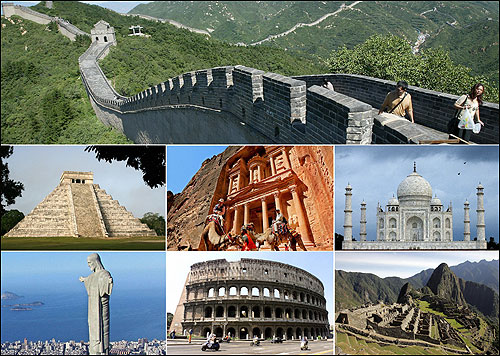
China's new interesting site

In Beijing, the big attractions remain the famous sites from Imperial China such as the Great Wall, the Forbidden City, and the Summer Palace. But tourists are also visiting new attractions such as the National Grand Theater, the controversial performing-arts center near Tiananmen Square designed by Paul Andreu.

Wednesday, April 29, 2009
Don't Mess With Women
Bottle of Wine
(Women will LOVE this one!)
A woman and a man are involved in a car accident on a snowy, cold Monday morning; it's a bad one. Both of their cars are totally demolished, but amazingly neither of them is hurt. God works in mysterious ways. After they crawl out of their cars, the man is yelling about women drivers. The woman says, 'So, you're a man. That's interesting. I'm a woman. Wow, just look at our cars! There's nothing left, but we're unhurt. This must be a sign from God that we should be friends and live in peace for the rest of our days.'
Flattered, the man replies, 'Oh yes, I agree completely, this must be a sign from God! But you're still at fault...women shouldn't be allowed to drive..'
The woman continues, 'And look at this, here's another miracle. My car is completely demolished but this bottle of wine didn't break. Surely God wants us to drink this wine and celebrate our good fortune.'
She hands the bottle to the man. The man nods his head in agreement, opens it and drinks half the bottle and then hands it back to the woman.
The woman takes the bottle, puts the cap back on and hands it back to the man.
The man asks, 'Aren't you having any?'
The woman replies, 'No. I think I'll just wait for the police...'
MORAL OF THE STORY:
Don't mess with women.
(Women will LOVE this one!)
A woman and a man are involved in a car accident on a snowy, cold Monday morning; it's a bad one. Both of their cars are totally demolished, but amazingly neither of them is hurt. God works in mysterious ways. After they crawl out of their cars, the man is yelling about women drivers. The woman says, 'So, you're a man. That's interesting. I'm a woman. Wow, just look at our cars! There's nothing left, but we're unhurt. This must be a sign from God that we should be friends and live in peace for the rest of our days.'
Flattered, the man replies, 'Oh yes, I agree completely, this must be a sign from God! But you're still at fault...women shouldn't be allowed to drive..'
The woman continues, 'And look at this, here's another miracle. My car is completely demolished but this bottle of wine didn't break. Surely God wants us to drink this wine and celebrate our good fortune.'
She hands the bottle to the man. The man nods his head in agreement, opens it and drinks half the bottle and then hands it back to the woman.
The woman takes the bottle, puts the cap back on and hands it back to the man.
The man asks, 'Aren't you having any?'
The woman replies, 'No. I think I'll just wait for the police...'
MORAL OF THE STORY:
Don't mess with women.
Tuesday, April 28, 2009
Monday, April 27, 2009
Phone Scam - Watch Out!
Phone scam that empties your account
By : Sonia Ramachandran
Email to friend Print article
Fraudsters are emptying the bank accounts of people by tricking them
into divulging their personal financial information.
KUALA LUMPUR: You receive a call, purportedly from a bank, asking if you had just conducted a credit card transaction for goods or services.
When you answer in the negative, the caller then tells you in a concerned tone to call an agent of a commercial bank and you are given the number.
Upon calling, the agent gives you the telephone number of the "bank" and tells you to call the bank itself.
You call and someone picks up, identifying himself as an officer of the "bank". You then tell him that you did not conduct the transaction and you do not have such card.
But he informs you that the records, however, show that the transaction had been carried out and that the card belongs to you!
He suggests you call Bank Negara's "Unit Kad Kredit Palsu" (Credit Card Fraud Unit) and gives you the number. You then reach an automated voice message service which says you have contacted "Bank Negara".
A Bank Negara "officer" then comes on and identifies himself. He asks for your banking and credit card information so that he can lodge a complaint on your behalf.
You then give your details over the phone and finally assured that "Bank Negara" will "look into your problem", you heave a sigh of relief.
But what you don't realise is that as soon as you have put down the phone, the fraudsters are already emptying your account, thanks to the information you had just furnished them.
This is the latest scam that Malaysians are falling prey to.
Last year, Bank Negara received 165 complaints on unauthorised withdrawals. As of mid-April this year, there have been 265 complaints.
The losses range from a minimum of RM4,000 to a maximum of RM10,000.
The Association of Banks in Malaysia received 42 complaints from April 1 to Friday on the scam which uses Bank Negara's name alone.
"One of the victims who walked in a few days ago lost RM7,000," said Bank Negara corporate communications director Abu Hassan Alshari Yahaya.
There is no such "Unit Kad Kredit Palsu" in Bank Negara, he added.
Abu Hassan said the fraudsters used a different approach before. They would SMS potential victims informing them that they had won prizes and to collect these prizes, they had to open an Internet banking account.
If you fall for this scam, the fraudster then provides a step-by-step guide on how to register and activate an Internet banking account using an automated teller machine (ATM) terminal.
At the ATM terminal, you will be given an Internet banking personal identification number (PIN) which will be given to the fraudster.
Based on the fraudster's instructions, you also key in his or her mobile number into the ATM.
When a person conducts Internet banking, he would receive a Transaction Authorisation Code (TAC) from the bank via SMS.
Since you have keyed in the fraudster's mobile number, this code will also be sent to him.
"People are vulnerable when they are told they have won prizes and these fraudsters take advantage of that vulnerability. There are no shortcuts to prizes. The public need to be aware at all times."
Abu Hassan advised people to never respond to any SMS, phone calls or email asking for personal information such as PIN and passwords for banking accounts.
"Banks will never request for such personal information through email, SMS or phone calls."
In June last year, the New Sunday Times reported that the SMS scam was so serious that the police were receiving at least one report a day.
The police said the number of scams was increasing with some victims losing up to RM1.2 million.
Email scams, said Abu Hassan, were those where email were sent out, purportedly from the banks asking the recipients to update their personal banking information or accounts.
To do that, the recipient would have to click on a link provided in the email and be led to a site that looks exactly like the bank's site. When you key in your personal information on this duplicate site, the fraudster retrieves it and withdraws the money from your account.
Bank Negara is now working with the telecommunications operators to warn their subscribers via SMS not to fall prey to such scams.
HOW TO AVOID BEING CONNED
- Do not respond to any request for your login ID, password or PIN over the phone, through fax, email or pop-up messages.
- Take down the name, phone number and any other information you can from the caller who asks for the information
- Call your bank if you are not sure of the authenticity of a call, SMS or email. ATM machines also provide numbers that you can call.
- You can also call the Association of Banks in Malaysia's toll-free hotline at 1300-88-9980 and Bank Negara's at 1300-88-5465.
- Always enter the Universal Resource Locators (URLs) directly into the web browser. Avoid being redirected to the website or hyperlinked to it from an email or another website.
- Ensure that you are in a secure website by checking the URLs to ensure that it begins with "https://'" instead of "http://'" and look for a display of a closed padlock symbol on the status bar of your browser.
- Protect your personal computer from hackers, viruses and malicious programmes.
Source: Bank Negara corporate communications director Abu Hassan Alshari Yahaya.
By : Sonia Ramachandran
Email to friend Print article
Fraudsters are emptying the bank accounts of people by tricking them
into divulging their personal financial information.
KUALA LUMPUR: You receive a call, purportedly from a bank, asking if you had just conducted a credit card transaction for goods or services.
When you answer in the negative, the caller then tells you in a concerned tone to call an agent of a commercial bank and you are given the number.
Upon calling, the agent gives you the telephone number of the "bank" and tells you to call the bank itself.
You call and someone picks up, identifying himself as an officer of the "bank". You then tell him that you did not conduct the transaction and you do not have such card.
But he informs you that the records, however, show that the transaction had been carried out and that the card belongs to you!
He suggests you call Bank Negara's "Unit Kad Kredit Palsu" (Credit Card Fraud Unit) and gives you the number. You then reach an automated voice message service which says you have contacted "Bank Negara".
A Bank Negara "officer" then comes on and identifies himself. He asks for your banking and credit card information so that he can lodge a complaint on your behalf.
You then give your details over the phone and finally assured that "Bank Negara" will "look into your problem", you heave a sigh of relief.
But what you don't realise is that as soon as you have put down the phone, the fraudsters are already emptying your account, thanks to the information you had just furnished them.
This is the latest scam that Malaysians are falling prey to.
Last year, Bank Negara received 165 complaints on unauthorised withdrawals. As of mid-April this year, there have been 265 complaints.
The losses range from a minimum of RM4,000 to a maximum of RM10,000.
The Association of Banks in Malaysia received 42 complaints from April 1 to Friday on the scam which uses Bank Negara's name alone.
"One of the victims who walked in a few days ago lost RM7,000," said Bank Negara corporate communications director Abu Hassan Alshari Yahaya.
There is no such "Unit Kad Kredit Palsu" in Bank Negara, he added.
Abu Hassan said the fraudsters used a different approach before. They would SMS potential victims informing them that they had won prizes and to collect these prizes, they had to open an Internet banking account.
If you fall for this scam, the fraudster then provides a step-by-step guide on how to register and activate an Internet banking account using an automated teller machine (ATM) terminal.
At the ATM terminal, you will be given an Internet banking personal identification number (PIN) which will be given to the fraudster.
Based on the fraudster's instructions, you also key in his or her mobile number into the ATM.
When a person conducts Internet banking, he would receive a Transaction Authorisation Code (TAC) from the bank via SMS.
Since you have keyed in the fraudster's mobile number, this code will also be sent to him.
"People are vulnerable when they are told they have won prizes and these fraudsters take advantage of that vulnerability. There are no shortcuts to prizes. The public need to be aware at all times."
Abu Hassan advised people to never respond to any SMS, phone calls or email asking for personal information such as PIN and passwords for banking accounts.
"Banks will never request for such personal information through email, SMS or phone calls."
In June last year, the New Sunday Times reported that the SMS scam was so serious that the police were receiving at least one report a day.
The police said the number of scams was increasing with some victims losing up to RM1.2 million.
Email scams, said Abu Hassan, were those where email were sent out, purportedly from the banks asking the recipients to update their personal banking information or accounts.
To do that, the recipient would have to click on a link provided in the email and be led to a site that looks exactly like the bank's site. When you key in your personal information on this duplicate site, the fraudster retrieves it and withdraws the money from your account.
Bank Negara is now working with the telecommunications operators to warn their subscribers via SMS not to fall prey to such scams.
HOW TO AVOID BEING CONNED
- Do not respond to any request for your login ID, password or PIN over the phone, through fax, email or pop-up messages.
- Take down the name, phone number and any other information you can from the caller who asks for the information
- Call your bank if you are not sure of the authenticity of a call, SMS or email. ATM machines also provide numbers that you can call.
- You can also call the Association of Banks in Malaysia's toll-free hotline at 1300-88-9980 and Bank Negara's at 1300-88-5465.
- Always enter the Universal Resource Locators (URLs) directly into the web browser. Avoid being redirected to the website or hyperlinked to it from an email or another website.
- Ensure that you are in a secure website by checking the URLs to ensure that it begins with "https://'" instead of "http://'" and look for a display of a closed padlock symbol on the status bar of your browser.
- Protect your personal computer from hackers, viruses and malicious programmes.
Source: Bank Negara corporate communications director Abu Hassan Alshari Yahaya.
Tuesday, March 31, 2009
America Once Ruled the World - The Last Bubble is Bursting ( By Daniel)
In less than two generations, America has squandered the human sacrifice, blood, sweat and tears of than seventy decades. We have been an independent country for 226 years. From 1783 until 1946 was an unrelenting upward trajectory for the beacon of the free world.
With the end of World War II, America was the last country standing. Germany and Japan were in shambles. Russia had lost millions of citizens, with Stalin about to murder millions more. Great Britain was a shell of its former self. The American Empire had been born. We were the manufacturer to the world. We rebuilt Europe and Japan. Our military was dominant. We made the best automobiles. We built 41,000 miles of national highway over two decades. In 1946, one in three U.S. workers was employed in the manufacturing industry.
Today, less than one in ten workers makes something.
In the years following World War II, the United States ran trade surpluses of 2 percent to 4 percent of GDP. We regularly ran surpluses until the late 1970’s. Since the late 1970’s, the United States has run increasingly large trade deficits, reaching 6 percent of GDP in 2007. For the last three decades, Americans have tried to spend their way to prosperity.
The government politicians and their moneyed backers have sold the idea that Americans could be the thinkers for the world, while other countries could do the menial work of producing stuff. After thirty years we are left with a hollowed out economy of paper pushers. It may be a reach to transition the Wall Street geniuses who created Mortgage Backed Securities, Credit Default Swaps, Credit Default Options–MBSs, CDSs, and CDO’s– into jobs building bridges. In truth, many of America’s manufacturing jobs are gone. Too many of the nation’s workers are left to sweep the streets they used to own.
After three decades of burning our furniture to keep warm, we are left owing the rest of the world $2.7 trillion. Many of these countries don’t like us. Ben Bernanke is actively trying to drive the value of the U.S. dollar down, while decreasing interest rates paid on this government debt. As Ben prints trillions of new dollars, the value of China’s, Japan’s and the oil exporting countries’ holdings goes down. The U.S. will run a $2 trillion deficit in the next year. We need these foreign countries to buy at least $1 trillion of our new debt. We are sure they will do so. Our reasoning is, what else can they do. From a purely financial standpoint, it is insanity for a country to make an investment in an asset paying 2.5 percent interest, when in one day last week the Federal Reserve purposely knocked the value of the dollar down 5 percent in one day, wiping out two years of interest income.
The Chinese are not fools. They can clearly see that the U.S. will try to devalue our way out of our financial mess. They are going to put the $500 billion of USD holdings to work, before it becomes worthless.
Recent examples reported by the Washington Post have been:
• On Feb. 12, China’s state-owned metals giant Chinalco signed a $19.5 billion deal with Australia’s Rio Tinto that will eventually double its stake in the world’s second-largest mining company.
• On Feb. 17 and 18, China National Petroleum signed separate agreements with Russia and Venezuela under which China would provide $25 billion and $4 billion in loans, respectively, in exchange for long-term commitments to supply oil.
• On Feb. 19, the China Development Bank struck a similar deal with Petrobras, the Brazilian oil company, agreeing to a loan of $10 billion in exchange for oil.
• Iran announced that it had signed a $3.2 billion agreement with a Chinese consortium to develop an area beneath the Persian Gulf seabed that is believed to hold about 8 percent of the world’s reserves of natural gas.
The Chinese have a long-term plan to rule the world. They are buying up natural resources throughout the world. The walls are closing in on the U.S. The U.S. solution is to print more dollars, borrow from future generations, and tax their citizens more. Ben Bernanke has rolled the dice, but the fear is in his eyes, not our enemies’. We will shortly realize that our castles were built upon pillars of salt and pillars of sand.
Bubble, Bubble
Never in the history of the world has a bubble burst halfway. Every bubble has collapsed to its starting point or below. The pundits on CNBC and on Sunday talk shows continue to predict a stabilization of the housing market. They are wrong. The bubble is still deflating and will not end until home values are back to 2000 levels, if we’re lucky. Examples of bubbles that fully deflated include the tulip bubble of 1637 - 1638, the South Sea bubble of 1719 - 1722, the Nikkei bubble from 1983 until today, and the NASDAQ bubble from 1999 – 2003. The United States has three bubbles that are deflating simultaneously, compliments of the Federal Reserve, George Bush, and Congress. Housing, consumer spending, and U.S. total debt are all at different phases of bubble deflation. No matter what politicians attempt, these bubbles cannot be re-inflated. They will deflate fully.
Tulip mania struck Holland in 1637. The whole nation was consumed by tulip bulbs in the first recorded speculative bubble. Contract prices for tulip bulbs reached astronomical levels and then suddenly collapsed. At the peak of tulip mania in February 1637, tulip contracts sold for more than 10 times the annual income of a skilled craftsman. In a matter of seven months, fortunes were made and lost. The bubble popped completely.
The South Sea Company was the AIG of the 1700’s. It was a British joint stock company, founded in 1711. The company was granted a monopoly to trade as part of a treaty during the War of Spanish Succession. The company assumed the national debt England had incurred during the war. In 1719 the company proposed a scheme by which it would buy more than half the national debt of Britain (£30,981,712), again with new shares, and a promise to the government that the debt would be converted to a lower interest rate, 5 percent until 1727 and 4 percent per year thereafter. The purpose of this conversion was similar to allow a conversion of high-interest but difficult-to-trade debt into low-interest, readily marketable debt and shares of the South Sea Company. These are the games that declining empires play when they have overreached in their empire building. The plan sounds a lot like Tim Geithner’s “Good Bank Bad Bank” scheme. Shuffling debt from one entity to another entity doesn’t get rid of it. It is just a scam paid for by taxpayers.
The price of South Sea Company stock went up from £100 a share to almost £1,000 per share. Its success caused a country-wide investing frenzy by peasants, businessmen and lords. The price reached £1,000 in early August and the level of selling was such that the price started to fall, dropping back to £100 per share before the year was out, triggering bankruptcy among those who had bought on credit. The English Parliament reacted to the crisis exactly the way our current clueless bunch of moron Congressmen are reacting to the AIG debacle. The estates of the directors of the South Sea Company were confiscated and used to relieve the suffering of the victims, and the stock of the South Sea Company was divided between the Bank of England and East India Company. A resolution was proposed in parliament that bankers be tied up in sacks filled with snakes and tipped into the Thames River. I’m sure Barney Frank is preparing a similar resolution regarding AIG executives. No one can calculate the madness of men.
Japan Inc. was going to dominate the world. From 1983 until its peak in 1989, the Nikkei rose from 7,500 to 38,900, a 500 percent increase in seven years. Following World War II Japan implemented tariffs that protected their industries from overseas competition. This resulted in large trade surpluses and an appreciating yen. With artificial protections, Japanese companies made mal-investments. Easy money and false confidence led to a frenzy in the stock market and real estate market. Japanese banks had financed this speculative bubble with high risk loans. The PE ratio of the Nikkei reached 78 in 1989. Twenty years after this peak, the Nikkei hit a low of 7,500 this year, the same level it started at in 1983. This has occurred despite spending billions on make work stimulus programs, reducing interest rates to zero, and artificially reducing the value of the …
With the end of World War II, America was the last country standing. Germany and Japan were in shambles. Russia had lost millions of citizens, with Stalin about to murder millions more. Great Britain was a shell of its former self. The American Empire had been born. We were the manufacturer to the world. We rebuilt Europe and Japan. Our military was dominant. We made the best automobiles. We built 41,000 miles of national highway over two decades. In 1946, one in three U.S. workers was employed in the manufacturing industry.
Today, less than one in ten workers makes something.
In the years following World War II, the United States ran trade surpluses of 2 percent to 4 percent of GDP. We regularly ran surpluses until the late 1970’s. Since the late 1970’s, the United States has run increasingly large trade deficits, reaching 6 percent of GDP in 2007. For the last three decades, Americans have tried to spend their way to prosperity.
The government politicians and their moneyed backers have sold the idea that Americans could be the thinkers for the world, while other countries could do the menial work of producing stuff. After thirty years we are left with a hollowed out economy of paper pushers. It may be a reach to transition the Wall Street geniuses who created Mortgage Backed Securities, Credit Default Swaps, Credit Default Options–MBSs, CDSs, and CDO’s– into jobs building bridges. In truth, many of America’s manufacturing jobs are gone. Too many of the nation’s workers are left to sweep the streets they used to own.
After three decades of burning our furniture to keep warm, we are left owing the rest of the world $2.7 trillion. Many of these countries don’t like us. Ben Bernanke is actively trying to drive the value of the U.S. dollar down, while decreasing interest rates paid on this government debt. As Ben prints trillions of new dollars, the value of China’s, Japan’s and the oil exporting countries’ holdings goes down. The U.S. will run a $2 trillion deficit in the next year. We need these foreign countries to buy at least $1 trillion of our new debt. We are sure they will do so. Our reasoning is, what else can they do. From a purely financial standpoint, it is insanity for a country to make an investment in an asset paying 2.5 percent interest, when in one day last week the Federal Reserve purposely knocked the value of the dollar down 5 percent in one day, wiping out two years of interest income.
The Chinese are not fools. They can clearly see that the U.S. will try to devalue our way out of our financial mess. They are going to put the $500 billion of USD holdings to work, before it becomes worthless.
Recent examples reported by the Washington Post have been:
• On Feb. 12, China’s state-owned metals giant Chinalco signed a $19.5 billion deal with Australia’s Rio Tinto that will eventually double its stake in the world’s second-largest mining company.
• On Feb. 17 and 18, China National Petroleum signed separate agreements with Russia and Venezuela under which China would provide $25 billion and $4 billion in loans, respectively, in exchange for long-term commitments to supply oil.
• On Feb. 19, the China Development Bank struck a similar deal with Petrobras, the Brazilian oil company, agreeing to a loan of $10 billion in exchange for oil.
• Iran announced that it had signed a $3.2 billion agreement with a Chinese consortium to develop an area beneath the Persian Gulf seabed that is believed to hold about 8 percent of the world’s reserves of natural gas.
The Chinese have a long-term plan to rule the world. They are buying up natural resources throughout the world. The walls are closing in on the U.S. The U.S. solution is to print more dollars, borrow from future generations, and tax their citizens more. Ben Bernanke has rolled the dice, but the fear is in his eyes, not our enemies’. We will shortly realize that our castles were built upon pillars of salt and pillars of sand.
Bubble, Bubble
Never in the history of the world has a bubble burst halfway. Every bubble has collapsed to its starting point or below. The pundits on CNBC and on Sunday talk shows continue to predict a stabilization of the housing market. They are wrong. The bubble is still deflating and will not end until home values are back to 2000 levels, if we’re lucky. Examples of bubbles that fully deflated include the tulip bubble of 1637 - 1638, the South Sea bubble of 1719 - 1722, the Nikkei bubble from 1983 until today, and the NASDAQ bubble from 1999 – 2003. The United States has three bubbles that are deflating simultaneously, compliments of the Federal Reserve, George Bush, and Congress. Housing, consumer spending, and U.S. total debt are all at different phases of bubble deflation. No matter what politicians attempt, these bubbles cannot be re-inflated. They will deflate fully.
Tulip mania struck Holland in 1637. The whole nation was consumed by tulip bulbs in the first recorded speculative bubble. Contract prices for tulip bulbs reached astronomical levels and then suddenly collapsed. At the peak of tulip mania in February 1637, tulip contracts sold for more than 10 times the annual income of a skilled craftsman. In a matter of seven months, fortunes were made and lost. The bubble popped completely.
The South Sea Company was the AIG of the 1700’s. It was a British joint stock company, founded in 1711. The company was granted a monopoly to trade as part of a treaty during the War of Spanish Succession. The company assumed the national debt England had incurred during the war. In 1719 the company proposed a scheme by which it would buy more than half the national debt of Britain (£30,981,712), again with new shares, and a promise to the government that the debt would be converted to a lower interest rate, 5 percent until 1727 and 4 percent per year thereafter. The purpose of this conversion was similar to allow a conversion of high-interest but difficult-to-trade debt into low-interest, readily marketable debt and shares of the South Sea Company. These are the games that declining empires play when they have overreached in their empire building. The plan sounds a lot like Tim Geithner’s “Good Bank Bad Bank” scheme. Shuffling debt from one entity to another entity doesn’t get rid of it. It is just a scam paid for by taxpayers.
The price of South Sea Company stock went up from £100 a share to almost £1,000 per share. Its success caused a country-wide investing frenzy by peasants, businessmen and lords. The price reached £1,000 in early August and the level of selling was such that the price started to fall, dropping back to £100 per share before the year was out, triggering bankruptcy among those who had bought on credit. The English Parliament reacted to the crisis exactly the way our current clueless bunch of moron Congressmen are reacting to the AIG debacle. The estates of the directors of the South Sea Company were confiscated and used to relieve the suffering of the victims, and the stock of the South Sea Company was divided between the Bank of England and East India Company. A resolution was proposed in parliament that bankers be tied up in sacks filled with snakes and tipped into the Thames River. I’m sure Barney Frank is preparing a similar resolution regarding AIG executives. No one can calculate the madness of men.
Japan Inc. was going to dominate the world. From 1983 until its peak in 1989, the Nikkei rose from 7,500 to 38,900, a 500 percent increase in seven years. Following World War II Japan implemented tariffs that protected their industries from overseas competition. This resulted in large trade surpluses and an appreciating yen. With artificial protections, Japanese companies made mal-investments. Easy money and false confidence led to a frenzy in the stock market and real estate market. Japanese banks had financed this speculative bubble with high risk loans. The PE ratio of the Nikkei reached 78 in 1989. Twenty years after this peak, the Nikkei hit a low of 7,500 this year, the same level it started at in 1983. This has occurred despite spending billions on make work stimulus programs, reducing interest rates to zero, and artificially reducing the value of the …
Saturday, March 28, 2009
Don't Fall Victim to these 5 Wall Street Lies
Don't Fall Victim to these 5 Wall Street Lies
By Keith Fitz-Gerald
What Got Us Here?
As we watch the government and Wall Street scramble to repair the economic mess we're in, it's more important than ever to understand exactly what got us in this situation in the first place.
Even if you're on the investing sidelines right now, looking at how we got here can help you avoid repeating past mistakes, learn how to spot future red flags and repair and grow your portfolio.
So, what got us here?
And how do we steer clear of such drastic losses in the future?
There are a few pieces of advice that Wall Street kept pitching to investors as gospel truth that I refer to as "Wall Street's biggest whoppers."
Wall Street Lie #1: Buy and Hold
It's a simple-enough concept: Consistently invest in the market and let it ride. You'll be laughing all the way to the bank. How could you go wrong?
In reality, "buy and hope" – a far better name for this myth – is one of Wall Street's favorite strategies.
Win or lose, brokers never want you to stop playing the game. So the collective "they" pitch you on a hot investment to get you hooked and then keep stringing you along.
To further increase the risk, ratings agencies that are in bed with certain companies will give the green light on investments that are anything but safe.
Of course, the rude awakening comes when the market goes through one of its frequent periods of readjustment.
Timing really is everything, isn't it?
What to Do Now
Just because you may have some time before you'll need the money does not necessarily mean you should take on more risk. A better strategy is to base choices on the certainty of returns – especially in this investing climate. At this point, boring is good!
Look at dividends and reinvestment for stable returns.
Stay with businesses that have proven management, plenty of free cash flow and increasing dividends that are backed up by unstoppable global trends.
Do your homework, and you'll find there are still plenty of solid investing options – just be selective!
Wall Street Lie #2: Some Debt Is Good
One of Wall Street's biggest (and most dangerous) lies is that debt is an appropriate tool for building wealth.
Here's the bottom line…
If you owe someone money, you've still got to pay it off eventually. That means any growth you attribute to debt until it's paid off in full exists only in fantasyland. How do you think General Motors and Lehman Brothers got into so much trouble?
It's no different for personal portfolios. Maybe if our leaders had understood this in the first place, millions of investors would not have been taken on a white-knuckle ride.
Even those who act responsibly are finding out that we're now liable for the "other" guys' debts, too.
What to Do Now
As an investor:
Only stick with companies that have little or no debt. Avoid any that are getting life support from the Federal Reserve – it's too shaky to assume they'll be able to stand on their own two feet once the crutch of government financing is taken away.
In your personal life:
Borrow only if you have to and on the conservative side.
Refinance your house by taking advantage of low interest rates before they start rising again.
Pay off your credit cards each month.
If you have trouble with plastic, shift to a cash-only lifestyle for a while.
And make sure that any new debt you take on is debt you can afford to pay off.
Wall Street Lie #3: It Pays to Diversify
Common investing wisdom touts spreading your money around as a safety precaution.
In reality, this is no more effective than rearranging the deck chairs on the Titanic. It's best to just get off the boat.
Instead, a "safety first" strategy is far more stable and generates some impressive returns by emphasizing high current income and long-term appreciation.
Many investors don't understand the name of the game right now, incorrectly believing investing in a recession is an all-or-nothing equation. They're wrong.
What to Do Now
In a time when so many markets – stock, bond, housing and credit – have collapsed simultaneously, it is crucial to hedge your portfolio at all times and not just when it's popular.
Skew your investments toward safety first. You can still allow yourself to screw up on speculative bets, but you won't be dependent on them to make up for losses.
Look into specialized tools, such as inverse funds or options, for low-risk choices with an upside. After all, the name of the game is planning for the worst while still obtaining the best of what's out there.
Wall Street Lie #4: Your Home Is an Investment
Actually, it's not.
A house is really a roof over your head that shields you from being priced out of the local rental markets.
Or, at worst, it's a money pit that provides you with the illusion that you're doing something sensible with your hard-earned money – despite the fact that an entire industry would have you believe otherwise.
Research shows that since 1900, home prices have run sideways or declined for long periods of time. What that means is real estate hasn't been the golden investment everyone claims it is.
Sadly, millions are learning the hard way right now that real estate can, and does, lose value.
Wall Street Lie #5: Shop 'til You Drop and Save the Economy
Have you heard?
It's our new patriotic duty to go out and spend money.
Not only does the U.S. government want you to go on a spending spree, but Wall Street and the credit card companies are also looking to you to save their sorry hides by helping you do just that.
That's why the stimulus plans – you know, the ones designed to give you relief during a recession – revolve around tax cuts and handouts. It's mere window dressing.
Here's the bottom line…
Nothing will matter until the banks start lending again. Period.
What to Do Now
People talk about our current situation as though it is an enigma, but that's simply because only a precious few people actually remember similar events in the past. For example, the Panic of 1873 (often referred to as the "real" Great Depression), the Great Financial Crisis of 1914 and the Banking Crisis of 1931.
So, what can you do?
Keep your powder dry. Misguided though our economic policies may be, savvy investors should plan for an eventual rebound – even if we're destined to test new lows in the months ahead.
Don't fall victim to Wall Street's lies, and you'll be able to come out ahead when it finally does.
By Keith Fitz-Gerald
What Got Us Here?
As we watch the government and Wall Street scramble to repair the economic mess we're in, it's more important than ever to understand exactly what got us in this situation in the first place.
Even if you're on the investing sidelines right now, looking at how we got here can help you avoid repeating past mistakes, learn how to spot future red flags and repair and grow your portfolio.
So, what got us here?
And how do we steer clear of such drastic losses in the future?
There are a few pieces of advice that Wall Street kept pitching to investors as gospel truth that I refer to as "Wall Street's biggest whoppers."
Wall Street Lie #1: Buy and Hold
It's a simple-enough concept: Consistently invest in the market and let it ride. You'll be laughing all the way to the bank. How could you go wrong?
In reality, "buy and hope" – a far better name for this myth – is one of Wall Street's favorite strategies.
Win or lose, brokers never want you to stop playing the game. So the collective "they" pitch you on a hot investment to get you hooked and then keep stringing you along.
To further increase the risk, ratings agencies that are in bed with certain companies will give the green light on investments that are anything but safe.
Of course, the rude awakening comes when the market goes through one of its frequent periods of readjustment.
Timing really is everything, isn't it?
What to Do Now
Just because you may have some time before you'll need the money does not necessarily mean you should take on more risk. A better strategy is to base choices on the certainty of returns – especially in this investing climate. At this point, boring is good!
Look at dividends and reinvestment for stable returns.
Stay with businesses that have proven management, plenty of free cash flow and increasing dividends that are backed up by unstoppable global trends.
Do your homework, and you'll find there are still plenty of solid investing options – just be selective!
Wall Street Lie #2: Some Debt Is Good
One of Wall Street's biggest (and most dangerous) lies is that debt is an appropriate tool for building wealth.
Here's the bottom line…
If you owe someone money, you've still got to pay it off eventually. That means any growth you attribute to debt until it's paid off in full exists only in fantasyland. How do you think General Motors and Lehman Brothers got into so much trouble?
It's no different for personal portfolios. Maybe if our leaders had understood this in the first place, millions of investors would not have been taken on a white-knuckle ride.
Even those who act responsibly are finding out that we're now liable for the "other" guys' debts, too.
What to Do Now
As an investor:
Only stick with companies that have little or no debt. Avoid any that are getting life support from the Federal Reserve – it's too shaky to assume they'll be able to stand on their own two feet once the crutch of government financing is taken away.
In your personal life:
Borrow only if you have to and on the conservative side.
Refinance your house by taking advantage of low interest rates before they start rising again.
Pay off your credit cards each month.
If you have trouble with plastic, shift to a cash-only lifestyle for a while.
And make sure that any new debt you take on is debt you can afford to pay off.
Wall Street Lie #3: It Pays to Diversify
Common investing wisdom touts spreading your money around as a safety precaution.
In reality, this is no more effective than rearranging the deck chairs on the Titanic. It's best to just get off the boat.
Instead, a "safety first" strategy is far more stable and generates some impressive returns by emphasizing high current income and long-term appreciation.
Many investors don't understand the name of the game right now, incorrectly believing investing in a recession is an all-or-nothing equation. They're wrong.
What to Do Now
In a time when so many markets – stock, bond, housing and credit – have collapsed simultaneously, it is crucial to hedge your portfolio at all times and not just when it's popular.
Skew your investments toward safety first. You can still allow yourself to screw up on speculative bets, but you won't be dependent on them to make up for losses.
Look into specialized tools, such as inverse funds or options, for low-risk choices with an upside. After all, the name of the game is planning for the worst while still obtaining the best of what's out there.
Wall Street Lie #4: Your Home Is an Investment
Actually, it's not.
A house is really a roof over your head that shields you from being priced out of the local rental markets.
Or, at worst, it's a money pit that provides you with the illusion that you're doing something sensible with your hard-earned money – despite the fact that an entire industry would have you believe otherwise.
Research shows that since 1900, home prices have run sideways or declined for long periods of time. What that means is real estate hasn't been the golden investment everyone claims it is.
Sadly, millions are learning the hard way right now that real estate can, and does, lose value.
Wall Street Lie #5: Shop 'til You Drop and Save the Economy
Have you heard?
It's our new patriotic duty to go out and spend money.
Not only does the U.S. government want you to go on a spending spree, but Wall Street and the credit card companies are also looking to you to save their sorry hides by helping you do just that.
That's why the stimulus plans – you know, the ones designed to give you relief during a recession – revolve around tax cuts and handouts. It's mere window dressing.
Here's the bottom line…
Nothing will matter until the banks start lending again. Period.
What to Do Now
People talk about our current situation as though it is an enigma, but that's simply because only a precious few people actually remember similar events in the past. For example, the Panic of 1873 (often referred to as the "real" Great Depression), the Great Financial Crisis of 1914 and the Banking Crisis of 1931.
So, what can you do?
Keep your powder dry. Misguided though our economic policies may be, savvy investors should plan for an eventual rebound – even if we're destined to test new lows in the months ahead.
Don't fall victim to Wall Street's lies, and you'll be able to come out ahead when it finally does.
Thursday, February 19, 2009
Depositors can't get their Cash
AP
Billionaire's bank customers denied their deposits
Wednesday February 18, 7:09 pm ET
By Ben Fox, Associated Press Writer
Stanford depositors can't get their cash while politicians scramble and regulators urge calm
ST. JOHN'S, Antigua (AP) -- Panicky depositors were turned away from Stanford International Bank and some of its Latin American affiliates Wednesday, unable to withdraw their money after U.S. regulators accused Texas financier R. Allen Stanford of perpetrating an $8 billion fraud against his companies' investors.
ADVERTISEMENT
Some customers arrived in Antigua by private jet and were driven up the lushly landscaped driveway of the bank's headquarters, only to be told that all assets have been frozen pending an investigation by Antiguan banking regulators.
"I don't know what to think. I have my life savings here," said Reinaldo Pinto Ramos, 48, a Venezuelan software firm owner who flew in by chartered plane from Caracas Wednesday with five other investors to check on their accounts. "We're waiting to see some light."
Banking regulators and politicians around the region are scrambling to contain the damage after the U.S. Securities and Exchange Commission filed civil fraud charges against the billionaire on Tuesday. Regional Director Rose Romero of the SEC's Fort Worth office called it a "fraud of shocking magnitude that has spread its tentacles throughout the world."
Stanford, 58, is a larger-than-life figure in the Caribbean, using his personal fortune -- estimated at $2.2 billion by Forbes magazine -- to bankroll public works and sports teams. He also is a major player in U.S. politics, personally donating nearly a million dollars, mostly to Democrats. At 6-foot-4 and 240 pounds, he towered over House Speaker Nancy Pelosi while giving her a warm hug at the Democratic National Convention last year.
He owns a home in the U.S. Virgin Islands, and operates businesses from Houston to Miami and Switzerland to Antigua, where the government knighted him in 2006 in recognition of his economic influence and charity work.
U.S. regulators have accused Stanford, two other executives and three of their companies of luring investors with promises of "improbable and unsubstantiated" high returns on certificates of deposit and other investments.
Many details about the alleged fraud remain unclear, but the SEC alleges a pattern of secrecy, including a failure to disclose the bank's exposure to losses by in money manager Bernard Madoff's alleged Ponzi scheme.
The SEC said no one but Stanford and James M. Davis of Baldwyn, Miss., the Antigua-based bank's chief financial officer, know where most of the depositors' cash is invested, and both men have failed to cooperate with investigators. "Approximately 90 percent of SIB's claimed investment portfolio resides in a 'black box' shielded from any independent oversight," the SEC said in its complaint.
Stanford wasn't talking Wednesday. A company Web site directed inquiries to the SEC. But in an e-mail to his employees last week, the billionaire said his company was cooperating with the probe, and vowed to "fight with every breath to continue to uphold our good name and continue the legacy we have built together."
A federal judge appointed a receiver to identify and protect Stanford's assets worldwide, including about $8 billion managed by bank, which has affiliates in Mexico, Panama, Colombia, Ecuador, Peru and Venezuela.
Also frozen were assets of Houston-based Stanford Capital Management and Stanford Group Company, which has 29 brokerage offices around the U.S.
"The fallout threatens catastrophic and immediate consequences" for the twin-island nation of Antigua and Barbuda, said Prime Minister Baldwin Spencer. It also could rattle the economies of smaller nations where Stanford's companies have had outsized influence.
SEC spokesman John Nester said the agency does not know where Stanford is. James Sullivan, the U.S. marshal for the Virgin Islands, said agents are monitoring his "extensive holdings" in St. Croix, including a boat he sometimes he docks there, but could not say whether he is currently in the territory. He does not currently face any charges requiring his presence in court.
"As of right now, all we are doing is an ongoing investigation to monitor his holdings, for lack of better term, and we are not actively pursuing him," Sullivan told The Associated Press.
Some U.S. lawmakers quickly announced they would donate his campaign contributions to charity.
The Stanford Financial Group, through its political action committee and employees, has contributed $2.4 million to political candidates, parties and committees in the U.S. since 1989, with nearly two-thirds going to Democrats, according to the Center for Responsive Politics, a group that tracks campaign spending.
Most of that cash flowed during the 2002 election cycle, when Congress was debating a financial services antifraud bill that would have linked the databases of state and federal banking, securities and insurance regulators. The bill ultimately died in the Senate, where the biggest recipients have been Sen. Bill Nelson, D-Fla. ($45,900); Sen. John McCain, R-Ariz. ($28,150); Sen. Chris Dodd, D-Conn. ($27,500); and Sen. John Cornyn, R-Texas ($19,700). Rep. Pete Sessions, R-Texas also received $41,375.
Stanford and his wife Susan also donated $931,100 of their own money, with 78 percent going to Democrats, including $4,600 to President Barack Obama's presidential campaign last May 31. Records show $2,300 of that was returned on the same day.
Governments across the region took a variety of actions Wednesday to protect local investors who'd deposited money with Stanford-linked institutions.
Colombia and Ecuador suspended the activities of Stanford's local brokerages Wednesday, and Panamanian regulators occupied Stanford bank branches hit by a run on deposits, which they described as an isolated "consequence of decisions adopted by foreign authorities." Assets at the bank's four Panama branches, which reportedly held $200 million in deposits at year's end, are held largely in liquid, fixed-income investments that can more easily be converted into cash to cover deposits if necessary, the bank said.
In Venezuela, banking regulator Edgar Hernandez said the government was considering a request for help from Stanford Bank SA in Caracas after a $26.5 million run on deposits removed about 12 percent of its holdings.
"We suggested an open intervention" by the government, including the possibility of the government or a state-run bank depositing funds to back deposits, Hugo Faria, one of the bank's directors, told The Associated Press.
In Mexico, where the Stanford Fondos unit manages about $50 million for some 3,400 clients, a note posted on a shuttered office door in the capital's wealthy Polanco neighborhood announced that all accounts "are temporarily frozen."
"We don't have any other information at this time, you will be contacted in the future with more details," the note said.
Karina Klinckwort, 38, had rushed to the office Wednesday: "Everything I have is with them, everything that my husband, may he rest in peace, invested is with them."
The Stanford-controlled Bank of Antigua was not named in the complaint, but many Antiguans lined up outside nevertheless to try to get their money. Some of these working-class depositors clutched portable radios to listen to financial news.
"People have to come to get their money," said electrician Rasta Kente.
But panicking will only make things worse, regional regulators warned.
"If individuals persist in rushing to the bank in a panic they will precipitate the very situation that we are all trying to avoid," said K. Dwight Venner, governor of the Eastern Caribbean Central Bank.
Associated Press Writers Anika Kentish in St. John's, Antigua; Jim Abrams in Washington, D.C.; Jeff Kummer in Dallas; Frank Bajak in Bogota; Jeanneth Valdivieso in Olga Rodriguez in Mexico City; and Fabiola Sanchez in Caracas, Venezuela contributed to this report.
Billionaire's bank customers denied their deposits
Wednesday February 18, 7:09 pm ET
By Ben Fox, Associated Press Writer
Stanford depositors can't get their cash while politicians scramble and regulators urge calm
ST. JOHN'S, Antigua (AP) -- Panicky depositors were turned away from Stanford International Bank and some of its Latin American affiliates Wednesday, unable to withdraw their money after U.S. regulators accused Texas financier R. Allen Stanford of perpetrating an $8 billion fraud against his companies' investors.
ADVERTISEMENT
Some customers arrived in Antigua by private jet and were driven up the lushly landscaped driveway of the bank's headquarters, only to be told that all assets have been frozen pending an investigation by Antiguan banking regulators.
"I don't know what to think. I have my life savings here," said Reinaldo Pinto Ramos, 48, a Venezuelan software firm owner who flew in by chartered plane from Caracas Wednesday with five other investors to check on their accounts. "We're waiting to see some light."
Banking regulators and politicians around the region are scrambling to contain the damage after the U.S. Securities and Exchange Commission filed civil fraud charges against the billionaire on Tuesday. Regional Director Rose Romero of the SEC's Fort Worth office called it a "fraud of shocking magnitude that has spread its tentacles throughout the world."
Stanford, 58, is a larger-than-life figure in the Caribbean, using his personal fortune -- estimated at $2.2 billion by Forbes magazine -- to bankroll public works and sports teams. He also is a major player in U.S. politics, personally donating nearly a million dollars, mostly to Democrats. At 6-foot-4 and 240 pounds, he towered over House Speaker Nancy Pelosi while giving her a warm hug at the Democratic National Convention last year.
He owns a home in the U.S. Virgin Islands, and operates businesses from Houston to Miami and Switzerland to Antigua, where the government knighted him in 2006 in recognition of his economic influence and charity work.
U.S. regulators have accused Stanford, two other executives and three of their companies of luring investors with promises of "improbable and unsubstantiated" high returns on certificates of deposit and other investments.
Many details about the alleged fraud remain unclear, but the SEC alleges a pattern of secrecy, including a failure to disclose the bank's exposure to losses by in money manager Bernard Madoff's alleged Ponzi scheme.
The SEC said no one but Stanford and James M. Davis of Baldwyn, Miss., the Antigua-based bank's chief financial officer, know where most of the depositors' cash is invested, and both men have failed to cooperate with investigators. "Approximately 90 percent of SIB's claimed investment portfolio resides in a 'black box' shielded from any independent oversight," the SEC said in its complaint.
Stanford wasn't talking Wednesday. A company Web site directed inquiries to the SEC. But in an e-mail to his employees last week, the billionaire said his company was cooperating with the probe, and vowed to "fight with every breath to continue to uphold our good name and continue the legacy we have built together."
A federal judge appointed a receiver to identify and protect Stanford's assets worldwide, including about $8 billion managed by bank, which has affiliates in Mexico, Panama, Colombia, Ecuador, Peru and Venezuela.
Also frozen were assets of Houston-based Stanford Capital Management and Stanford Group Company, which has 29 brokerage offices around the U.S.
"The fallout threatens catastrophic and immediate consequences" for the twin-island nation of Antigua and Barbuda, said Prime Minister Baldwin Spencer. It also could rattle the economies of smaller nations where Stanford's companies have had outsized influence.
SEC spokesman John Nester said the agency does not know where Stanford is. James Sullivan, the U.S. marshal for the Virgin Islands, said agents are monitoring his "extensive holdings" in St. Croix, including a boat he sometimes he docks there, but could not say whether he is currently in the territory. He does not currently face any charges requiring his presence in court.
"As of right now, all we are doing is an ongoing investigation to monitor his holdings, for lack of better term, and we are not actively pursuing him," Sullivan told The Associated Press.
Some U.S. lawmakers quickly announced they would donate his campaign contributions to charity.
The Stanford Financial Group, through its political action committee and employees, has contributed $2.4 million to political candidates, parties and committees in the U.S. since 1989, with nearly two-thirds going to Democrats, according to the Center for Responsive Politics, a group that tracks campaign spending.
Most of that cash flowed during the 2002 election cycle, when Congress was debating a financial services antifraud bill that would have linked the databases of state and federal banking, securities and insurance regulators. The bill ultimately died in the Senate, where the biggest recipients have been Sen. Bill Nelson, D-Fla. ($45,900); Sen. John McCain, R-Ariz. ($28,150); Sen. Chris Dodd, D-Conn. ($27,500); and Sen. John Cornyn, R-Texas ($19,700). Rep. Pete Sessions, R-Texas also received $41,375.
Stanford and his wife Susan also donated $931,100 of their own money, with 78 percent going to Democrats, including $4,600 to President Barack Obama's presidential campaign last May 31. Records show $2,300 of that was returned on the same day.
Governments across the region took a variety of actions Wednesday to protect local investors who'd deposited money with Stanford-linked institutions.
Colombia and Ecuador suspended the activities of Stanford's local brokerages Wednesday, and Panamanian regulators occupied Stanford bank branches hit by a run on deposits, which they described as an isolated "consequence of decisions adopted by foreign authorities." Assets at the bank's four Panama branches, which reportedly held $200 million in deposits at year's end, are held largely in liquid, fixed-income investments that can more easily be converted into cash to cover deposits if necessary, the bank said.
In Venezuela, banking regulator Edgar Hernandez said the government was considering a request for help from Stanford Bank SA in Caracas after a $26.5 million run on deposits removed about 12 percent of its holdings.
"We suggested an open intervention" by the government, including the possibility of the government or a state-run bank depositing funds to back deposits, Hugo Faria, one of the bank's directors, told The Associated Press.
In Mexico, where the Stanford Fondos unit manages about $50 million for some 3,400 clients, a note posted on a shuttered office door in the capital's wealthy Polanco neighborhood announced that all accounts "are temporarily frozen."
"We don't have any other information at this time, you will be contacted in the future with more details," the note said.
Karina Klinckwort, 38, had rushed to the office Wednesday: "Everything I have is with them, everything that my husband, may he rest in peace, invested is with them."
The Stanford-controlled Bank of Antigua was not named in the complaint, but many Antiguans lined up outside nevertheless to try to get their money. Some of these working-class depositors clutched portable radios to listen to financial news.
"People have to come to get their money," said electrician Rasta Kente.
But panicking will only make things worse, regional regulators warned.
"If individuals persist in rushing to the bank in a panic they will precipitate the very situation that we are all trying to avoid," said K. Dwight Venner, governor of the Eastern Caribbean Central Bank.
Associated Press Writers Anika Kentish in St. John's, Antigua; Jim Abrams in Washington, D.C.; Jeff Kummer in Dallas; Frank Bajak in Bogota; Jeanneth Valdivieso in Olga Rodriguez in Mexico City; and Fabiola Sanchez in Caracas, Venezuela contributed to this report.
Thursday, February 05, 2009
Are You Using Your Right Brain or Your Left Brain?

Do you see the image turning clock-wise or counter clock-wise? Can you use your imagination to make the image turn the other way? Try it, it's fun.
Wednesday, February 04, 2009
Let's Smile
A smile costs nothing but gives much.
It enriches those who receive without making poorer those who give.
It takes but a moment, but the memory of it sometimes lasts forever.
No one is so rich or mighty that he can get along without it, and no one is so poor that he cannot give it.
A smile creates happiness in the home, fosters goodwill in business, and is the cornerstone of friendship.
It brings rest to the weary, cheer to the discouraged, sunshine to the sad, and is nature's best antidote for trouble.
Yet it cannot be bought, begged, borrowed, or stolen, for it is something that is of no value to anyone until it is given away.
When people are too tired to give you a smile, give them one of yours.
No one needs a smile so much as he who has none to give. - Author unknown
Cheers! and don't forget to smile, smile and smile.
It enriches those who receive without making poorer those who give.
It takes but a moment, but the memory of it sometimes lasts forever.
No one is so rich or mighty that he can get along without it, and no one is so poor that he cannot give it.
A smile creates happiness in the home, fosters goodwill in business, and is the cornerstone of friendship.
It brings rest to the weary, cheer to the discouraged, sunshine to the sad, and is nature's best antidote for trouble.
Yet it cannot be bought, begged, borrowed, or stolen, for it is something that is of no value to anyone until it is given away.
When people are too tired to give you a smile, give them one of yours.
No one needs a smile so much as he who has none to give. - Author unknown
Cheers! and don't forget to smile, smile and smile.
Saturday, January 24, 2009


Tuesday, January 20, 2009
A Wonderful Therapy
Read this wonderful therapy and inform your friends about it.
http://www.oilpulling.com/
http://www.oilpulling.com/
Sunday, January 11, 2009
Zimbabwe Today
Inflation at 231 million percent. One US$ equals ZW$25 billion. Two loaves of bread cost ZW$50 billion.
Truth is stranger than friction. Here's the article:
HARARE, Zimbabwe (CNN) -- Zimbabwe's central bank will introduce a $50 billion note -- enough to buy just two loaves of bread -- as a way of fighting cash shortages amid spiraling inflation.
Zimbabwe's dollar is virtually worthless, with foreign currency now being used to purchase basic items.
The country's acting finance minister, Patrick Chinamasa, made the announcement in a government gazette released Saturday.
Although Chinamasa did not give the date on which the $50 billion and new $20 billion notes would come into circulation, an official at the Reserve Bank of Zimbabwe said the notes would be distributed to all banks by the end of Monday.
Zimbabwe is grappling with hyperinflation now officially estimated at 231 million percent, and its currency is fast losing its value. As of Friday, one U.S. dollar was trading at around ZW$25 billion.
When the government issued a $10 billion note just three weeks ago, it bought 20 loaves of bread. That note now can purchase less than half of one loaf.
Realizing the worthlessness of the currency, the RBZ has allowed most goods and services to be charged in foreign currency. As a result, grocery purchases, government hospital bills, property sales, rent, vegetables and even mobile phone recharge cards are now paid for in foreign currency, as the worthless Zimbabwe dollar virtually ceases to be legal tender.
Once a regional economic model, Zimbabwe is in the throes of an economic crisis, with unemployment running at more than 80 percent and many families unable to afford a square meal. President Robert Mugabe's critics blame his policies for the economic meltdown, but he says the West is sabotaging his efforts.
Don't Miss
Zimbabwe's new $10 billion note buys bread
Zimbabwe court leaves activists in jail
In order to attract foreign currency, Zimbabwe's central bank has, since September, licensed at least 1,000 shops to sell goods in foreign currency. All mobile phone service providers are now licensed to accept foreign exchange for airtime and other services.
John Robertson, an economist in Zimbabwe, said he's puzzled by the introduction of the $50 billion and $20 billion notes.
"I am not really sure what these notes would be for," he said. "No one now accepts the local currency. It is a waste of resources to print Zimbabwe dollar notes now. Who accepts a currency that loses value by almost 100 percent daily?"
In August, the RBZ slashed ten zeros from the currency. But the zeroes have bounced back with more vigor.
A power-sharing deal between Mugabe and opposition leader Morgan Tsvangirai signed in September, and brokered by former South African leader Thabo Mbeki, raised hopes of halting Zimbabwe's plunge into economic destruction.
But the pact has stalled over the allocation of key cabinet ministries, with Tsvangirai accusing Mugabe of grabbing all key posts such as defense, home affairs, local government, foreign affairs and finance.
Truth is stranger than friction. Here's the article:
HARARE, Zimbabwe (CNN) -- Zimbabwe's central bank will introduce a $50 billion note -- enough to buy just two loaves of bread -- as a way of fighting cash shortages amid spiraling inflation.
Zimbabwe's dollar is virtually worthless, with foreign currency now being used to purchase basic items.
The country's acting finance minister, Patrick Chinamasa, made the announcement in a government gazette released Saturday.
Although Chinamasa did not give the date on which the $50 billion and new $20 billion notes would come into circulation, an official at the Reserve Bank of Zimbabwe said the notes would be distributed to all banks by the end of Monday.
Zimbabwe is grappling with hyperinflation now officially estimated at 231 million percent, and its currency is fast losing its value. As of Friday, one U.S. dollar was trading at around ZW$25 billion.
When the government issued a $10 billion note just three weeks ago, it bought 20 loaves of bread. That note now can purchase less than half of one loaf.
Realizing the worthlessness of the currency, the RBZ has allowed most goods and services to be charged in foreign currency. As a result, grocery purchases, government hospital bills, property sales, rent, vegetables and even mobile phone recharge cards are now paid for in foreign currency, as the worthless Zimbabwe dollar virtually ceases to be legal tender.
Once a regional economic model, Zimbabwe is in the throes of an economic crisis, with unemployment running at more than 80 percent and many families unable to afford a square meal. President Robert Mugabe's critics blame his policies for the economic meltdown, but he says the West is sabotaging his efforts.
Don't Miss
Zimbabwe's new $10 billion note buys bread
Zimbabwe court leaves activists in jail
In order to attract foreign currency, Zimbabwe's central bank has, since September, licensed at least 1,000 shops to sell goods in foreign currency. All mobile phone service providers are now licensed to accept foreign exchange for airtime and other services.
John Robertson, an economist in Zimbabwe, said he's puzzled by the introduction of the $50 billion and $20 billion notes.
"I am not really sure what these notes would be for," he said. "No one now accepts the local currency. It is a waste of resources to print Zimbabwe dollar notes now. Who accepts a currency that loses value by almost 100 percent daily?"
In August, the RBZ slashed ten zeros from the currency. But the zeroes have bounced back with more vigor.
A power-sharing deal between Mugabe and opposition leader Morgan Tsvangirai signed in September, and brokered by former South African leader Thabo Mbeki, raised hopes of halting Zimbabwe's plunge into economic destruction.
But the pact has stalled over the allocation of key cabinet ministries, with Tsvangirai accusing Mugabe of grabbing all key posts such as defense, home affairs, local government, foreign affairs and finance.
Subscribe to:
Posts (Atom)