Friday April 6, 2007
Revaluation of Keck Seng assets
By Yeow Pooi Ling
PETALING JAYA: The market has yet to fully appreciate the potential revaluation surplus of Keck Seng (M) Bhd's rich assets, especially its huge land bank in south Johor.
Main board-listed Keck Seng is involved in four core businesses – property development, hotel management, plantations and palm oil milling.
According to the company's 2005 annual report, about 10,000 acres in south Johor are still valued based on prices at the 1980s level.
The surplus from the revaluation of land, especially in Ulu Tiram, Bandar Baru Kangkar Pulai, Pasir Gudang and Tanjong Langsat, could be significant since land and property prices in south Johor have appreciated due to plans to develop the Iskandar Development Region.
In 2005, Keck Seng sold 181 acres of plantation land in Ulu Tiram to the state government for RM45.4mil, or about RM251,000 per acre, which resulted in a one-off gain of RM39.5mil.
Assuming a price of RM251,000 per acre, the total land bank in south Johor could be worth RM2.5bil, which is a surplus of RM2.3bil from the current book value.
This could enhance Keck Seng's net tangible asset (NTA) by a whopping RM9.50 per share.
The company's plantation land bank could eventually be converted for property development, which would fetch better pricing as it is close to the urban area.
Its commercial properties are also valued at below market prices. The net book value of Menara Keck Seng at Jalan Bukit Bintang, for example, was last valued at RM63.5mil, or RM240 per sq ft, in 1996.
The MAS building at Jalan Sultan Ismail was sold last year for RM130mil, or about RM481 per sq ft. Based on the same price per sq ft, Menara Keck Seng could be worth RM127mil, double its current book value.
The company also owns properties in Singapore, which were last valued in the 80s; two hotels in Canada (1997 and 2000) and another hotel in Hawaii, last valued at 2000.
Keck Seng's investment in equities is also priced at a book value lower than the current market price.
According to notes accompanying its fourth quarter results ended Dec 31, 2006, the book value of these investments amounted to RM146.7mil, but based on market value as at end-December, they were worth RM567.2mil.
Keck Seng owns 4.9 million shares in PPB Group Bhd and 2.8 million shares in Chin Teck Plantations Bhd.
When the Financial Reporting Standards 139 (FRS 139) are fully enforced, all companies including Keck Seng would have to mark-to-market their investment in equities, and state the surplus or deficit over cost as earnings or losses in the profit and loss accounts.
As a result, Keck Seng could see a surplus of RM420.5mil on its investment in equities, which could boost its NTA by RM1.74 per share.
Meanwhile, its healthy balance sheet enabled it to buy Regency Tower in Kuala Lumpur last year for RM62.5mil cash. Its net cash stood at RM189mil as at Dec 31, 2006.
Based on a conservative estimation arrived at by adding surpluses from the revaluation of Keck Seng's Johor land bank and its equity investments, the company's total NTA could reach as high as RM15 a share compared with RM4.34 currently.
However, the present share price is below the year's high of RM5.45, while other property stocks with exposure to south Johor have soared to their 52-week highs. The counter rose 22 sen to RM4.66 yesterday.
The above article is not a solicitation that you buy or sell shares in Keck Seng Berhad. You are fully responsible for your own action. You buy or sell at your own risk.

马 到 功 成. Success is when the horses come. Success goes only to those who dare and act, it seldom goes to the timid. The pessimist complains about the wind; the optimist expects it to change; the realist adjusts the sails.
Sunday, May 24, 2009
Are You Ready for the World's Biggest Bankruptcy?
By Tom Dyson
Wednesday, March 04, 2009
The media have given London a new nickname: Reykjavik-on-Thames.
Britain's economy revolved around banking. British banks hold about $4.4 trillion in foreign debt. The total size of the UK economy is $2.1 trillion. This year, the British government nationalized major parts of the UK's banking system. In total, the UK Treasury is on the hook for over $2 trillion in potential liabilities, according to an estimate by the Office of National Statistics.
But Britain is NOT going to be the world's biggest national bankruptcy. The government debt of the United Kingdom is only around $950 billion... or about $15,000 per capita.
This week, the United States Treasury sunk another $30 billion into AIG... its fourth bailout. It also put another $25 billion into Citigroup. The Treasury is now on the hook for as much as $6 trillion in liabilities. Last week, the White House produced its new budget. President Obama wants to run a deficit of $1.75 trillion in 2009.
The Treasury will pay for these bailouts by borrowing money. The Treasury borrows money by issuing Treasury bonds. Tomorrow, for example, it will auction three-year, 10-year, and 30-year bonds. This auction should raise around $60 billion.
The "debt clock" measures the amount of money the government owes its creditors. Today, the U.S. debt clock reads $11 trillion. To pay off this debt tomorrow, the government would have to collect $36,000 from every American.
But America is NOT about to be the world's biggest bankruptcy.
Of the major industrial economies in the world, Japan's government is the most indebted.
Since its recession began 20 years ago, Japan has plowed trillions into its banking system via numerous bailout programs. Japan's mantra is growth without cost. As a result, the Japanese government has built up the world's most crippling debt load.
The government of Japan owes $7.8 trillion. That's $157,000 per capita.
We've been using government debt per capita to compare the government debts of Britain, the United States, and Japan. But government debt to GDP is the ratio economists use to compare the indebtedness of countries. The UK has a government debt-to-GDP ratio of 48%. The U.S. has a government debt-to-GDP ratio of 75%. Japan has a government debt-to-GDP ratio of 187%.
If there's going to be a major sovereign bankruptcy, it's going to happen in Japan. Its economy is a shambles. For years, Japan has relied on exports... but even that's drying up now. In January, Japan's exports plunged 47%, producing a trade deficit. People talk about Japan as a "nation of savers." But that's not true anymore. Japan's personal savings rate has collapsed from 16% in the early 1990s to 2.2% last year.
Japan has an aging population and no immigration. I can't see where it's going to find the money to pay off its huge pile of debt.
The way to play the collapse in Japan is by shorting the yen. Right now, the Japanese yen is the world's most popular currency. Traders perceive it as a safe haven. In 2008, the yen was the world's best performing currency.... Rising 33% against the Canadian dollar, 40% against the British pound, and 19% against the dollar.
Back in January, I told you a fall in the yen was all but inevitable. The yen is down 12% since that article. But according to
Japan Is About to Devalue Its Currency: Here's How to Profit
This Year's Triple-Digit Trade
a Merrill lynch report I saw yesterday, large speculators still have a $3.7 billion long position in yen futures. The analyst described it as "crowded."
The Japanese yen has been in a 40-year bull market. I think a new long-term bear market has just started... and it will end in the bankruptcy of Japan's government. FXY is the ETF for the Japanese yen. When then yen falls, this fund falls, too. The easiest way to bet on a fall in yen is to short this fund or buy put options on it.
Good investing,
Tom
Wednesday, March 04, 2009
The media have given London a new nickname: Reykjavik-on-Thames.
Britain's economy revolved around banking. British banks hold about $4.4 trillion in foreign debt. The total size of the UK economy is $2.1 trillion. This year, the British government nationalized major parts of the UK's banking system. In total, the UK Treasury is on the hook for over $2 trillion in potential liabilities, according to an estimate by the Office of National Statistics.
But Britain is NOT going to be the world's biggest national bankruptcy. The government debt of the United Kingdom is only around $950 billion... or about $15,000 per capita.
This week, the United States Treasury sunk another $30 billion into AIG... its fourth bailout. It also put another $25 billion into Citigroup. The Treasury is now on the hook for as much as $6 trillion in liabilities. Last week, the White House produced its new budget. President Obama wants to run a deficit of $1.75 trillion in 2009.
The Treasury will pay for these bailouts by borrowing money. The Treasury borrows money by issuing Treasury bonds. Tomorrow, for example, it will auction three-year, 10-year, and 30-year bonds. This auction should raise around $60 billion.
The "debt clock" measures the amount of money the government owes its creditors. Today, the U.S. debt clock reads $11 trillion. To pay off this debt tomorrow, the government would have to collect $36,000 from every American.
But America is NOT about to be the world's biggest bankruptcy.
Of the major industrial economies in the world, Japan's government is the most indebted.
Since its recession began 20 years ago, Japan has plowed trillions into its banking system via numerous bailout programs. Japan's mantra is growth without cost. As a result, the Japanese government has built up the world's most crippling debt load.
The government of Japan owes $7.8 trillion. That's $157,000 per capita.
We've been using government debt per capita to compare the government debts of Britain, the United States, and Japan. But government debt to GDP is the ratio economists use to compare the indebtedness of countries. The UK has a government debt-to-GDP ratio of 48%. The U.S. has a government debt-to-GDP ratio of 75%. Japan has a government debt-to-GDP ratio of 187%.
If there's going to be a major sovereign bankruptcy, it's going to happen in Japan. Its economy is a shambles. For years, Japan has relied on exports... but even that's drying up now. In January, Japan's exports plunged 47%, producing a trade deficit. People talk about Japan as a "nation of savers." But that's not true anymore. Japan's personal savings rate has collapsed from 16% in the early 1990s to 2.2% last year.
Japan has an aging population and no immigration. I can't see where it's going to find the money to pay off its huge pile of debt.
The way to play the collapse in Japan is by shorting the yen. Right now, the Japanese yen is the world's most popular currency. Traders perceive it as a safe haven. In 2008, the yen was the world's best performing currency.... Rising 33% against the Canadian dollar, 40% against the British pound, and 19% against the dollar.
Back in January, I told you a fall in the yen was all but inevitable. The yen is down 12% since that article. But according to
Japan Is About to Devalue Its Currency: Here's How to Profit
This Year's Triple-Digit Trade
a Merrill lynch report I saw yesterday, large speculators still have a $3.7 billion long position in yen futures. The analyst described it as "crowded."
The Japanese yen has been in a 40-year bull market. I think a new long-term bear market has just started... and it will end in the bankruptcy of Japan's government. FXY is the ETF for the Japanese yen. When then yen falls, this fund falls, too. The easiest way to bet on a fall in yen is to short this fund or buy put options on it.
Good investing,
Tom


Sunday, May 17, 2009
Money for value you must insist
BY DANIEL AT 15 MAY, 2009, 11:58 PM
Buy quality, go to sleep with quality, and hold quality; you my friend understand the basic principle of investing. When you wake up each day, you will still be owning quality, not s***!
Buy good stocks, and hold until you have reached your goals for that particular stock.
20% off of 8500 is 6800; still higher than the Dow low of 6540 on March 9th.
20% off of 925 is 740, still higher than the S&P 500 low of 670 on March 9th.
I rounded off all the above figures to end in 0’s, so please, don’t anyone call me for being off a point one way or another!
The daily trader 99% end up the loser over time; the people that buy good quality for the purpose of investing, and not gambling, end up reaping the rewards, and winning.
A “true” bull market is not that far off; now is the time to be investing in good quality, and holding on to it till you reach your goal!
Will you take some losses; of course! But, in the process you will, if you are doing things properly, be able to write those losses against gains; gains made by selling good quality stocks at a profit, and harvesting them.
Harvesting = Buying back at a lower price at some time in the future!
I am not going to reveal my net worth or anything personal on the INTERNET; but this much I will tell you - I am quite wealthy!
I have never been a daily trader, I have always been a long term investor; I have reaped the harvest, and all of the rewards of investing smartly, and having patience!
Good luck my friend; you have it down pat - don’t deviate!
Just don’t chase the market; the market, sooner or later, will always come to you, in time!
My father was a great investor; he used to say if you buy s***, you go to bed with s***, and then, you wake up still owning s***!
Do exactly as you have proposed, and in time, you will be a very happy person!
If you want to gamble, go to Vegas!
BEST OF LUCK!
Buy quality, go to sleep with quality, and hold quality; you my friend understand the basic principle of investing. When you wake up each day, you will still be owning quality, not s***!
Buy good stocks, and hold until you have reached your goals for that particular stock.
20% off of 8500 is 6800; still higher than the Dow low of 6540 on March 9th.
20% off of 925 is 740, still higher than the S&P 500 low of 670 on March 9th.
I rounded off all the above figures to end in 0’s, so please, don’t anyone call me for being off a point one way or another!
The daily trader 99% end up the loser over time; the people that buy good quality for the purpose of investing, and not gambling, end up reaping the rewards, and winning.
A “true” bull market is not that far off; now is the time to be investing in good quality, and holding on to it till you reach your goal!
Will you take some losses; of course! But, in the process you will, if you are doing things properly, be able to write those losses against gains; gains made by selling good quality stocks at a profit, and harvesting them.
Harvesting = Buying back at a lower price at some time in the future!
I am not going to reveal my net worth or anything personal on the INTERNET; but this much I will tell you - I am quite wealthy!
I have never been a daily trader, I have always been a long term investor; I have reaped the harvest, and all of the rewards of investing smartly, and having patience!
Good luck my friend; you have it down pat - don’t deviate!
Just don’t chase the market; the market, sooner or later, will always come to you, in time!
My father was a great investor; he used to say if you buy s***, you go to bed with s***, and then, you wake up still owning s***!
Do exactly as you have proposed, and in time, you will be a very happy person!
If you want to gamble, go to Vegas!
BEST OF LUCK!
Thursday, May 14, 2009
The Stock Market at The Top
The stock market near the top is a hive of activity
Making money is everyone’s ability
Price rises are spectacular, steady and daily
Today’s high becomes tomorrows low, normally
Everyone is talking about stock and shares
No one is losing and nobody fears the bears
Laughter and giggles are in the air
Perpetual prosperity is what people talk and share
All around, people are boasting about their gains
Not knowing when to get out, they may soon cry in pain
At the most optimistic time, the reversal suddenly comes
The turn of the tide is only aware to some
Amidst the rumblings of thunder and lighting comes the landslide
Prices gone up have started their downslide
Astute traders immediately make their exit at what is given
The naïve hold on hoping to get out even
Sadly, their hopes soon turn into a nightmare
Trapped and unable to get out of their snare
Their monies are now gone for want of a few dollars more
Hopefully, they are now not as stupid as before.
Making money is everyone’s ability
Price rises are spectacular, steady and daily
Today’s high becomes tomorrows low, normally
Everyone is talking about stock and shares
No one is losing and nobody fears the bears
Laughter and giggles are in the air
Perpetual prosperity is what people talk and share
All around, people are boasting about their gains
Not knowing when to get out, they may soon cry in pain
At the most optimistic time, the reversal suddenly comes
The turn of the tide is only aware to some
Amidst the rumblings of thunder and lighting comes the landslide
Prices gone up have started their downslide
Astute traders immediately make their exit at what is given
The naïve hold on hoping to get out even
Sadly, their hopes soon turn into a nightmare
Trapped and unable to get out of their snare
Their monies are now gone for want of a few dollars more
Hopefully, they are now not as stupid as before.
Saturday, May 09, 2009
Wednesday, May 06, 2009
Ginger - the wonder herb

Ginger is well known as a culinary spice and flavoring agent all over the world. It is also used as a herb to treat:
stomach upset, diarrhea, nausea, colic, motion sickness, headaches, common cold and other ailments.
In Bentong at Bukit Tinggi, ginger is widely planted. Malaysian use ginger everyday in their cuisine.
Ginger roots (zingiber officinale) has been used as a folk medicine for thousand of years.
Do not take ginger if you have a bleeding disorder or if you are taking blood-thinning medications, including aspirin.
Tuesday, May 05, 2009
Security Is The First Priority
No place is a good place to stay if security there is a problem. If Malaysia are serious about imaging the country as a second home for foreigners or a tourist attraction, they must first and foremost tighten their security.
The recent rounding up of Mat Rempit is a good start. This operation should continue for some time to root out the undesirable activities of Mat Rempit who have become very brave indeed. They fight the police, rob citizens and create lots of violence. What's next? Rape, daylight robbery, road bullying, etc. may be on their agendas if left unchecked.
Perhaps the government should construct a special track for them to do their racing. There, they can race to their hearts" content without causing danger to other people.
Corruption is the root of many evils. Many people contribute to corruption without realizing it. Do you know that if you buy illegal lotteries, pirated goods, stolen goods or get yourself involved in illegal organized gambling, you are actually contributing to corruption?
Here in Malaysia, you can easily buy illegal lotteries. This is a sign that corruption is at a high level.
You can easily judge whether corruption is on the rise or otherwise by looking at organized crimes such as drug abuse, prostitution, illegal gambling or the like.
Once corruption is weeded out, a clean image of the country will emerge. This will be a great boost to tourism. Security will be much better and people can go about their daily chores without fear.
My vote for the next election will definitely depend on how well the present government weed out corruption.
The recent rounding up of Mat Rempit is a good start. This operation should continue for some time to root out the undesirable activities of Mat Rempit who have become very brave indeed. They fight the police, rob citizens and create lots of violence. What's next? Rape, daylight robbery, road bullying, etc. may be on their agendas if left unchecked.
Perhaps the government should construct a special track for them to do their racing. There, they can race to their hearts" content without causing danger to other people.
Corruption is the root of many evils. Many people contribute to corruption without realizing it. Do you know that if you buy illegal lotteries, pirated goods, stolen goods or get yourself involved in illegal organized gambling, you are actually contributing to corruption?
Here in Malaysia, you can easily buy illegal lotteries. This is a sign that corruption is at a high level.
You can easily judge whether corruption is on the rise or otherwise by looking at organized crimes such as drug abuse, prostitution, illegal gambling or the like.
Once corruption is weeded out, a clean image of the country will emerge. This will be a great boost to tourism. Security will be much better and people can go about their daily chores without fear.
My vote for the next election will definitely depend on how well the present government weed out corruption.
Monday, May 04, 2009
World No. 2 Happiest Country

No. 2: Puerto Rico
Population: 3,958,128
Life Expectancy: 79
GDP Per Capita: $19,600
With the U.S. rated at a disappointing 16th on the list of happiest countries, the World Values Survey saw fit to separate Puerto Rico, an American territory that's culturally closer to its Latin American cousins. The result: The self-described "Island of Enchantment" ranked No. 2 in the world, despite having per capita income lower than Mississippi and receiving less than 15% of the Medicaid funding it would be allotted as a state. But Puerto Ricans, who enjoy permanent summer weather, a vibrant musical heritage, and idyllic emerald beaches, pay no federal income taxes.
Sunday, May 03, 2009
My Prostate Operation
Probably about a month prior to Feb 28, 2009, I was having urinary infection. I went to a local clinic at Bandar Puteri for treatment. My urine was checked and I was given antibiotic to combat the illness. For the one month, while I was on antibiotic, I was okay. But when I stopped taking the medicine, the infection came back.
Finding this to be unacceptable, I went to see a urologist. The doctor recommended that I go for an operation called TURP. He was very reassuring; he told me that he had done more than a thousand such operation and that there was really nothing to be scared of or worried about. As I was also having hernia he recommended that both operations be done at the same time. I agreed to his proposal.
The TURP operation commenced on March 03, 09 in the late afternoon. I was given regional anesthesia. The injection called Epidural was really killing; it was very painful indeed! (I can't understand why I was not given general anesthesia that is not so painful.)
Two days after the operation, the catheter, (the tube that drains out urine from the bladder) was removed from the urethra. I was then instructed to drink plenty of water to induce urination. Unfortunately I was unable to urinate despite tremendous effort amidst excruciating pain. The catheter was then inserted into the urethera again. Two days later, it was removed and I was asked to try to urinate again. Again I failed. The doctor had to insert the catheter again. This procedure went on for a few times before I was asked to go home with the catheter in place.
Five days later, on 17.03.09 I was back to the Medical Centre. Again I was unable to urinate when the catheter was removed in spite of every effort I put in. The taking out and putting in the catheter was really a very painful experience. The doctor then said that he had no option but to use another catheter to drain out the urine. I was put under anesthesia and a new catheter inserted at a point about five inches right below the navel. With two catheters in place, you can imagine the position I was in at that time. The next morning, the catheter in the urethra was removed. That time I was a bit fortunate. I was able to urinate but with severe pain and with a little bit of blood. From then on the progress was slow and painful.
On May 02, 09 I went for a check-up of my urine flow which was weak. The doctor said that the weakness could be due to scar tissue. This is very scary as scar issue has the tendency to grow back when removed. The doctor has now put me under watchful alert for the next three months. I pray and hope that my urine flow will improve over time.
This morning I came to know about Professor George Lee. His article is appended below for those who are interested to know about Green LIght Laser Surgery on prostate.
The green light at the end of the tunnel- Prostate operation
I have been looking forward to today in the last few months. Finally, the arrival of a Green Light Laser prostate surgery machine to a Government Hospital in Malaysia. Green Light Laser surgery operation is an important landmark in surgery as this operation offers patients the prostate surgery without having significant morbidity such as blood loss and long hospital stay.
I have been working in London Hospital in the United Kingdom for a few years prior to my return to Malaysia. In the United Kingdom, I had the opportunity to use Perform Laser operations for patients and had observed the benefits of such operations over the conventional operation. Of course, the healthcare budget in the country was significantly larger than the government healthcare budget in Malaysia. The Laser operation for prostate is widely available for the general public, and the costs are fully supported by the Government. In Malaysia, however, the constant thrive to keep up with the state of the art technology for patients is not lacking. This operation actually has been offered to patient in a Private Hospital in Kuala Lumpur recently, and the interest has been overwhelming! In a government Hospital, we are not lagging; in fact we were the first one to place the order for the machine. Although in Many fields of medicine, we may not be in the forefront, however, in Malaysia we have the constant drive to keep up, and that gives me a sense of pride.
Today, we are having our soft launch before the official launch. The list of the patients eagerly waiting for this surgery is phenomenal. We invited an expert from Australia to train the staff and provide laser safety, and everyone could feel the excitement in the air.
Our first patient was a man in his sixties. He has been suffering from the typical prostate problems such as hesitancy of initiating urine, poor flow, dribbling and incomplete emptying. This is further complicated by the fact that he has both urinary urgency and the necessity of waking up at night to pass urine. Despite on medications, the symptom of this patient persisted. Of course, this is a well educated retired professional who also has read up about PVP Laser prostatectomy from the newspaper, and he is keen to have the contemporary operation. The man had the operation under spinal anesthesia, and he actually was awake through the operation and did not feel any pain. The operation went as smooth as the clockwork and we drew a large audience from the other operating theatres. Everyone knew this was going to be landmark advancement in the University Malaya Medical Centre.
I went to see the patient the day after the operation. We were already up and had a shower, and enjoying his breakfast in bed. I asked him whether he had a good rest last night. He reply “of course not! I am still in disbelief that I managed to be one of the first few patients to have this operation in Malaysia. The catheter was removed that morning and the patient went home by that afternoon.
When I was writing this article, I was thinking…”Would I feel as proud with this operation when it is done in the United Kingdom?” This answer was a definite NO! I felt proud because this was a technology we fight for and providing for our fellow country Malaysians.
Is Green Light Laser Surgery the answer to those who need prostate surgery? Anyone who has any experience with it, is most welcome to comment. Thanks.
Finding this to be unacceptable, I went to see a urologist. The doctor recommended that I go for an operation called TURP. He was very reassuring; he told me that he had done more than a thousand such operation and that there was really nothing to be scared of or worried about. As I was also having hernia he recommended that both operations be done at the same time. I agreed to his proposal.
The TURP operation commenced on March 03, 09 in the late afternoon. I was given regional anesthesia. The injection called Epidural was really killing; it was very painful indeed! (I can't understand why I was not given general anesthesia that is not so painful.)
Two days after the operation, the catheter, (the tube that drains out urine from the bladder) was removed from the urethra. I was then instructed to drink plenty of water to induce urination. Unfortunately I was unable to urinate despite tremendous effort amidst excruciating pain. The catheter was then inserted into the urethera again. Two days later, it was removed and I was asked to try to urinate again. Again I failed. The doctor had to insert the catheter again. This procedure went on for a few times before I was asked to go home with the catheter in place.
Five days later, on 17.03.09 I was back to the Medical Centre. Again I was unable to urinate when the catheter was removed in spite of every effort I put in. The taking out and putting in the catheter was really a very painful experience. The doctor then said that he had no option but to use another catheter to drain out the urine. I was put under anesthesia and a new catheter inserted at a point about five inches right below the navel. With two catheters in place, you can imagine the position I was in at that time. The next morning, the catheter in the urethra was removed. That time I was a bit fortunate. I was able to urinate but with severe pain and with a little bit of blood. From then on the progress was slow and painful.
On May 02, 09 I went for a check-up of my urine flow which was weak. The doctor said that the weakness could be due to scar tissue. This is very scary as scar issue has the tendency to grow back when removed. The doctor has now put me under watchful alert for the next three months. I pray and hope that my urine flow will improve over time.
This morning I came to know about Professor George Lee. His article is appended below for those who are interested to know about Green LIght Laser Surgery on prostate.
The green light at the end of the tunnel- Prostate operation
I have been looking forward to today in the last few months. Finally, the arrival of a Green Light Laser prostate surgery machine to a Government Hospital in Malaysia. Green Light Laser surgery operation is an important landmark in surgery as this operation offers patients the prostate surgery without having significant morbidity such as blood loss and long hospital stay.
I have been working in London Hospital in the United Kingdom for a few years prior to my return to Malaysia. In the United Kingdom, I had the opportunity to use Perform Laser operations for patients and had observed the benefits of such operations over the conventional operation. Of course, the healthcare budget in the country was significantly larger than the government healthcare budget in Malaysia. The Laser operation for prostate is widely available for the general public, and the costs are fully supported by the Government. In Malaysia, however, the constant thrive to keep up with the state of the art technology for patients is not lacking. This operation actually has been offered to patient in a Private Hospital in Kuala Lumpur recently, and the interest has been overwhelming! In a government Hospital, we are not lagging; in fact we were the first one to place the order for the machine. Although in Many fields of medicine, we may not be in the forefront, however, in Malaysia we have the constant drive to keep up, and that gives me a sense of pride.
Today, we are having our soft launch before the official launch. The list of the patients eagerly waiting for this surgery is phenomenal. We invited an expert from Australia to train the staff and provide laser safety, and everyone could feel the excitement in the air.
Our first patient was a man in his sixties. He has been suffering from the typical prostate problems such as hesitancy of initiating urine, poor flow, dribbling and incomplete emptying. This is further complicated by the fact that he has both urinary urgency and the necessity of waking up at night to pass urine. Despite on medications, the symptom of this patient persisted. Of course, this is a well educated retired professional who also has read up about PVP Laser prostatectomy from the newspaper, and he is keen to have the contemporary operation. The man had the operation under spinal anesthesia, and he actually was awake through the operation and did not feel any pain. The operation went as smooth as the clockwork and we drew a large audience from the other operating theatres. Everyone knew this was going to be landmark advancement in the University Malaya Medical Centre.
I went to see the patient the day after the operation. We were already up and had a shower, and enjoying his breakfast in bed. I asked him whether he had a good rest last night. He reply “of course not! I am still in disbelief that I managed to be one of the first few patients to have this operation in Malaysia. The catheter was removed that morning and the patient went home by that afternoon.
When I was writing this article, I was thinking…”Would I feel as proud with this operation when it is done in the United Kingdom?” This answer was a definite NO! I felt proud because this was a technology we fight for and providing for our fellow country Malaysians.
Is Green Light Laser Surgery the answer to those who need prostate surgery? Anyone who has any experience with it, is most welcome to comment. Thanks.
Friday, May 01, 2009

Thursday, April 30, 2009
China's new interesting site

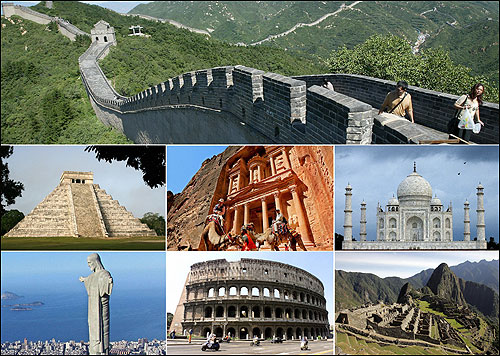
In Beijing, the big attractions remain the famous sites from Imperial China such as the Great Wall, the Forbidden City, and the Summer Palace. But tourists are also visiting new attractions such as the National Grand Theater, the controversial performing-arts center near Tiananmen Square designed by Paul Andreu.

Wednesday, April 29, 2009
Don't Mess With Women
Bottle of Wine
(Women will LOVE this one!)
A woman and a man are involved in a car accident on a snowy, cold Monday morning; it's a bad one. Both of their cars are totally demolished, but amazingly neither of them is hurt. God works in mysterious ways. After they crawl out of their cars, the man is yelling about women drivers. The woman says, 'So, you're a man. That's interesting. I'm a woman. Wow, just look at our cars! There's nothing left, but we're unhurt. This must be a sign from God that we should be friends and live in peace for the rest of our days.'
Flattered, the man replies, 'Oh yes, I agree completely, this must be a sign from God! But you're still at fault...women shouldn't be allowed to drive..'
The woman continues, 'And look at this, here's another miracle. My car is completely demolished but this bottle of wine didn't break. Surely God wants us to drink this wine and celebrate our good fortune.'
She hands the bottle to the man. The man nods his head in agreement, opens it and drinks half the bottle and then hands it back to the woman.
The woman takes the bottle, puts the cap back on and hands it back to the man.
The man asks, 'Aren't you having any?'
The woman replies, 'No. I think I'll just wait for the police...'
MORAL OF THE STORY:
Don't mess with women.
(Women will LOVE this one!)
A woman and a man are involved in a car accident on a snowy, cold Monday morning; it's a bad one. Both of their cars are totally demolished, but amazingly neither of them is hurt. God works in mysterious ways. After they crawl out of their cars, the man is yelling about women drivers. The woman says, 'So, you're a man. That's interesting. I'm a woman. Wow, just look at our cars! There's nothing left, but we're unhurt. This must be a sign from God that we should be friends and live in peace for the rest of our days.'
Flattered, the man replies, 'Oh yes, I agree completely, this must be a sign from God! But you're still at fault...women shouldn't be allowed to drive..'
The woman continues, 'And look at this, here's another miracle. My car is completely demolished but this bottle of wine didn't break. Surely God wants us to drink this wine and celebrate our good fortune.'
She hands the bottle to the man. The man nods his head in agreement, opens it and drinks half the bottle and then hands it back to the woman.
The woman takes the bottle, puts the cap back on and hands it back to the man.
The man asks, 'Aren't you having any?'
The woman replies, 'No. I think I'll just wait for the police...'
MORAL OF THE STORY:
Don't mess with women.
Tuesday, April 28, 2009
Monday, April 27, 2009
Phone Scam - Watch Out!
Phone scam that empties your account
By : Sonia Ramachandran
Email to friend Print article
Fraudsters are emptying the bank accounts of people by tricking them
into divulging their personal financial information.
KUALA LUMPUR: You receive a call, purportedly from a bank, asking if you had just conducted a credit card transaction for goods or services.
When you answer in the negative, the caller then tells you in a concerned tone to call an agent of a commercial bank and you are given the number.
Upon calling, the agent gives you the telephone number of the "bank" and tells you to call the bank itself.
You call and someone picks up, identifying himself as an officer of the "bank". You then tell him that you did not conduct the transaction and you do not have such card.
But he informs you that the records, however, show that the transaction had been carried out and that the card belongs to you!
He suggests you call Bank Negara's "Unit Kad Kredit Palsu" (Credit Card Fraud Unit) and gives you the number. You then reach an automated voice message service which says you have contacted "Bank Negara".
A Bank Negara "officer" then comes on and identifies himself. He asks for your banking and credit card information so that he can lodge a complaint on your behalf.
You then give your details over the phone and finally assured that "Bank Negara" will "look into your problem", you heave a sigh of relief.
But what you don't realise is that as soon as you have put down the phone, the fraudsters are already emptying your account, thanks to the information you had just furnished them.
This is the latest scam that Malaysians are falling prey to.
Last year, Bank Negara received 165 complaints on unauthorised withdrawals. As of mid-April this year, there have been 265 complaints.
The losses range from a minimum of RM4,000 to a maximum of RM10,000.
The Association of Banks in Malaysia received 42 complaints from April 1 to Friday on the scam which uses Bank Negara's name alone.
"One of the victims who walked in a few days ago lost RM7,000," said Bank Negara corporate communications director Abu Hassan Alshari Yahaya.
There is no such "Unit Kad Kredit Palsu" in Bank Negara, he added.
Abu Hassan said the fraudsters used a different approach before. They would SMS potential victims informing them that they had won prizes and to collect these prizes, they had to open an Internet banking account.
If you fall for this scam, the fraudster then provides a step-by-step guide on how to register and activate an Internet banking account using an automated teller machine (ATM) terminal.
At the ATM terminal, you will be given an Internet banking personal identification number (PIN) which will be given to the fraudster.
Based on the fraudster's instructions, you also key in his or her mobile number into the ATM.
When a person conducts Internet banking, he would receive a Transaction Authorisation Code (TAC) from the bank via SMS.
Since you have keyed in the fraudster's mobile number, this code will also be sent to him.
"People are vulnerable when they are told they have won prizes and these fraudsters take advantage of that vulnerability. There are no shortcuts to prizes. The public need to be aware at all times."
Abu Hassan advised people to never respond to any SMS, phone calls or email asking for personal information such as PIN and passwords for banking accounts.
"Banks will never request for such personal information through email, SMS or phone calls."
In June last year, the New Sunday Times reported that the SMS scam was so serious that the police were receiving at least one report a day.
The police said the number of scams was increasing with some victims losing up to RM1.2 million.
Email scams, said Abu Hassan, were those where email were sent out, purportedly from the banks asking the recipients to update their personal banking information or accounts.
To do that, the recipient would have to click on a link provided in the email and be led to a site that looks exactly like the bank's site. When you key in your personal information on this duplicate site, the fraudster retrieves it and withdraws the money from your account.
Bank Negara is now working with the telecommunications operators to warn their subscribers via SMS not to fall prey to such scams.
HOW TO AVOID BEING CONNED
- Do not respond to any request for your login ID, password or PIN over the phone, through fax, email or pop-up messages.
- Take down the name, phone number and any other information you can from the caller who asks for the information
- Call your bank if you are not sure of the authenticity of a call, SMS or email. ATM machines also provide numbers that you can call.
- You can also call the Association of Banks in Malaysia's toll-free hotline at 1300-88-9980 and Bank Negara's at 1300-88-5465.
- Always enter the Universal Resource Locators (URLs) directly into the web browser. Avoid being redirected to the website or hyperlinked to it from an email or another website.
- Ensure that you are in a secure website by checking the URLs to ensure that it begins with "https://'" instead of "http://'" and look for a display of a closed padlock symbol on the status bar of your browser.
- Protect your personal computer from hackers, viruses and malicious programmes.
Source: Bank Negara corporate communications director Abu Hassan Alshari Yahaya.
By : Sonia Ramachandran
Email to friend Print article
Fraudsters are emptying the bank accounts of people by tricking them
into divulging their personal financial information.
KUALA LUMPUR: You receive a call, purportedly from a bank, asking if you had just conducted a credit card transaction for goods or services.
When you answer in the negative, the caller then tells you in a concerned tone to call an agent of a commercial bank and you are given the number.
Upon calling, the agent gives you the telephone number of the "bank" and tells you to call the bank itself.
You call and someone picks up, identifying himself as an officer of the "bank". You then tell him that you did not conduct the transaction and you do not have such card.
But he informs you that the records, however, show that the transaction had been carried out and that the card belongs to you!
He suggests you call Bank Negara's "Unit Kad Kredit Palsu" (Credit Card Fraud Unit) and gives you the number. You then reach an automated voice message service which says you have contacted "Bank Negara".
A Bank Negara "officer" then comes on and identifies himself. He asks for your banking and credit card information so that he can lodge a complaint on your behalf.
You then give your details over the phone and finally assured that "Bank Negara" will "look into your problem", you heave a sigh of relief.
But what you don't realise is that as soon as you have put down the phone, the fraudsters are already emptying your account, thanks to the information you had just furnished them.
This is the latest scam that Malaysians are falling prey to.
Last year, Bank Negara received 165 complaints on unauthorised withdrawals. As of mid-April this year, there have been 265 complaints.
The losses range from a minimum of RM4,000 to a maximum of RM10,000.
The Association of Banks in Malaysia received 42 complaints from April 1 to Friday on the scam which uses Bank Negara's name alone.
"One of the victims who walked in a few days ago lost RM7,000," said Bank Negara corporate communications director Abu Hassan Alshari Yahaya.
There is no such "Unit Kad Kredit Palsu" in Bank Negara, he added.
Abu Hassan said the fraudsters used a different approach before. They would SMS potential victims informing them that they had won prizes and to collect these prizes, they had to open an Internet banking account.
If you fall for this scam, the fraudster then provides a step-by-step guide on how to register and activate an Internet banking account using an automated teller machine (ATM) terminal.
At the ATM terminal, you will be given an Internet banking personal identification number (PIN) which will be given to the fraudster.
Based on the fraudster's instructions, you also key in his or her mobile number into the ATM.
When a person conducts Internet banking, he would receive a Transaction Authorisation Code (TAC) from the bank via SMS.
Since you have keyed in the fraudster's mobile number, this code will also be sent to him.
"People are vulnerable when they are told they have won prizes and these fraudsters take advantage of that vulnerability. There are no shortcuts to prizes. The public need to be aware at all times."
Abu Hassan advised people to never respond to any SMS, phone calls or email asking for personal information such as PIN and passwords for banking accounts.
"Banks will never request for such personal information through email, SMS or phone calls."
In June last year, the New Sunday Times reported that the SMS scam was so serious that the police were receiving at least one report a day.
The police said the number of scams was increasing with some victims losing up to RM1.2 million.
Email scams, said Abu Hassan, were those where email were sent out, purportedly from the banks asking the recipients to update their personal banking information or accounts.
To do that, the recipient would have to click on a link provided in the email and be led to a site that looks exactly like the bank's site. When you key in your personal information on this duplicate site, the fraudster retrieves it and withdraws the money from your account.
Bank Negara is now working with the telecommunications operators to warn their subscribers via SMS not to fall prey to such scams.
HOW TO AVOID BEING CONNED
- Do not respond to any request for your login ID, password or PIN over the phone, through fax, email or pop-up messages.
- Take down the name, phone number and any other information you can from the caller who asks for the information
- Call your bank if you are not sure of the authenticity of a call, SMS or email. ATM machines also provide numbers that you can call.
- You can also call the Association of Banks in Malaysia's toll-free hotline at 1300-88-9980 and Bank Negara's at 1300-88-5465.
- Always enter the Universal Resource Locators (URLs) directly into the web browser. Avoid being redirected to the website or hyperlinked to it from an email or another website.
- Ensure that you are in a secure website by checking the URLs to ensure that it begins with "https://'" instead of "http://'" and look for a display of a closed padlock symbol on the status bar of your browser.
- Protect your personal computer from hackers, viruses and malicious programmes.
Source: Bank Negara corporate communications director Abu Hassan Alshari Yahaya.
Tuesday, March 31, 2009
America Once Ruled the World - The Last Bubble is Bursting ( By Daniel)
In less than two generations, America has squandered the human sacrifice, blood, sweat and tears of than seventy decades. We have been an independent country for 226 years. From 1783 until 1946 was an unrelenting upward trajectory for the beacon of the free world.
With the end of World War II, America was the last country standing. Germany and Japan were in shambles. Russia had lost millions of citizens, with Stalin about to murder millions more. Great Britain was a shell of its former self. The American Empire had been born. We were the manufacturer to the world. We rebuilt Europe and Japan. Our military was dominant. We made the best automobiles. We built 41,000 miles of national highway over two decades. In 1946, one in three U.S. workers was employed in the manufacturing industry.
Today, less than one in ten workers makes something.
In the years following World War II, the United States ran trade surpluses of 2 percent to 4 percent of GDP. We regularly ran surpluses until the late 1970’s. Since the late 1970’s, the United States has run increasingly large trade deficits, reaching 6 percent of GDP in 2007. For the last three decades, Americans have tried to spend their way to prosperity.
The government politicians and their moneyed backers have sold the idea that Americans could be the thinkers for the world, while other countries could do the menial work of producing stuff. After thirty years we are left with a hollowed out economy of paper pushers. It may be a reach to transition the Wall Street geniuses who created Mortgage Backed Securities, Credit Default Swaps, Credit Default Options–MBSs, CDSs, and CDO’s– into jobs building bridges. In truth, many of America’s manufacturing jobs are gone. Too many of the nation’s workers are left to sweep the streets they used to own.
After three decades of burning our furniture to keep warm, we are left owing the rest of the world $2.7 trillion. Many of these countries don’t like us. Ben Bernanke is actively trying to drive the value of the U.S. dollar down, while decreasing interest rates paid on this government debt. As Ben prints trillions of new dollars, the value of China’s, Japan’s and the oil exporting countries’ holdings goes down. The U.S. will run a $2 trillion deficit in the next year. We need these foreign countries to buy at least $1 trillion of our new debt. We are sure they will do so. Our reasoning is, what else can they do. From a purely financial standpoint, it is insanity for a country to make an investment in an asset paying 2.5 percent interest, when in one day last week the Federal Reserve purposely knocked the value of the dollar down 5 percent in one day, wiping out two years of interest income.
The Chinese are not fools. They can clearly see that the U.S. will try to devalue our way out of our financial mess. They are going to put the $500 billion of USD holdings to work, before it becomes worthless.
Recent examples reported by the Washington Post have been:
• On Feb. 12, China’s state-owned metals giant Chinalco signed a $19.5 billion deal with Australia’s Rio Tinto that will eventually double its stake in the world’s second-largest mining company.
• On Feb. 17 and 18, China National Petroleum signed separate agreements with Russia and Venezuela under which China would provide $25 billion and $4 billion in loans, respectively, in exchange for long-term commitments to supply oil.
• On Feb. 19, the China Development Bank struck a similar deal with Petrobras, the Brazilian oil company, agreeing to a loan of $10 billion in exchange for oil.
• Iran announced that it had signed a $3.2 billion agreement with a Chinese consortium to develop an area beneath the Persian Gulf seabed that is believed to hold about 8 percent of the world’s reserves of natural gas.
The Chinese have a long-term plan to rule the world. They are buying up natural resources throughout the world. The walls are closing in on the U.S. The U.S. solution is to print more dollars, borrow from future generations, and tax their citizens more. Ben Bernanke has rolled the dice, but the fear is in his eyes, not our enemies’. We will shortly realize that our castles were built upon pillars of salt and pillars of sand.
Bubble, Bubble
Never in the history of the world has a bubble burst halfway. Every bubble has collapsed to its starting point or below. The pundits on CNBC and on Sunday talk shows continue to predict a stabilization of the housing market. They are wrong. The bubble is still deflating and will not end until home values are back to 2000 levels, if we’re lucky. Examples of bubbles that fully deflated include the tulip bubble of 1637 - 1638, the South Sea bubble of 1719 - 1722, the Nikkei bubble from 1983 until today, and the NASDAQ bubble from 1999 – 2003. The United States has three bubbles that are deflating simultaneously, compliments of the Federal Reserve, George Bush, and Congress. Housing, consumer spending, and U.S. total debt are all at different phases of bubble deflation. No matter what politicians attempt, these bubbles cannot be re-inflated. They will deflate fully.
Tulip mania struck Holland in 1637. The whole nation was consumed by tulip bulbs in the first recorded speculative bubble. Contract prices for tulip bulbs reached astronomical levels and then suddenly collapsed. At the peak of tulip mania in February 1637, tulip contracts sold for more than 10 times the annual income of a skilled craftsman. In a matter of seven months, fortunes were made and lost. The bubble popped completely.
The South Sea Company was the AIG of the 1700’s. It was a British joint stock company, founded in 1711. The company was granted a monopoly to trade as part of a treaty during the War of Spanish Succession. The company assumed the national debt England had incurred during the war. In 1719 the company proposed a scheme by which it would buy more than half the national debt of Britain (£30,981,712), again with new shares, and a promise to the government that the debt would be converted to a lower interest rate, 5 percent until 1727 and 4 percent per year thereafter. The purpose of this conversion was similar to allow a conversion of high-interest but difficult-to-trade debt into low-interest, readily marketable debt and shares of the South Sea Company. These are the games that declining empires play when they have overreached in their empire building. The plan sounds a lot like Tim Geithner’s “Good Bank Bad Bank” scheme. Shuffling debt from one entity to another entity doesn’t get rid of it. It is just a scam paid for by taxpayers.
The price of South Sea Company stock went up from £100 a share to almost £1,000 per share. Its success caused a country-wide investing frenzy by peasants, businessmen and lords. The price reached £1,000 in early August and the level of selling was such that the price started to fall, dropping back to £100 per share before the year was out, triggering bankruptcy among those who had bought on credit. The English Parliament reacted to the crisis exactly the way our current clueless bunch of moron Congressmen are reacting to the AIG debacle. The estates of the directors of the South Sea Company were confiscated and used to relieve the suffering of the victims, and the stock of the South Sea Company was divided between the Bank of England and East India Company. A resolution was proposed in parliament that bankers be tied up in sacks filled with snakes and tipped into the Thames River. I’m sure Barney Frank is preparing a similar resolution regarding AIG executives. No one can calculate the madness of men.
Japan Inc. was going to dominate the world. From 1983 until its peak in 1989, the Nikkei rose from 7,500 to 38,900, a 500 percent increase in seven years. Following World War II Japan implemented tariffs that protected their industries from overseas competition. This resulted in large trade surpluses and an appreciating yen. With artificial protections, Japanese companies made mal-investments. Easy money and false confidence led to a frenzy in the stock market and real estate market. Japanese banks had financed this speculative bubble with high risk loans. The PE ratio of the Nikkei reached 78 in 1989. Twenty years after this peak, the Nikkei hit a low of 7,500 this year, the same level it started at in 1983. This has occurred despite spending billions on make work stimulus programs, reducing interest rates to zero, and artificially reducing the value of the …
With the end of World War II, America was the last country standing. Germany and Japan were in shambles. Russia had lost millions of citizens, with Stalin about to murder millions more. Great Britain was a shell of its former self. The American Empire had been born. We were the manufacturer to the world. We rebuilt Europe and Japan. Our military was dominant. We made the best automobiles. We built 41,000 miles of national highway over two decades. In 1946, one in three U.S. workers was employed in the manufacturing industry.
Today, less than one in ten workers makes something.
In the years following World War II, the United States ran trade surpluses of 2 percent to 4 percent of GDP. We regularly ran surpluses until the late 1970’s. Since the late 1970’s, the United States has run increasingly large trade deficits, reaching 6 percent of GDP in 2007. For the last three decades, Americans have tried to spend their way to prosperity.
The government politicians and their moneyed backers have sold the idea that Americans could be the thinkers for the world, while other countries could do the menial work of producing stuff. After thirty years we are left with a hollowed out economy of paper pushers. It may be a reach to transition the Wall Street geniuses who created Mortgage Backed Securities, Credit Default Swaps, Credit Default Options–MBSs, CDSs, and CDO’s– into jobs building bridges. In truth, many of America’s manufacturing jobs are gone. Too many of the nation’s workers are left to sweep the streets they used to own.
After three decades of burning our furniture to keep warm, we are left owing the rest of the world $2.7 trillion. Many of these countries don’t like us. Ben Bernanke is actively trying to drive the value of the U.S. dollar down, while decreasing interest rates paid on this government debt. As Ben prints trillions of new dollars, the value of China’s, Japan’s and the oil exporting countries’ holdings goes down. The U.S. will run a $2 trillion deficit in the next year. We need these foreign countries to buy at least $1 trillion of our new debt. We are sure they will do so. Our reasoning is, what else can they do. From a purely financial standpoint, it is insanity for a country to make an investment in an asset paying 2.5 percent interest, when in one day last week the Federal Reserve purposely knocked the value of the dollar down 5 percent in one day, wiping out two years of interest income.
The Chinese are not fools. They can clearly see that the U.S. will try to devalue our way out of our financial mess. They are going to put the $500 billion of USD holdings to work, before it becomes worthless.
Recent examples reported by the Washington Post have been:
• On Feb. 12, China’s state-owned metals giant Chinalco signed a $19.5 billion deal with Australia’s Rio Tinto that will eventually double its stake in the world’s second-largest mining company.
• On Feb. 17 and 18, China National Petroleum signed separate agreements with Russia and Venezuela under which China would provide $25 billion and $4 billion in loans, respectively, in exchange for long-term commitments to supply oil.
• On Feb. 19, the China Development Bank struck a similar deal with Petrobras, the Brazilian oil company, agreeing to a loan of $10 billion in exchange for oil.
• Iran announced that it had signed a $3.2 billion agreement with a Chinese consortium to develop an area beneath the Persian Gulf seabed that is believed to hold about 8 percent of the world’s reserves of natural gas.
The Chinese have a long-term plan to rule the world. They are buying up natural resources throughout the world. The walls are closing in on the U.S. The U.S. solution is to print more dollars, borrow from future generations, and tax their citizens more. Ben Bernanke has rolled the dice, but the fear is in his eyes, not our enemies’. We will shortly realize that our castles were built upon pillars of salt and pillars of sand.
Bubble, Bubble
Never in the history of the world has a bubble burst halfway. Every bubble has collapsed to its starting point or below. The pundits on CNBC and on Sunday talk shows continue to predict a stabilization of the housing market. They are wrong. The bubble is still deflating and will not end until home values are back to 2000 levels, if we’re lucky. Examples of bubbles that fully deflated include the tulip bubble of 1637 - 1638, the South Sea bubble of 1719 - 1722, the Nikkei bubble from 1983 until today, and the NASDAQ bubble from 1999 – 2003. The United States has three bubbles that are deflating simultaneously, compliments of the Federal Reserve, George Bush, and Congress. Housing, consumer spending, and U.S. total debt are all at different phases of bubble deflation. No matter what politicians attempt, these bubbles cannot be re-inflated. They will deflate fully.
Tulip mania struck Holland in 1637. The whole nation was consumed by tulip bulbs in the first recorded speculative bubble. Contract prices for tulip bulbs reached astronomical levels and then suddenly collapsed. At the peak of tulip mania in February 1637, tulip contracts sold for more than 10 times the annual income of a skilled craftsman. In a matter of seven months, fortunes were made and lost. The bubble popped completely.
The South Sea Company was the AIG of the 1700’s. It was a British joint stock company, founded in 1711. The company was granted a monopoly to trade as part of a treaty during the War of Spanish Succession. The company assumed the national debt England had incurred during the war. In 1719 the company proposed a scheme by which it would buy more than half the national debt of Britain (£30,981,712), again with new shares, and a promise to the government that the debt would be converted to a lower interest rate, 5 percent until 1727 and 4 percent per year thereafter. The purpose of this conversion was similar to allow a conversion of high-interest but difficult-to-trade debt into low-interest, readily marketable debt and shares of the South Sea Company. These are the games that declining empires play when they have overreached in their empire building. The plan sounds a lot like Tim Geithner’s “Good Bank Bad Bank” scheme. Shuffling debt from one entity to another entity doesn’t get rid of it. It is just a scam paid for by taxpayers.
The price of South Sea Company stock went up from £100 a share to almost £1,000 per share. Its success caused a country-wide investing frenzy by peasants, businessmen and lords. The price reached £1,000 in early August and the level of selling was such that the price started to fall, dropping back to £100 per share before the year was out, triggering bankruptcy among those who had bought on credit. The English Parliament reacted to the crisis exactly the way our current clueless bunch of moron Congressmen are reacting to the AIG debacle. The estates of the directors of the South Sea Company were confiscated and used to relieve the suffering of the victims, and the stock of the South Sea Company was divided between the Bank of England and East India Company. A resolution was proposed in parliament that bankers be tied up in sacks filled with snakes and tipped into the Thames River. I’m sure Barney Frank is preparing a similar resolution regarding AIG executives. No one can calculate the madness of men.
Japan Inc. was going to dominate the world. From 1983 until its peak in 1989, the Nikkei rose from 7,500 to 38,900, a 500 percent increase in seven years. Following World War II Japan implemented tariffs that protected their industries from overseas competition. This resulted in large trade surpluses and an appreciating yen. With artificial protections, Japanese companies made mal-investments. Easy money and false confidence led to a frenzy in the stock market and real estate market. Japanese banks had financed this speculative bubble with high risk loans. The PE ratio of the Nikkei reached 78 in 1989. Twenty years after this peak, the Nikkei hit a low of 7,500 this year, the same level it started at in 1983. This has occurred despite spending billions on make work stimulus programs, reducing interest rates to zero, and artificially reducing the value of the …
Saturday, March 28, 2009
Don't Fall Victim to these 5 Wall Street Lies
Don't Fall Victim to these 5 Wall Street Lies
By Keith Fitz-Gerald
What Got Us Here?
As we watch the government and Wall Street scramble to repair the economic mess we're in, it's more important than ever to understand exactly what got us in this situation in the first place.
Even if you're on the investing sidelines right now, looking at how we got here can help you avoid repeating past mistakes, learn how to spot future red flags and repair and grow your portfolio.
So, what got us here?
And how do we steer clear of such drastic losses in the future?
There are a few pieces of advice that Wall Street kept pitching to investors as gospel truth that I refer to as "Wall Street's biggest whoppers."
Wall Street Lie #1: Buy and Hold
It's a simple-enough concept: Consistently invest in the market and let it ride. You'll be laughing all the way to the bank. How could you go wrong?
In reality, "buy and hope" – a far better name for this myth – is one of Wall Street's favorite strategies.
Win or lose, brokers never want you to stop playing the game. So the collective "they" pitch you on a hot investment to get you hooked and then keep stringing you along.
To further increase the risk, ratings agencies that are in bed with certain companies will give the green light on investments that are anything but safe.
Of course, the rude awakening comes when the market goes through one of its frequent periods of readjustment.
Timing really is everything, isn't it?
What to Do Now
Just because you may have some time before you'll need the money does not necessarily mean you should take on more risk. A better strategy is to base choices on the certainty of returns – especially in this investing climate. At this point, boring is good!
Look at dividends and reinvestment for stable returns.
Stay with businesses that have proven management, plenty of free cash flow and increasing dividends that are backed up by unstoppable global trends.
Do your homework, and you'll find there are still plenty of solid investing options – just be selective!
Wall Street Lie #2: Some Debt Is Good
One of Wall Street's biggest (and most dangerous) lies is that debt is an appropriate tool for building wealth.
Here's the bottom line…
If you owe someone money, you've still got to pay it off eventually. That means any growth you attribute to debt until it's paid off in full exists only in fantasyland. How do you think General Motors and Lehman Brothers got into so much trouble?
It's no different for personal portfolios. Maybe if our leaders had understood this in the first place, millions of investors would not have been taken on a white-knuckle ride.
Even those who act responsibly are finding out that we're now liable for the "other" guys' debts, too.
What to Do Now
As an investor:
Only stick with companies that have little or no debt. Avoid any that are getting life support from the Federal Reserve – it's too shaky to assume they'll be able to stand on their own two feet once the crutch of government financing is taken away.
In your personal life:
Borrow only if you have to and on the conservative side.
Refinance your house by taking advantage of low interest rates before they start rising again.
Pay off your credit cards each month.
If you have trouble with plastic, shift to a cash-only lifestyle for a while.
And make sure that any new debt you take on is debt you can afford to pay off.
Wall Street Lie #3: It Pays to Diversify
Common investing wisdom touts spreading your money around as a safety precaution.
In reality, this is no more effective than rearranging the deck chairs on the Titanic. It's best to just get off the boat.
Instead, a "safety first" strategy is far more stable and generates some impressive returns by emphasizing high current income and long-term appreciation.
Many investors don't understand the name of the game right now, incorrectly believing investing in a recession is an all-or-nothing equation. They're wrong.
What to Do Now
In a time when so many markets – stock, bond, housing and credit – have collapsed simultaneously, it is crucial to hedge your portfolio at all times and not just when it's popular.
Skew your investments toward safety first. You can still allow yourself to screw up on speculative bets, but you won't be dependent on them to make up for losses.
Look into specialized tools, such as inverse funds or options, for low-risk choices with an upside. After all, the name of the game is planning for the worst while still obtaining the best of what's out there.
Wall Street Lie #4: Your Home Is an Investment
Actually, it's not.
A house is really a roof over your head that shields you from being priced out of the local rental markets.
Or, at worst, it's a money pit that provides you with the illusion that you're doing something sensible with your hard-earned money – despite the fact that an entire industry would have you believe otherwise.
Research shows that since 1900, home prices have run sideways or declined for long periods of time. What that means is real estate hasn't been the golden investment everyone claims it is.
Sadly, millions are learning the hard way right now that real estate can, and does, lose value.
Wall Street Lie #5: Shop 'til You Drop and Save the Economy
Have you heard?
It's our new patriotic duty to go out and spend money.
Not only does the U.S. government want you to go on a spending spree, but Wall Street and the credit card companies are also looking to you to save their sorry hides by helping you do just that.
That's why the stimulus plans – you know, the ones designed to give you relief during a recession – revolve around tax cuts and handouts. It's mere window dressing.
Here's the bottom line…
Nothing will matter until the banks start lending again. Period.
What to Do Now
People talk about our current situation as though it is an enigma, but that's simply because only a precious few people actually remember similar events in the past. For example, the Panic of 1873 (often referred to as the "real" Great Depression), the Great Financial Crisis of 1914 and the Banking Crisis of 1931.
So, what can you do?
Keep your powder dry. Misguided though our economic policies may be, savvy investors should plan for an eventual rebound – even if we're destined to test new lows in the months ahead.
Don't fall victim to Wall Street's lies, and you'll be able to come out ahead when it finally does.
By Keith Fitz-Gerald
What Got Us Here?
As we watch the government and Wall Street scramble to repair the economic mess we're in, it's more important than ever to understand exactly what got us in this situation in the first place.
Even if you're on the investing sidelines right now, looking at how we got here can help you avoid repeating past mistakes, learn how to spot future red flags and repair and grow your portfolio.
So, what got us here?
And how do we steer clear of such drastic losses in the future?
There are a few pieces of advice that Wall Street kept pitching to investors as gospel truth that I refer to as "Wall Street's biggest whoppers."
Wall Street Lie #1: Buy and Hold
It's a simple-enough concept: Consistently invest in the market and let it ride. You'll be laughing all the way to the bank. How could you go wrong?
In reality, "buy and hope" – a far better name for this myth – is one of Wall Street's favorite strategies.
Win or lose, brokers never want you to stop playing the game. So the collective "they" pitch you on a hot investment to get you hooked and then keep stringing you along.
To further increase the risk, ratings agencies that are in bed with certain companies will give the green light on investments that are anything but safe.
Of course, the rude awakening comes when the market goes through one of its frequent periods of readjustment.
Timing really is everything, isn't it?
What to Do Now
Just because you may have some time before you'll need the money does not necessarily mean you should take on more risk. A better strategy is to base choices on the certainty of returns – especially in this investing climate. At this point, boring is good!
Look at dividends and reinvestment for stable returns.
Stay with businesses that have proven management, plenty of free cash flow and increasing dividends that are backed up by unstoppable global trends.
Do your homework, and you'll find there are still plenty of solid investing options – just be selective!
Wall Street Lie #2: Some Debt Is Good
One of Wall Street's biggest (and most dangerous) lies is that debt is an appropriate tool for building wealth.
Here's the bottom line…
If you owe someone money, you've still got to pay it off eventually. That means any growth you attribute to debt until it's paid off in full exists only in fantasyland. How do you think General Motors and Lehman Brothers got into so much trouble?
It's no different for personal portfolios. Maybe if our leaders had understood this in the first place, millions of investors would not have been taken on a white-knuckle ride.
Even those who act responsibly are finding out that we're now liable for the "other" guys' debts, too.
What to Do Now
As an investor:
Only stick with companies that have little or no debt. Avoid any that are getting life support from the Federal Reserve – it's too shaky to assume they'll be able to stand on their own two feet once the crutch of government financing is taken away.
In your personal life:
Borrow only if you have to and on the conservative side.
Refinance your house by taking advantage of low interest rates before they start rising again.
Pay off your credit cards each month.
If you have trouble with plastic, shift to a cash-only lifestyle for a while.
And make sure that any new debt you take on is debt you can afford to pay off.
Wall Street Lie #3: It Pays to Diversify
Common investing wisdom touts spreading your money around as a safety precaution.
In reality, this is no more effective than rearranging the deck chairs on the Titanic. It's best to just get off the boat.
Instead, a "safety first" strategy is far more stable and generates some impressive returns by emphasizing high current income and long-term appreciation.
Many investors don't understand the name of the game right now, incorrectly believing investing in a recession is an all-or-nothing equation. They're wrong.
What to Do Now
In a time when so many markets – stock, bond, housing and credit – have collapsed simultaneously, it is crucial to hedge your portfolio at all times and not just when it's popular.
Skew your investments toward safety first. You can still allow yourself to screw up on speculative bets, but you won't be dependent on them to make up for losses.
Look into specialized tools, such as inverse funds or options, for low-risk choices with an upside. After all, the name of the game is planning for the worst while still obtaining the best of what's out there.
Wall Street Lie #4: Your Home Is an Investment
Actually, it's not.
A house is really a roof over your head that shields you from being priced out of the local rental markets.
Or, at worst, it's a money pit that provides you with the illusion that you're doing something sensible with your hard-earned money – despite the fact that an entire industry would have you believe otherwise.
Research shows that since 1900, home prices have run sideways or declined for long periods of time. What that means is real estate hasn't been the golden investment everyone claims it is.
Sadly, millions are learning the hard way right now that real estate can, and does, lose value.
Wall Street Lie #5: Shop 'til You Drop and Save the Economy
Have you heard?
It's our new patriotic duty to go out and spend money.
Not only does the U.S. government want you to go on a spending spree, but Wall Street and the credit card companies are also looking to you to save their sorry hides by helping you do just that.
That's why the stimulus plans – you know, the ones designed to give you relief during a recession – revolve around tax cuts and handouts. It's mere window dressing.
Here's the bottom line…
Nothing will matter until the banks start lending again. Period.
What to Do Now
People talk about our current situation as though it is an enigma, but that's simply because only a precious few people actually remember similar events in the past. For example, the Panic of 1873 (often referred to as the "real" Great Depression), the Great Financial Crisis of 1914 and the Banking Crisis of 1931.
So, what can you do?
Keep your powder dry. Misguided though our economic policies may be, savvy investors should plan for an eventual rebound – even if we're destined to test new lows in the months ahead.
Don't fall victim to Wall Street's lies, and you'll be able to come out ahead when it finally does.
Thursday, February 19, 2009
Depositors can't get their Cash
AP
Billionaire's bank customers denied their deposits
Wednesday February 18, 7:09 pm ET
By Ben Fox, Associated Press Writer
Stanford depositors can't get their cash while politicians scramble and regulators urge calm
ST. JOHN'S, Antigua (AP) -- Panicky depositors were turned away from Stanford International Bank and some of its Latin American affiliates Wednesday, unable to withdraw their money after U.S. regulators accused Texas financier R. Allen Stanford of perpetrating an $8 billion fraud against his companies' investors.
ADVERTISEMENT
Some customers arrived in Antigua by private jet and were driven up the lushly landscaped driveway of the bank's headquarters, only to be told that all assets have been frozen pending an investigation by Antiguan banking regulators.
"I don't know what to think. I have my life savings here," said Reinaldo Pinto Ramos, 48, a Venezuelan software firm owner who flew in by chartered plane from Caracas Wednesday with five other investors to check on their accounts. "We're waiting to see some light."
Banking regulators and politicians around the region are scrambling to contain the damage after the U.S. Securities and Exchange Commission filed civil fraud charges against the billionaire on Tuesday. Regional Director Rose Romero of the SEC's Fort Worth office called it a "fraud of shocking magnitude that has spread its tentacles throughout the world."
Stanford, 58, is a larger-than-life figure in the Caribbean, using his personal fortune -- estimated at $2.2 billion by Forbes magazine -- to bankroll public works and sports teams. He also is a major player in U.S. politics, personally donating nearly a million dollars, mostly to Democrats. At 6-foot-4 and 240 pounds, he towered over House Speaker Nancy Pelosi while giving her a warm hug at the Democratic National Convention last year.
He owns a home in the U.S. Virgin Islands, and operates businesses from Houston to Miami and Switzerland to Antigua, where the government knighted him in 2006 in recognition of his economic influence and charity work.
U.S. regulators have accused Stanford, two other executives and three of their companies of luring investors with promises of "improbable and unsubstantiated" high returns on certificates of deposit and other investments.
Many details about the alleged fraud remain unclear, but the SEC alleges a pattern of secrecy, including a failure to disclose the bank's exposure to losses by in money manager Bernard Madoff's alleged Ponzi scheme.
The SEC said no one but Stanford and James M. Davis of Baldwyn, Miss., the Antigua-based bank's chief financial officer, know where most of the depositors' cash is invested, and both men have failed to cooperate with investigators. "Approximately 90 percent of SIB's claimed investment portfolio resides in a 'black box' shielded from any independent oversight," the SEC said in its complaint.
Stanford wasn't talking Wednesday. A company Web site directed inquiries to the SEC. But in an e-mail to his employees last week, the billionaire said his company was cooperating with the probe, and vowed to "fight with every breath to continue to uphold our good name and continue the legacy we have built together."
A federal judge appointed a receiver to identify and protect Stanford's assets worldwide, including about $8 billion managed by bank, which has affiliates in Mexico, Panama, Colombia, Ecuador, Peru and Venezuela.
Also frozen were assets of Houston-based Stanford Capital Management and Stanford Group Company, which has 29 brokerage offices around the U.S.
"The fallout threatens catastrophic and immediate consequences" for the twin-island nation of Antigua and Barbuda, said Prime Minister Baldwin Spencer. It also could rattle the economies of smaller nations where Stanford's companies have had outsized influence.
SEC spokesman John Nester said the agency does not know where Stanford is. James Sullivan, the U.S. marshal for the Virgin Islands, said agents are monitoring his "extensive holdings" in St. Croix, including a boat he sometimes he docks there, but could not say whether he is currently in the territory. He does not currently face any charges requiring his presence in court.
"As of right now, all we are doing is an ongoing investigation to monitor his holdings, for lack of better term, and we are not actively pursuing him," Sullivan told The Associated Press.
Some U.S. lawmakers quickly announced they would donate his campaign contributions to charity.
The Stanford Financial Group, through its political action committee and employees, has contributed $2.4 million to political candidates, parties and committees in the U.S. since 1989, with nearly two-thirds going to Democrats, according to the Center for Responsive Politics, a group that tracks campaign spending.
Most of that cash flowed during the 2002 election cycle, when Congress was debating a financial services antifraud bill that would have linked the databases of state and federal banking, securities and insurance regulators. The bill ultimately died in the Senate, where the biggest recipients have been Sen. Bill Nelson, D-Fla. ($45,900); Sen. John McCain, R-Ariz. ($28,150); Sen. Chris Dodd, D-Conn. ($27,500); and Sen. John Cornyn, R-Texas ($19,700). Rep. Pete Sessions, R-Texas also received $41,375.
Stanford and his wife Susan also donated $931,100 of their own money, with 78 percent going to Democrats, including $4,600 to President Barack Obama's presidential campaign last May 31. Records show $2,300 of that was returned on the same day.
Governments across the region took a variety of actions Wednesday to protect local investors who'd deposited money with Stanford-linked institutions.
Colombia and Ecuador suspended the activities of Stanford's local brokerages Wednesday, and Panamanian regulators occupied Stanford bank branches hit by a run on deposits, which they described as an isolated "consequence of decisions adopted by foreign authorities." Assets at the bank's four Panama branches, which reportedly held $200 million in deposits at year's end, are held largely in liquid, fixed-income investments that can more easily be converted into cash to cover deposits if necessary, the bank said.
In Venezuela, banking regulator Edgar Hernandez said the government was considering a request for help from Stanford Bank SA in Caracas after a $26.5 million run on deposits removed about 12 percent of its holdings.
"We suggested an open intervention" by the government, including the possibility of the government or a state-run bank depositing funds to back deposits, Hugo Faria, one of the bank's directors, told The Associated Press.
In Mexico, where the Stanford Fondos unit manages about $50 million for some 3,400 clients, a note posted on a shuttered office door in the capital's wealthy Polanco neighborhood announced that all accounts "are temporarily frozen."
"We don't have any other information at this time, you will be contacted in the future with more details," the note said.
Karina Klinckwort, 38, had rushed to the office Wednesday: "Everything I have is with them, everything that my husband, may he rest in peace, invested is with them."
The Stanford-controlled Bank of Antigua was not named in the complaint, but many Antiguans lined up outside nevertheless to try to get their money. Some of these working-class depositors clutched portable radios to listen to financial news.
"People have to come to get their money," said electrician Rasta Kente.
But panicking will only make things worse, regional regulators warned.
"If individuals persist in rushing to the bank in a panic they will precipitate the very situation that we are all trying to avoid," said K. Dwight Venner, governor of the Eastern Caribbean Central Bank.
Associated Press Writers Anika Kentish in St. John's, Antigua; Jim Abrams in Washington, D.C.; Jeff Kummer in Dallas; Frank Bajak in Bogota; Jeanneth Valdivieso in Olga Rodriguez in Mexico City; and Fabiola Sanchez in Caracas, Venezuela contributed to this report.
Billionaire's bank customers denied their deposits
Wednesday February 18, 7:09 pm ET
By Ben Fox, Associated Press Writer
Stanford depositors can't get their cash while politicians scramble and regulators urge calm
ST. JOHN'S, Antigua (AP) -- Panicky depositors were turned away from Stanford International Bank and some of its Latin American affiliates Wednesday, unable to withdraw their money after U.S. regulators accused Texas financier R. Allen Stanford of perpetrating an $8 billion fraud against his companies' investors.
ADVERTISEMENT
Some customers arrived in Antigua by private jet and were driven up the lushly landscaped driveway of the bank's headquarters, only to be told that all assets have been frozen pending an investigation by Antiguan banking regulators.
"I don't know what to think. I have my life savings here," said Reinaldo Pinto Ramos, 48, a Venezuelan software firm owner who flew in by chartered plane from Caracas Wednesday with five other investors to check on their accounts. "We're waiting to see some light."
Banking regulators and politicians around the region are scrambling to contain the damage after the U.S. Securities and Exchange Commission filed civil fraud charges against the billionaire on Tuesday. Regional Director Rose Romero of the SEC's Fort Worth office called it a "fraud of shocking magnitude that has spread its tentacles throughout the world."
Stanford, 58, is a larger-than-life figure in the Caribbean, using his personal fortune -- estimated at $2.2 billion by Forbes magazine -- to bankroll public works and sports teams. He also is a major player in U.S. politics, personally donating nearly a million dollars, mostly to Democrats. At 6-foot-4 and 240 pounds, he towered over House Speaker Nancy Pelosi while giving her a warm hug at the Democratic National Convention last year.
He owns a home in the U.S. Virgin Islands, and operates businesses from Houston to Miami and Switzerland to Antigua, where the government knighted him in 2006 in recognition of his economic influence and charity work.
U.S. regulators have accused Stanford, two other executives and three of their companies of luring investors with promises of "improbable and unsubstantiated" high returns on certificates of deposit and other investments.
Many details about the alleged fraud remain unclear, but the SEC alleges a pattern of secrecy, including a failure to disclose the bank's exposure to losses by in money manager Bernard Madoff's alleged Ponzi scheme.
The SEC said no one but Stanford and James M. Davis of Baldwyn, Miss., the Antigua-based bank's chief financial officer, know where most of the depositors' cash is invested, and both men have failed to cooperate with investigators. "Approximately 90 percent of SIB's claimed investment portfolio resides in a 'black box' shielded from any independent oversight," the SEC said in its complaint.
Stanford wasn't talking Wednesday. A company Web site directed inquiries to the SEC. But in an e-mail to his employees last week, the billionaire said his company was cooperating with the probe, and vowed to "fight with every breath to continue to uphold our good name and continue the legacy we have built together."
A federal judge appointed a receiver to identify and protect Stanford's assets worldwide, including about $8 billion managed by bank, which has affiliates in Mexico, Panama, Colombia, Ecuador, Peru and Venezuela.
Also frozen were assets of Houston-based Stanford Capital Management and Stanford Group Company, which has 29 brokerage offices around the U.S.
"The fallout threatens catastrophic and immediate consequences" for the twin-island nation of Antigua and Barbuda, said Prime Minister Baldwin Spencer. It also could rattle the economies of smaller nations where Stanford's companies have had outsized influence.
SEC spokesman John Nester said the agency does not know where Stanford is. James Sullivan, the U.S. marshal for the Virgin Islands, said agents are monitoring his "extensive holdings" in St. Croix, including a boat he sometimes he docks there, but could not say whether he is currently in the territory. He does not currently face any charges requiring his presence in court.
"As of right now, all we are doing is an ongoing investigation to monitor his holdings, for lack of better term, and we are not actively pursuing him," Sullivan told The Associated Press.
Some U.S. lawmakers quickly announced they would donate his campaign contributions to charity.
The Stanford Financial Group, through its political action committee and employees, has contributed $2.4 million to political candidates, parties and committees in the U.S. since 1989, with nearly two-thirds going to Democrats, according to the Center for Responsive Politics, a group that tracks campaign spending.
Most of that cash flowed during the 2002 election cycle, when Congress was debating a financial services antifraud bill that would have linked the databases of state and federal banking, securities and insurance regulators. The bill ultimately died in the Senate, where the biggest recipients have been Sen. Bill Nelson, D-Fla. ($45,900); Sen. John McCain, R-Ariz. ($28,150); Sen. Chris Dodd, D-Conn. ($27,500); and Sen. John Cornyn, R-Texas ($19,700). Rep. Pete Sessions, R-Texas also received $41,375.
Stanford and his wife Susan also donated $931,100 of their own money, with 78 percent going to Democrats, including $4,600 to President Barack Obama's presidential campaign last May 31. Records show $2,300 of that was returned on the same day.
Governments across the region took a variety of actions Wednesday to protect local investors who'd deposited money with Stanford-linked institutions.
Colombia and Ecuador suspended the activities of Stanford's local brokerages Wednesday, and Panamanian regulators occupied Stanford bank branches hit by a run on deposits, which they described as an isolated "consequence of decisions adopted by foreign authorities." Assets at the bank's four Panama branches, which reportedly held $200 million in deposits at year's end, are held largely in liquid, fixed-income investments that can more easily be converted into cash to cover deposits if necessary, the bank said.
In Venezuela, banking regulator Edgar Hernandez said the government was considering a request for help from Stanford Bank SA in Caracas after a $26.5 million run on deposits removed about 12 percent of its holdings.
"We suggested an open intervention" by the government, including the possibility of the government or a state-run bank depositing funds to back deposits, Hugo Faria, one of the bank's directors, told The Associated Press.
In Mexico, where the Stanford Fondos unit manages about $50 million for some 3,400 clients, a note posted on a shuttered office door in the capital's wealthy Polanco neighborhood announced that all accounts "are temporarily frozen."
"We don't have any other information at this time, you will be contacted in the future with more details," the note said.
Karina Klinckwort, 38, had rushed to the office Wednesday: "Everything I have is with them, everything that my husband, may he rest in peace, invested is with them."
The Stanford-controlled Bank of Antigua was not named in the complaint, but many Antiguans lined up outside nevertheless to try to get their money. Some of these working-class depositors clutched portable radios to listen to financial news.
"People have to come to get their money," said electrician Rasta Kente.
But panicking will only make things worse, regional regulators warned.
"If individuals persist in rushing to the bank in a panic they will precipitate the very situation that we are all trying to avoid," said K. Dwight Venner, governor of the Eastern Caribbean Central Bank.
Associated Press Writers Anika Kentish in St. John's, Antigua; Jim Abrams in Washington, D.C.; Jeff Kummer in Dallas; Frank Bajak in Bogota; Jeanneth Valdivieso in Olga Rodriguez in Mexico City; and Fabiola Sanchez in Caracas, Venezuela contributed to this report.
Thursday, February 05, 2009
Are You Using Your Right Brain or Your Left Brain?

Do you see the image turning clock-wise or counter clock-wise? Can you use your imagination to make the image turn the other way? Try it, it's fun.
Wednesday, February 04, 2009
Let's Smile
A smile costs nothing but gives much.
It enriches those who receive without making poorer those who give.
It takes but a moment, but the memory of it sometimes lasts forever.
No one is so rich or mighty that he can get along without it, and no one is so poor that he cannot give it.
A smile creates happiness in the home, fosters goodwill in business, and is the cornerstone of friendship.
It brings rest to the weary, cheer to the discouraged, sunshine to the sad, and is nature's best antidote for trouble.
Yet it cannot be bought, begged, borrowed, or stolen, for it is something that is of no value to anyone until it is given away.
When people are too tired to give you a smile, give them one of yours.
No one needs a smile so much as he who has none to give. - Author unknown
Cheers! and don't forget to smile, smile and smile.
It enriches those who receive without making poorer those who give.
It takes but a moment, but the memory of it sometimes lasts forever.
No one is so rich or mighty that he can get along without it, and no one is so poor that he cannot give it.
A smile creates happiness in the home, fosters goodwill in business, and is the cornerstone of friendship.
It brings rest to the weary, cheer to the discouraged, sunshine to the sad, and is nature's best antidote for trouble.
Yet it cannot be bought, begged, borrowed, or stolen, for it is something that is of no value to anyone until it is given away.
When people are too tired to give you a smile, give them one of yours.
No one needs a smile so much as he who has none to give. - Author unknown
Cheers! and don't forget to smile, smile and smile.
Saturday, January 24, 2009


Tuesday, January 20, 2009
A Wonderful Therapy
Read this wonderful therapy and inform your friends about it.
http://www.oilpulling.com/
http://www.oilpulling.com/
Sunday, January 11, 2009
Zimbabwe Today
Inflation at 231 million percent. One US$ equals ZW$25 billion. Two loaves of bread cost ZW$50 billion.
Truth is stranger than friction. Here's the article:
HARARE, Zimbabwe (CNN) -- Zimbabwe's central bank will introduce a $50 billion note -- enough to buy just two loaves of bread -- as a way of fighting cash shortages amid spiraling inflation.
Zimbabwe's dollar is virtually worthless, with foreign currency now being used to purchase basic items.
The country's acting finance minister, Patrick Chinamasa, made the announcement in a government gazette released Saturday.
Although Chinamasa did not give the date on which the $50 billion and new $20 billion notes would come into circulation, an official at the Reserve Bank of Zimbabwe said the notes would be distributed to all banks by the end of Monday.
Zimbabwe is grappling with hyperinflation now officially estimated at 231 million percent, and its currency is fast losing its value. As of Friday, one U.S. dollar was trading at around ZW$25 billion.
When the government issued a $10 billion note just three weeks ago, it bought 20 loaves of bread. That note now can purchase less than half of one loaf.
Realizing the worthlessness of the currency, the RBZ has allowed most goods and services to be charged in foreign currency. As a result, grocery purchases, government hospital bills, property sales, rent, vegetables and even mobile phone recharge cards are now paid for in foreign currency, as the worthless Zimbabwe dollar virtually ceases to be legal tender.
Once a regional economic model, Zimbabwe is in the throes of an economic crisis, with unemployment running at more than 80 percent and many families unable to afford a square meal. President Robert Mugabe's critics blame his policies for the economic meltdown, but he says the West is sabotaging his efforts.
Don't Miss
Zimbabwe's new $10 billion note buys bread
Zimbabwe court leaves activists in jail
In order to attract foreign currency, Zimbabwe's central bank has, since September, licensed at least 1,000 shops to sell goods in foreign currency. All mobile phone service providers are now licensed to accept foreign exchange for airtime and other services.
John Robertson, an economist in Zimbabwe, said he's puzzled by the introduction of the $50 billion and $20 billion notes.
"I am not really sure what these notes would be for," he said. "No one now accepts the local currency. It is a waste of resources to print Zimbabwe dollar notes now. Who accepts a currency that loses value by almost 100 percent daily?"
In August, the RBZ slashed ten zeros from the currency. But the zeroes have bounced back with more vigor.
A power-sharing deal between Mugabe and opposition leader Morgan Tsvangirai signed in September, and brokered by former South African leader Thabo Mbeki, raised hopes of halting Zimbabwe's plunge into economic destruction.
But the pact has stalled over the allocation of key cabinet ministries, with Tsvangirai accusing Mugabe of grabbing all key posts such as defense, home affairs, local government, foreign affairs and finance.
Truth is stranger than friction. Here's the article:
HARARE, Zimbabwe (CNN) -- Zimbabwe's central bank will introduce a $50 billion note -- enough to buy just two loaves of bread -- as a way of fighting cash shortages amid spiraling inflation.
Zimbabwe's dollar is virtually worthless, with foreign currency now being used to purchase basic items.
The country's acting finance minister, Patrick Chinamasa, made the announcement in a government gazette released Saturday.
Although Chinamasa did not give the date on which the $50 billion and new $20 billion notes would come into circulation, an official at the Reserve Bank of Zimbabwe said the notes would be distributed to all banks by the end of Monday.
Zimbabwe is grappling with hyperinflation now officially estimated at 231 million percent, and its currency is fast losing its value. As of Friday, one U.S. dollar was trading at around ZW$25 billion.
When the government issued a $10 billion note just three weeks ago, it bought 20 loaves of bread. That note now can purchase less than half of one loaf.
Realizing the worthlessness of the currency, the RBZ has allowed most goods and services to be charged in foreign currency. As a result, grocery purchases, government hospital bills, property sales, rent, vegetables and even mobile phone recharge cards are now paid for in foreign currency, as the worthless Zimbabwe dollar virtually ceases to be legal tender.
Once a regional economic model, Zimbabwe is in the throes of an economic crisis, with unemployment running at more than 80 percent and many families unable to afford a square meal. President Robert Mugabe's critics blame his policies for the economic meltdown, but he says the West is sabotaging his efforts.
Don't Miss
Zimbabwe's new $10 billion note buys bread
Zimbabwe court leaves activists in jail
In order to attract foreign currency, Zimbabwe's central bank has, since September, licensed at least 1,000 shops to sell goods in foreign currency. All mobile phone service providers are now licensed to accept foreign exchange for airtime and other services.
John Robertson, an economist in Zimbabwe, said he's puzzled by the introduction of the $50 billion and $20 billion notes.
"I am not really sure what these notes would be for," he said. "No one now accepts the local currency. It is a waste of resources to print Zimbabwe dollar notes now. Who accepts a currency that loses value by almost 100 percent daily?"
In August, the RBZ slashed ten zeros from the currency. But the zeroes have bounced back with more vigor.
A power-sharing deal between Mugabe and opposition leader Morgan Tsvangirai signed in September, and brokered by former South African leader Thabo Mbeki, raised hopes of halting Zimbabwe's plunge into economic destruction.
But the pact has stalled over the allocation of key cabinet ministries, with Tsvangirai accusing Mugabe of grabbing all key posts such as defense, home affairs, local government, foreign affairs and finance.
Thursday, January 08, 2009
Gann's 29 Rules of Success
Gann's 29 Rules of Success
©Halliker's Inc. Reprinted with permission of Traders World Magazine (www.tradersworld.com)
Rule #1 : Strive for Success
To be successful the most important rule is to strive for success. This means you must exert effort and put a lot of hard work into your effort. You must have both the short term and long term charts necessary for trading the markets you trade. They must be always up-to-date and you need to watch them on a daily basis so your mind gets use to their price and time movement. You will then learn the secret of trading and see how the entire price movement continually evolves.
Rule #2: No One Owes You Anything
You must succeed on your own. It is all up to you. The markets, stockbrokers, brokerage firms, news letters don't owe you anything. Gann never took anyone's newsletter. He did it all himself. The markets are there to provide you a service for buying and selling the markets you are trading. They really don't care that you make money. The markets are there for the brokerage fees. The more you trade, the more money the brokerage firms and exchanges make. You must be knowledgeable of a reliable trading method that you can use to extract money from these markets. This method must be able to help you understand the price structure of the markets in regards to time and price movement.
Rule #3: Plan You're Way to Profit
When you enter a trade you should have a figured a game plan for both the entry and exit of the trade. The plan should be definite and not subject to changes to your psychology during market hours. Gann knew exactly what he was doing all the time. You should have a stop in the market at all times, because you never know when a time cycle might turn against you. You should also have a profit objective in the market. So many traders today lose because they are using computer oscillators to trade with and they never know where they are going. They usually end up on trading with rumors and tips and use hope and fear to try to make a success of the markets.
Rule #4: Plan your Orders
You should always use price orders to enter the market. By doing this you will limit your risk and you can have a predetermined stop loss for the trade you are making. It also eliminates slippage on the entry. When you exit the market, it can be with a limit order based on the time and price objective. However, if the price has not been met by the end of your time cycle, you should then exit at the market.
Rule #5: Profit Ratio
You should set your profit ratio at 3 times your risk factor. Go back on the previous charts of the market you are trading and determine how much the market has risen or fallen and then set the loss ratio based on that. For example, if you have found that wheat usually rallies 12 cents then you should have a stop set at 4 cents.
Rule #6: Trade in Private
Never under any circumstances reveal your trading positions to anyone. Your mind must be in complete harmony with your trading positions. When you reveal your positions to someone, they will immediately start to question the trade and start to erode your confidence and concentration in the trade. You will then be a less effective trader and eventually lose.
Rule #7: Margin
Over trading on low margins is why so many people lose in the markets. You should never put a position on the risks over 10% of your capital. Every position you have in commodities should be backed with 3 times the minimum exchange margins. That means if the minimum exchange margins on wheat is $700 then when you buy a contract of wheat, it should be backed with $2100. This backing can be done in several ways. You don't have to have the money sitting in the brokerage account. It can be in a money market account or in Tbills.
Rule #8: Double Tops
Double tops offer you the best method of selling a market. What is happening is that a time and price high is being challenged. In most cases, the upward timing of the market has run out and it is in a downtrend. You should use the first rally to test the top as a selling point. In many cases, it ends up being a double top. Check back on the particular market you are trading on previous double tops and see what the market needed to do to get through and break the double top. It is usually 1-2 percent of the price of the current market. You should then set your stop based on that. The distance between double tops is important. The longer the distance the more important it is. Double tops on yearly charts are the most important, and then monthly and then daily are important. This is why you should always be looking at long-term charts to see these tops
Rule #9: Double Bottoms
Just like double tops, a good double bottom offers an excellent trading opportunity. Most major bull markets are created from these bottoms. Always keep an eye on all charts for this development. Place the orders and use your protective stops to take advantage of these trades.
Rule #10: Inside Day
Watch the markets for inside days. This means that the previous day's market high and low is inside of the previous day's range. You will find that after a long-term price. Brokers are constantly bombard with conflicting news which distorts the current view move that this signal gives you an early warning that the market is about to reverse in the opposite direction.
Rule #11: Reversal Signals
Understand and look for reversal signals. This will tell you the trend of the market short term. When the market runs up for more than five days and then gaps up, fills that gap, and closes lower for the day, it indicates low prices. You should expect the trend has changed. This is the strongest reversal signal. Another reversal is a market that runs up for 5 days or more and opens steady goes higher and then closes lower and under the previous days close. In many cases, the market will move at least 3 days in the opposite direction after one of these reverse signals.
Rule #12: Fibonacci Sequence Numbers
Gann never talked about Fibonacci Sequence Numbers, but he did use them. This was one of his secrets he kept to himself. Everything in nature and in the markets is based on Fibonacci Ratios of .382, .500 and .618. Markets will move according to the Fibonacci Numbers of 1, 3, 5, 8, 21 and so on. Watch for turns of the market on these numbers.
Rule #13: The Right Broker
You should choose a broker who complements you and thinks like you. The broker should take your order and fill it with the utmost speed. In commodity trading today it is important that your order gets to the floor within seconds. The new electronic trading has helped increase the speed. The broker should be willing to give you all the technical and fundament research you need to succeed without question and in a timely manner. The broker should never question your orders as you have put in the many hours of research into this trade and you know the trend of the market much better than he does of the market. Their only job should be to provide you with the best execution service possible.
Rule #14: Diversification
You should diversify your money so that you are in more than one group. For example, if you are a commodity trader you should have positions in grains, metals and meats. This helps to protect you from having adverse things hitting your one sector. This also destroys your confidence. In the stock market, you could have positions in different industries for protection.
Rule #15: Stops Based on Percent
All the stops you use should be based on percent of the price of the current market. Check back and you will find that a certain percentage stop works on the market most of the time and it is based on the current price of the market. Usually a 1 percent stop will protect you. Check back and see what previous stops have held the market and you will find one secret to trading successfully.
Rule #16: Trading Positions
There are three different positions you can be in at any one time. Those being long, short and neutral and not in the market. Don't be afraid to be out of the market. When cycles are changing, there are times when you should not be in. Changing cycle markets give you poor signals. You are also constantly being stopped out in these markets. If you are stopped out of 2 - 3 trades, you probable won't take the next trade because of psychology and that will be the one that works.
Rule #17: Odd Price Orders
When you place limit price orders, they should be not even but odd. That means if you want to buy corn at $3.00 you should place the order at $3.01. That is a little above the price level. The price level of $3.00 is a strong psychological level and many orders are placed there. The chances are that you would not be filled at that price level and the market would then rally sharply.
Rule #18: Fundamentals
You should not dismiss fundamentals. They are what move the markets. You should always be aware of upcoming reports, weather and other fundamentals in the commodity's markets. In stocks, you should know what's happening with sales, earnings, new products, management and other fundamental factors. The technical charts will then give you a leading indicator as to how those fundamentals will change. For example, in commodities the market will often go up into a report. The report will come out bullish and will jump the day of the report, just to turn down again the next several days. Checking further you will find that the report was on a cycle high day in a major down trend.
Rule #19: Anniversary Dates
Anniversary dates are very important. If you check back on your long-term charts (using daily) you will find that harmonic years many times will move in the same direction. The important harmonic years are every 10 years back. Therefore, if you find that December Wheat made a high on October 20, 1978 and we are approaching October 20, 1988 watch that anniversary date, If it reverses that same day it is very important and could lead to a major reversal.
Rule #20 Gaps
Gaps are extremely important. There are three types. One is the breakaway gap, which occurs after a congestion area. It usually leads to a big move in the market. The next is a midway gap. This is a gap, which occurs after the market has moved in the same direction for some time. It usually will tell you the market will move the same amount in the same direction for another extended period. The last type of gap is the exhaustion gap. It is where the market exhausts itself. For example, in a bull market when the bear finally gives up, throws in the towel and the market gaps up, and trades a few days up there, then finally starts down the market is through. The market will start a major downtrend.
Rule: #21 Swing Charts
Swing charts are extremely important. They tell you the direction of the market. When a previous swing low is broken, the market should be sold on any rallies and when a swing top is broken the market is ready to start up and all lows should then be bought. Using a stochastic oscillator on your charts sometimes tells you the relative importance of any particular swing high or low.
Rule: #22 Pyramiding
Pyramiding can be extremely profitable. You should buy 50% of your position on the cycle low or known bottom according to your time and price cycle work. Keep your stop below this low. Then at the wave two bottom you should add 25% of your position. Yes, you need to know Elliott Wave to trade. Place your stop for that position below that low. At wave, four buy another 25% and place your stop for that position below that low. On the last wave up which is the Fifth, you should start peeling off positions and removing stops starting with the first positions taken. When you think the market has topped take off all positions, cancel all stops, and wait for the next major trend to develop.
Rule: #23 Trade with the Main Trend
Gann always said go with the main trend. It is very important. You can buy reactions against the main trend and this can be very profitable. Reactions will usually be 1, 3 or 5 days, weeks, or months. That means that if the market reacts beyond 5 days then it will react 1, 3 or 5 weeks. If the market reacts beyond 5 weeks then it will react 1, 3 or 5 months.
Rule: #24 Harmonic Cycles
Harmonic cycles are time cycles and they are very important. The major cycles are every ten years back. You should have available long-term charts going back as far as possible in daily format. Overlay these long-term harmonic charts on top of each other. If 90% of them are going up during a time period then there is a high probability that the current trend will go up.
Rule: #25 Square Time and Price
If the market bottoms at a set price then it will rally in hours, days, weeks, months or years to square that price. For example if Dec Wheat bottoms at 250 then it will rally 250 hours, days, weeks, months or years from that bottom.
Rule: #26 Timing Points
Timing lows and highs are based on time and may not necessarily be the high or low of the market. Sometimes momentum will carry the market further than the high or low.
Rule: #27 Time Overbalancing Price
Watch the rise and fall of the markets carefully. If the 2nd last reaction in an uptrend drops for example 5 cents in corn in 3 days and the last reaction drops 5 cents in 6 days, then time is changing to the downside and the market will soon decline.
Rule: #28 Watch the Timing Swings
Timing swings are important. Watch both time and price from lows to highs, highs to lows, bottoms to bottoms and tops to tops. Keep track of them; as in many cases, they are the same.
Rule: #29 Psychology and Health
Psychology is very important. Trade only when you are mentally and psychologically strong. Your mind and body must be at its top condition when making critical decisions, which risk large sums of money.
©Halliker's Inc. Reprinted with permission of Traders World Magazine (www.tradersworld.com)
Rule #1 : Strive for Success
To be successful the most important rule is to strive for success. This means you must exert effort and put a lot of hard work into your effort. You must have both the short term and long term charts necessary for trading the markets you trade. They must be always up-to-date and you need to watch them on a daily basis so your mind gets use to their price and time movement. You will then learn the secret of trading and see how the entire price movement continually evolves.
Rule #2: No One Owes You Anything
You must succeed on your own. It is all up to you. The markets, stockbrokers, brokerage firms, news letters don't owe you anything. Gann never took anyone's newsletter. He did it all himself. The markets are there to provide you a service for buying and selling the markets you are trading. They really don't care that you make money. The markets are there for the brokerage fees. The more you trade, the more money the brokerage firms and exchanges make. You must be knowledgeable of a reliable trading method that you can use to extract money from these markets. This method must be able to help you understand the price structure of the markets in regards to time and price movement.
Rule #3: Plan You're Way to Profit
When you enter a trade you should have a figured a game plan for both the entry and exit of the trade. The plan should be definite and not subject to changes to your psychology during market hours. Gann knew exactly what he was doing all the time. You should have a stop in the market at all times, because you never know when a time cycle might turn against you. You should also have a profit objective in the market. So many traders today lose because they are using computer oscillators to trade with and they never know where they are going. They usually end up on trading with rumors and tips and use hope and fear to try to make a success of the markets.
Rule #4: Plan your Orders
You should always use price orders to enter the market. By doing this you will limit your risk and you can have a predetermined stop loss for the trade you are making. It also eliminates slippage on the entry. When you exit the market, it can be with a limit order based on the time and price objective. However, if the price has not been met by the end of your time cycle, you should then exit at the market.
Rule #5: Profit Ratio
You should set your profit ratio at 3 times your risk factor. Go back on the previous charts of the market you are trading and determine how much the market has risen or fallen and then set the loss ratio based on that. For example, if you have found that wheat usually rallies 12 cents then you should have a stop set at 4 cents.
Rule #6: Trade in Private
Never under any circumstances reveal your trading positions to anyone. Your mind must be in complete harmony with your trading positions. When you reveal your positions to someone, they will immediately start to question the trade and start to erode your confidence and concentration in the trade. You will then be a less effective trader and eventually lose.
Rule #7: Margin
Over trading on low margins is why so many people lose in the markets. You should never put a position on the risks over 10% of your capital. Every position you have in commodities should be backed with 3 times the minimum exchange margins. That means if the minimum exchange margins on wheat is $700 then when you buy a contract of wheat, it should be backed with $2100. This backing can be done in several ways. You don't have to have the money sitting in the brokerage account. It can be in a money market account or in Tbills.
Rule #8: Double Tops
Double tops offer you the best method of selling a market. What is happening is that a time and price high is being challenged. In most cases, the upward timing of the market has run out and it is in a downtrend. You should use the first rally to test the top as a selling point. In many cases, it ends up being a double top. Check back on the particular market you are trading on previous double tops and see what the market needed to do to get through and break the double top. It is usually 1-2 percent of the price of the current market. You should then set your stop based on that. The distance between double tops is important. The longer the distance the more important it is. Double tops on yearly charts are the most important, and then monthly and then daily are important. This is why you should always be looking at long-term charts to see these tops
Rule #9: Double Bottoms
Just like double tops, a good double bottom offers an excellent trading opportunity. Most major bull markets are created from these bottoms. Always keep an eye on all charts for this development. Place the orders and use your protective stops to take advantage of these trades.
Rule #10: Inside Day
Watch the markets for inside days. This means that the previous day's market high and low is inside of the previous day's range. You will find that after a long-term price. Brokers are constantly bombard with conflicting news which distorts the current view move that this signal gives you an early warning that the market is about to reverse in the opposite direction.
Rule #11: Reversal Signals
Understand and look for reversal signals. This will tell you the trend of the market short term. When the market runs up for more than five days and then gaps up, fills that gap, and closes lower for the day, it indicates low prices. You should expect the trend has changed. This is the strongest reversal signal. Another reversal is a market that runs up for 5 days or more and opens steady goes higher and then closes lower and under the previous days close. In many cases, the market will move at least 3 days in the opposite direction after one of these reverse signals.
Rule #12: Fibonacci Sequence Numbers
Gann never talked about Fibonacci Sequence Numbers, but he did use them. This was one of his secrets he kept to himself. Everything in nature and in the markets is based on Fibonacci Ratios of .382, .500 and .618. Markets will move according to the Fibonacci Numbers of 1, 3, 5, 8, 21 and so on. Watch for turns of the market on these numbers.
Rule #13: The Right Broker
You should choose a broker who complements you and thinks like you. The broker should take your order and fill it with the utmost speed. In commodity trading today it is important that your order gets to the floor within seconds. The new electronic trading has helped increase the speed. The broker should be willing to give you all the technical and fundament research you need to succeed without question and in a timely manner. The broker should never question your orders as you have put in the many hours of research into this trade and you know the trend of the market much better than he does of the market. Their only job should be to provide you with the best execution service possible.
Rule #14: Diversification
You should diversify your money so that you are in more than one group. For example, if you are a commodity trader you should have positions in grains, metals and meats. This helps to protect you from having adverse things hitting your one sector. This also destroys your confidence. In the stock market, you could have positions in different industries for protection.
Rule #15: Stops Based on Percent
All the stops you use should be based on percent of the price of the current market. Check back and you will find that a certain percentage stop works on the market most of the time and it is based on the current price of the market. Usually a 1 percent stop will protect you. Check back and see what previous stops have held the market and you will find one secret to trading successfully.
Rule #16: Trading Positions
There are three different positions you can be in at any one time. Those being long, short and neutral and not in the market. Don't be afraid to be out of the market. When cycles are changing, there are times when you should not be in. Changing cycle markets give you poor signals. You are also constantly being stopped out in these markets. If you are stopped out of 2 - 3 trades, you probable won't take the next trade because of psychology and that will be the one that works.
Rule #17: Odd Price Orders
When you place limit price orders, they should be not even but odd. That means if you want to buy corn at $3.00 you should place the order at $3.01. That is a little above the price level. The price level of $3.00 is a strong psychological level and many orders are placed there. The chances are that you would not be filled at that price level and the market would then rally sharply.
Rule #18: Fundamentals
You should not dismiss fundamentals. They are what move the markets. You should always be aware of upcoming reports, weather and other fundamentals in the commodity's markets. In stocks, you should know what's happening with sales, earnings, new products, management and other fundamental factors. The technical charts will then give you a leading indicator as to how those fundamentals will change. For example, in commodities the market will often go up into a report. The report will come out bullish and will jump the day of the report, just to turn down again the next several days. Checking further you will find that the report was on a cycle high day in a major down trend.
Rule #19: Anniversary Dates
Anniversary dates are very important. If you check back on your long-term charts (using daily) you will find that harmonic years many times will move in the same direction. The important harmonic years are every 10 years back. Therefore, if you find that December Wheat made a high on October 20, 1978 and we are approaching October 20, 1988 watch that anniversary date, If it reverses that same day it is very important and could lead to a major reversal.
Rule #20 Gaps
Gaps are extremely important. There are three types. One is the breakaway gap, which occurs after a congestion area. It usually leads to a big move in the market. The next is a midway gap. This is a gap, which occurs after the market has moved in the same direction for some time. It usually will tell you the market will move the same amount in the same direction for another extended period. The last type of gap is the exhaustion gap. It is where the market exhausts itself. For example, in a bull market when the bear finally gives up, throws in the towel and the market gaps up, and trades a few days up there, then finally starts down the market is through. The market will start a major downtrend.
Rule: #21 Swing Charts
Swing charts are extremely important. They tell you the direction of the market. When a previous swing low is broken, the market should be sold on any rallies and when a swing top is broken the market is ready to start up and all lows should then be bought. Using a stochastic oscillator on your charts sometimes tells you the relative importance of any particular swing high or low.
Rule: #22 Pyramiding
Pyramiding can be extremely profitable. You should buy 50% of your position on the cycle low or known bottom according to your time and price cycle work. Keep your stop below this low. Then at the wave two bottom you should add 25% of your position. Yes, you need to know Elliott Wave to trade. Place your stop for that position below that low. At wave, four buy another 25% and place your stop for that position below that low. On the last wave up which is the Fifth, you should start peeling off positions and removing stops starting with the first positions taken. When you think the market has topped take off all positions, cancel all stops, and wait for the next major trend to develop.
Rule: #23 Trade with the Main Trend
Gann always said go with the main trend. It is very important. You can buy reactions against the main trend and this can be very profitable. Reactions will usually be 1, 3 or 5 days, weeks, or months. That means that if the market reacts beyond 5 days then it will react 1, 3 or 5 weeks. If the market reacts beyond 5 weeks then it will react 1, 3 or 5 months.
Rule: #24 Harmonic Cycles
Harmonic cycles are time cycles and they are very important. The major cycles are every ten years back. You should have available long-term charts going back as far as possible in daily format. Overlay these long-term harmonic charts on top of each other. If 90% of them are going up during a time period then there is a high probability that the current trend will go up.
Rule: #25 Square Time and Price
If the market bottoms at a set price then it will rally in hours, days, weeks, months or years to square that price. For example if Dec Wheat bottoms at 250 then it will rally 250 hours, days, weeks, months or years from that bottom.
Rule: #26 Timing Points
Timing lows and highs are based on time and may not necessarily be the high or low of the market. Sometimes momentum will carry the market further than the high or low.
Rule: #27 Time Overbalancing Price
Watch the rise and fall of the markets carefully. If the 2nd last reaction in an uptrend drops for example 5 cents in corn in 3 days and the last reaction drops 5 cents in 6 days, then time is changing to the downside and the market will soon decline.
Rule: #28 Watch the Timing Swings
Timing swings are important. Watch both time and price from lows to highs, highs to lows, bottoms to bottoms and tops to tops. Keep track of them; as in many cases, they are the same.
Rule: #29 Psychology and Health
Psychology is very important. Trade only when you are mentally and psychologically strong. Your mind and body must be at its top condition when making critical decisions, which risk large sums of money.
The Mental Aspect of Trading by Linda Bradford Raschke
Many traders quickly come to acknowledge that despite being familiar with winning strategies, systems, and money management techniques, trading success is dependent on your psychological state of mind. If you're a trader just starting out, where do you find the initial confidence to pull the trigger? How do you deal with the down times without digging yourself deeper into the hole? If you are in a hole, how do you work your way back out? How do experienced traders push through the ceiling of profitability that caps their initial trading years and make a truly fabulous living?
Trading is a performance-oriented discipline. Stress and mental pressures can affect your ability to function and impact your bottom line. Much of what has been learned about achieving peak performance in both business and sports can be applied to trading. But before looking at some of these factors, let's first examine the ways that trading differs from other businesses.
Intellect has nothing to do with your ability as a trader. Success is not a function of how smart you are or how much you have applied yourself academically. This is hard to accept in a society that puts a premium on intellect.
There is no customer or client good will built up each day in your business. Customer relationships, traditionally important in American businesses, have little to do with a trader's profitability. Each day is a clean slate.
The traditionally 8-5 work ethic doesn't apply in this business! A trader could sit in front of a screen all day waiting for a recognizable pattern to occur and have nothing happen. There is a temptation to take marginal trades just so a trader can feel like he's doing something. There's also the dilemma of putting in constant hours of research, having nothing to show for it, and not getting paid for the work done. Yet if a trader works too hard, he risks burn- out. And what about those months where 19 out of 20 days are profitable, but the trader gives it all back in one or two bad days? How can a trader account for his productivity in these situations?
If you were to invest time, energy, and emotion into developing a business venture and backed out at the last minute, it would be considered a failure. However, you should be able to invest time and energy into researching a trading idea, and yet still be able to change your mind at the last minute. Market conditions change, and we cannot be expected to predict all the variables with foresight. Getting out of a bad trade with only a small loss should be considered a big success!
What IS the definition of a successful trader? He should feel good about himself and enjoy playing the game. You can make a few small trades a year as a hobby, generate some very modest profits, and be quite successful because you had fun. There are also aggressive traders who have had big years, but ultimately blow-out, ruin their health or lead miserable lives from all the stress they put themselves under.
Principles of Peak Performance
The first principle of peak performance is to put fun and passion first. Get the performance pressures out of your head. Forget about statistics, percentage returns, win/loss ratios, etc. Floor-traders scratch dozens of trades during the course of a day, but all that matters is whether they're up at the end of the month.
Don't think about TRYING to win the game - that goes for any sport or performance-oriented discipline. Stay involved in the process, the technique, the moment, the proverbial here and now.! A trader must concentrate on the present price action of the market. A good analogy is a professional tennis player who focuses only on the point at hand. He'll probably lose half the points he plays, but he doesn't allow himself to worry about whether or not he's down a set. He must have confidence that by concentrating on the techniques he's worked on in practice, the strengths in his game will prevail and he will be able to outlast his opponent.
The second principle of peak performance is confidence. in yourself, your methodology, and your ability to succeed. Some people are naturally born confident. Other people are able to translate success from another area in their life. Perhaps they were good in sports, music, or academics growing up. There's also the old-fashioned "hard work" way of getting confidence. Begin by researching and developing different systems or methodologies. Put in the hours of backtesting. Tweak and modify the systems so as to make them your own. Study the charts until you've memorized every significant swing high or low. Self-confidence comes from developing a methodology that YOU believe in.
Concentrate on the technical conditions. Have a clear game plan. Don't listen to CNBC, your broker, or a friend. You must do your own analysis and have confidence in your game plan to be a successful trader.
Analyze the markets when they are closed. Your job during the day is to monitor markets, execute trades and manage positions. Traders should be like fighter pilots - make quick decisions and have quick reflexes. Their plan of attack is already predetermined, yet they must be ready to abort their mission at any stage of the game.
Just as you should put winning out of your mind, so should you put losing out of your mind - quickly. A bad trade doesn't mean you've blown your day. Get rid of the problem quickly and start making the money back. It's like cheating on a diet. You can't undo the damage that's been done. However, it doesn't mean you've blown your whole diet. Get back on track and you'll do fine.
For that matter, the better you are able to eliminate emotions from your day, the better off you will be. A certain amount of detachment adds a healthy dose of objectivity.
Trading is a great business because the markets close at the end of the day (at least some of them). This gives you a zero point from which to begin the next day - a clean slate. Each day is a new day. Forget about how you did the week before. What counts is how you do today!
Sometimes what will happen during the day comes down to knowing yourself. Are you relaxed or distracted? Are you prepared or not? If you can't trade that day, don't! - and don't overanalyze the reasons why or why not. Is psychoanalyzing your childhood going to help your trading? Nonsense!
The third important ingredient for achieving peak performance is attitude. Attitude is how you deal with the inevitable adverse situations that occur in the markets. Attitude is also how you handle the daily grind, the constant 2 steps forward and 2 steps back. Every professional has gone through long flat times. Slumps are inevitable for it's impossible to stay on top of your game 100% of the time. Once you've dug yourself out of a hole, no matter how long it takes, you know that you can do it again. If you've done something once, it is a repeatable act. That knowledge is a powerful weapon and can make you a much stronger trader.
Good trades don't always work out. A good trade is one that has the probabilities in its favor, but that doesn't mean that it will always work out. People who have a background in game theory understand this well. The statistics are only meaningful when looking at a string of numbers. For example, in professional football, not every play is going to gain yardage. What percentage of games do you need to win in order to make the playoffs? It's a number much smaller than most of us are willing to accept in our own win/loss ratios!
Here is an interesting question: should you look at a trade logically or psychologically? In other words, should every trade stand on its own merits? Theoretically, yes, but in real life it doesn't always work that way. A trader is likely to manage a position differently depending on whether the previous trade was a winner or a loser.
How does one know when to take profits on a good trade? You must ask yourself first how greedy do you want to be, or, how much money do you want to make? And also, does your pattern have a "perceived profit" or objective level? Why is it that we hear successful winning traders complain far more about getting out of good trades too soon than not getting out of bad trades soon enough? There's an old expression: "Profits are like eels, they slip away."
Successful traders are very defensive of their capital. They are far more likely to exit a trade that doesn't work right away than to give it the benefit of the doubt. The best trades work right away!
OK. Realistically, every trader has made a stubborn, big losing trade. What do you do if you're really caught in a pickle? The first thing is to offer a "prayer to the Gods". This means, immediately get rid of half your position. Cut down the size. Right off the bat you are taking action instead of freezing up. You are reducing your risk, and you have shifted the psychological balance to a win-win situation. If the market turns around, you still have part of your position on. If it continues against you, your loss will be more manageable. Usually, you will find that you wished you exited the whole position on the first order, but not everyone is able to do this.
At an annual Market Technician's conference, a famous trader was speaking and someone in the audience asked him what he did when he had terrible losing trades. He replied that when his stomach began to hurt, he'd "puke them at the lows along with everyone else." The point is, everyone makes mistakes but sooner or later you're going to have to exit that nasty losing position.
"Feel good" trades help get one back in the game. It's nice to start the day with a winning scalp. It tends to give you more breathing room on the next trade. The day's psychology is shifted in your favor right away. This is also why it's so important to get rid of losing trades the day before. so you don't have to deal with them first thing in the morning. This is usually when the choice opportunity is and you want to be ready to take advantage of it.
A small profitable scalp is the easiest trade to make. The whole secret is to get in and get out of the market as quickly as possible. Enter in the direction of the market's last thrust or impulse. The shorter the period of time you are is the marketplace, the easier it is to make a winning trade. Of course, this strategy of making a small scalp is not substantial enough to make a living, but remember the object is to start the day out on the right foot.
If you are following a methodology consistently (key word), and making money, how do you make more money? You must build up the number of units traded without increasing the leverage. In other words, don't try going for the bigger trade, instead, trade more contracts. It just takes awhile to build up your account or the amount of capital under management. Proper leverage can be the key to your success and longevity in this business. Most traders who run into trouble have too big a trade on. Size influences your objectivity. Your main object should be to stay in the game.
Most people react differently when they're under pressure. They tend to be more emotional or reactive. They tense up and judgement is often impaired. Many talented athletes can't cut it because they choke when the pressure's on. You could be a brilliant analyst but a lousy trader. Consistency is far more important than brilliance. Just strive for consistency in what you do and let go of the performance expectations.
Master the Game
The last key to achieving mental mastery over the game is believing that you can actually do it. Everyone is capable of being a successful trader if they truly believe they can be. You must believe in the power of belief. If you're a recluse skeptic or self-doubter, begin by pretending to believe you can make it. Keep telling yourself that you'll make it even if it takes you five years. If a person's will is strong enough, they will always find a way.
If you admit to yourself that you truly don't have the will to win at this game, don't try to trade. It is too easy to lose too much money. Many people think that they'll enjoy trading when they really don't. It's boring at times, lonely during the day, mentally trying, with little structure or security. The markets are not a logical or fair playing ground. But there are numerous inefficiencies and patterns ready to be exploited, and there always will be.
Trading is a performance-oriented discipline. Stress and mental pressures can affect your ability to function and impact your bottom line. Much of what has been learned about achieving peak performance in both business and sports can be applied to trading. But before looking at some of these factors, let's first examine the ways that trading differs from other businesses.
Intellect has nothing to do with your ability as a trader. Success is not a function of how smart you are or how much you have applied yourself academically. This is hard to accept in a society that puts a premium on intellect.
There is no customer or client good will built up each day in your business. Customer relationships, traditionally important in American businesses, have little to do with a trader's profitability. Each day is a clean slate.
The traditionally 8-5 work ethic doesn't apply in this business! A trader could sit in front of a screen all day waiting for a recognizable pattern to occur and have nothing happen. There is a temptation to take marginal trades just so a trader can feel like he's doing something. There's also the dilemma of putting in constant hours of research, having nothing to show for it, and not getting paid for the work done. Yet if a trader works too hard, he risks burn- out. And what about those months where 19 out of 20 days are profitable, but the trader gives it all back in one or two bad days? How can a trader account for his productivity in these situations?
If you were to invest time, energy, and emotion into developing a business venture and backed out at the last minute, it would be considered a failure. However, you should be able to invest time and energy into researching a trading idea, and yet still be able to change your mind at the last minute. Market conditions change, and we cannot be expected to predict all the variables with foresight. Getting out of a bad trade with only a small loss should be considered a big success!
What IS the definition of a successful trader? He should feel good about himself and enjoy playing the game. You can make a few small trades a year as a hobby, generate some very modest profits, and be quite successful because you had fun. There are also aggressive traders who have had big years, but ultimately blow-out, ruin their health or lead miserable lives from all the stress they put themselves under.
Principles of Peak Performance
The first principle of peak performance is to put fun and passion first. Get the performance pressures out of your head. Forget about statistics, percentage returns, win/loss ratios, etc. Floor-traders scratch dozens of trades during the course of a day, but all that matters is whether they're up at the end of the month.
Don't think about TRYING to win the game - that goes for any sport or performance-oriented discipline. Stay involved in the process, the technique, the moment, the proverbial here and now.! A trader must concentrate on the present price action of the market. A good analogy is a professional tennis player who focuses only on the point at hand. He'll probably lose half the points he plays, but he doesn't allow himself to worry about whether or not he's down a set. He must have confidence that by concentrating on the techniques he's worked on in practice, the strengths in his game will prevail and he will be able to outlast his opponent.
The second principle of peak performance is confidence. in yourself, your methodology, and your ability to succeed. Some people are naturally born confident. Other people are able to translate success from another area in their life. Perhaps they were good in sports, music, or academics growing up. There's also the old-fashioned "hard work" way of getting confidence. Begin by researching and developing different systems or methodologies. Put in the hours of backtesting. Tweak and modify the systems so as to make them your own. Study the charts until you've memorized every significant swing high or low. Self-confidence comes from developing a methodology that YOU believe in.
Concentrate on the technical conditions. Have a clear game plan. Don't listen to CNBC, your broker, or a friend. You must do your own analysis and have confidence in your game plan to be a successful trader.
Analyze the markets when they are closed. Your job during the day is to monitor markets, execute trades and manage positions. Traders should be like fighter pilots - make quick decisions and have quick reflexes. Their plan of attack is already predetermined, yet they must be ready to abort their mission at any stage of the game.
Just as you should put winning out of your mind, so should you put losing out of your mind - quickly. A bad trade doesn't mean you've blown your day. Get rid of the problem quickly and start making the money back. It's like cheating on a diet. You can't undo the damage that's been done. However, it doesn't mean you've blown your whole diet. Get back on track and you'll do fine.
For that matter, the better you are able to eliminate emotions from your day, the better off you will be. A certain amount of detachment adds a healthy dose of objectivity.
Trading is a great business because the markets close at the end of the day (at least some of them). This gives you a zero point from which to begin the next day - a clean slate. Each day is a new day. Forget about how you did the week before. What counts is how you do today!
Sometimes what will happen during the day comes down to knowing yourself. Are you relaxed or distracted? Are you prepared or not? If you can't trade that day, don't! - and don't overanalyze the reasons why or why not. Is psychoanalyzing your childhood going to help your trading? Nonsense!
The third important ingredient for achieving peak performance is attitude. Attitude is how you deal with the inevitable adverse situations that occur in the markets. Attitude is also how you handle the daily grind, the constant 2 steps forward and 2 steps back. Every professional has gone through long flat times. Slumps are inevitable for it's impossible to stay on top of your game 100% of the time. Once you've dug yourself out of a hole, no matter how long it takes, you know that you can do it again. If you've done something once, it is a repeatable act. That knowledge is a powerful weapon and can make you a much stronger trader.
Good trades don't always work out. A good trade is one that has the probabilities in its favor, but that doesn't mean that it will always work out. People who have a background in game theory understand this well. The statistics are only meaningful when looking at a string of numbers. For example, in professional football, not every play is going to gain yardage. What percentage of games do you need to win in order to make the playoffs? It's a number much smaller than most of us are willing to accept in our own win/loss ratios!
Here is an interesting question: should you look at a trade logically or psychologically? In other words, should every trade stand on its own merits? Theoretically, yes, but in real life it doesn't always work that way. A trader is likely to manage a position differently depending on whether the previous trade was a winner or a loser.
How does one know when to take profits on a good trade? You must ask yourself first how greedy do you want to be, or, how much money do you want to make? And also, does your pattern have a "perceived profit" or objective level? Why is it that we hear successful winning traders complain far more about getting out of good trades too soon than not getting out of bad trades soon enough? There's an old expression: "Profits are like eels, they slip away."
Successful traders are very defensive of their capital. They are far more likely to exit a trade that doesn't work right away than to give it the benefit of the doubt. The best trades work right away!
OK. Realistically, every trader has made a stubborn, big losing trade. What do you do if you're really caught in a pickle? The first thing is to offer a "prayer to the Gods". This means, immediately get rid of half your position. Cut down the size. Right off the bat you are taking action instead of freezing up. You are reducing your risk, and you have shifted the psychological balance to a win-win situation. If the market turns around, you still have part of your position on. If it continues against you, your loss will be more manageable. Usually, you will find that you wished you exited the whole position on the first order, but not everyone is able to do this.
At an annual Market Technician's conference, a famous trader was speaking and someone in the audience asked him what he did when he had terrible losing trades. He replied that when his stomach began to hurt, he'd "puke them at the lows along with everyone else." The point is, everyone makes mistakes but sooner or later you're going to have to exit that nasty losing position.
"Feel good" trades help get one back in the game. It's nice to start the day with a winning scalp. It tends to give you more breathing room on the next trade. The day's psychology is shifted in your favor right away. This is also why it's so important to get rid of losing trades the day before. so you don't have to deal with them first thing in the morning. This is usually when the choice opportunity is and you want to be ready to take advantage of it.
A small profitable scalp is the easiest trade to make. The whole secret is to get in and get out of the market as quickly as possible. Enter in the direction of the market's last thrust or impulse. The shorter the period of time you are is the marketplace, the easier it is to make a winning trade. Of course, this strategy of making a small scalp is not substantial enough to make a living, but remember the object is to start the day out on the right foot.
If you are following a methodology consistently (key word), and making money, how do you make more money? You must build up the number of units traded without increasing the leverage. In other words, don't try going for the bigger trade, instead, trade more contracts. It just takes awhile to build up your account or the amount of capital under management. Proper leverage can be the key to your success and longevity in this business. Most traders who run into trouble have too big a trade on. Size influences your objectivity. Your main object should be to stay in the game.
Most people react differently when they're under pressure. They tend to be more emotional or reactive. They tense up and judgement is often impaired. Many talented athletes can't cut it because they choke when the pressure's on. You could be a brilliant analyst but a lousy trader. Consistency is far more important than brilliance. Just strive for consistency in what you do and let go of the performance expectations.
Master the Game
The last key to achieving mental mastery over the game is believing that you can actually do it. Everyone is capable of being a successful trader if they truly believe they can be. You must believe in the power of belief. If you're a recluse skeptic or self-doubter, begin by pretending to believe you can make it. Keep telling yourself that you'll make it even if it takes you five years. If a person's will is strong enough, they will always find a way.
If you admit to yourself that you truly don't have the will to win at this game, don't try to trade. It is too easy to lose too much money. Many people think that they'll enjoy trading when they really don't. It's boring at times, lonely during the day, mentally trying, with little structure or security. The markets are not a logical or fair playing ground. But there are numerous inefficiencies and patterns ready to be exploited, and there always will be.
Monday, December 29, 2008
Friday, December 26, 2008
Monday, December 22, 2008
A Financial Wizard
It's incredible how a financial scandal of this magnitude can go undetected for so many years. US$50 billion by any standard is not a small sum. Bernard L Madoff is easily the greatest con man of the century. I rate him a genius and a rare financial wizard.
Jews are popularity known to be astute and shrewd. Yet the majority of investors in the Madoff's Ponzi scheme are none other than Jews. These investors are really fattened for the slaughter house by their own breed. What a calamity! What an embarrassment!
For those who can ill afford the lost, the pain will last them a life time. When you wake up one morning and suddenly find that you are completely wiped out, the emotional distress is likely to be too much to bear. So far I have not read or heard of anyone who has a heart attack or has committed suicide as a result of the debacle. I take this to mean that all these very rich men or women are really those who can afford to lose. The pain may not be that excruciating after all.
What can we learn from this financial fiasco? The first is that what appears to be the safest may actually be the most dangerous.
The second is that no matter how careful you care, you can be taken for a ride. The sensible thing to do is therefore to diversify, not putting all eggs in one basket and to remember that there is no such thing as completely risk-free.
Cheers!
Jews are popularity known to be astute and shrewd. Yet the majority of investors in the Madoff's Ponzi scheme are none other than Jews. These investors are really fattened for the slaughter house by their own breed. What a calamity! What an embarrassment!
For those who can ill afford the lost, the pain will last them a life time. When you wake up one morning and suddenly find that you are completely wiped out, the emotional distress is likely to be too much to bear. So far I have not read or heard of anyone who has a heart attack or has committed suicide as a result of the debacle. I take this to mean that all these very rich men or women are really those who can afford to lose. The pain may not be that excruciating after all.
What can we learn from this financial fiasco? The first is that what appears to be the safest may actually be the most dangerous.
The second is that no matter how careful you care, you can be taken for a ride. The sensible thing to do is therefore to diversify, not putting all eggs in one basket and to remember that there is no such thing as completely risk-free.
Cheers!
Sunday, December 21, 2008
Quotable Quotes
I am an optimist. It does not seem to be much use being anything else.
Winston Churchill
Markets come back strongly after crashes. That was the case in 1932, 1937,1962, 1974/1975, 1980/1982, 1987, & 2001/2002.
So, why not 2007/2008?
Marty Whitman
When the majority of investors believe something, it's never long before they are proven wrong.
Robert Torray
When Bufett was young, he asked his mentor Benjamin Graham what would happen if after a crash, the market never came back.
Graham just shrugged his shoulder and said, "Don't worry, it is sure to come back."
So guys, don't worry, we are sure to see the light at the end of every tunnel.
Best wishes.
Winston Churchill
Markets come back strongly after crashes. That was the case in 1932, 1937,1962, 1974/1975, 1980/1982, 1987, & 2001/2002.
So, why not 2007/2008?
Marty Whitman
When the majority of investors believe something, it's never long before they are proven wrong.
Robert Torray
When Bufett was young, he asked his mentor Benjamin Graham what would happen if after a crash, the market never came back.
Graham just shrugged his shoulder and said, "Don't worry, it is sure to come back."
So guys, don't worry, we are sure to see the light at the end of every tunnel.
Best wishes.
Wednesday, December 10, 2008
Zero Interest Rate
Are you prepared to put your money in the banks if they pay you no interest or even charge you a small fee for taking care of your deposits? In the US, Treasury bills are now sold at zero interest and there's great demand for them. People there are now willing to sacrifice interest income for safety of their money.
"And when investors traded their T-bills with each other, the yield sometimes went negative. That's how extreme the market anxiety is: Some are willing to give up a little of their money just to park it in a relatively safe place." Yes. that's what is reported in the New York (AP).
Here, in Malaysia, we are still getting not less than 3% p.a. for our fixed deposits. And the grand thing is that these deposits are guaranteed by our government. In our stock market, many worthwhile investing counters are now at realistic levels yielding more than 5% returns. It is not difficult to find out what these counters are. At JupiterOnLine, the price earnings ratio for each counter is shown in the trading screen. What should be of concern to you is whether the earnings can be sustained and dividend payments maintained. For you to figure these out, you need to take into consideration the core business of the company and the integrity & skill of the management. Pay extra concern to plantation companies. The high earnings for the previous quarters will definitely not be repeated going forward as the price of palm oil has gone down substantially. Steel counters are in the same boat.
Interest rate will soften; the price of real estates will soften as well. Inflation will moderate and consumer goods will become less expensive. Take care of your money and they will take care of you.
Cheers and good luck.
"And when investors traded their T-bills with each other, the yield sometimes went negative. That's how extreme the market anxiety is: Some are willing to give up a little of their money just to park it in a relatively safe place." Yes. that's what is reported in the New York (AP).
Here, in Malaysia, we are still getting not less than 3% p.a. for our fixed deposits. And the grand thing is that these deposits are guaranteed by our government. In our stock market, many worthwhile investing counters are now at realistic levels yielding more than 5% returns. It is not difficult to find out what these counters are. At JupiterOnLine, the price earnings ratio for each counter is shown in the trading screen. What should be of concern to you is whether the earnings can be sustained and dividend payments maintained. For you to figure these out, you need to take into consideration the core business of the company and the integrity & skill of the management. Pay extra concern to plantation companies. The high earnings for the previous quarters will definitely not be repeated going forward as the price of palm oil has gone down substantially. Steel counters are in the same boat.
Interest rate will soften; the price of real estates will soften as well. Inflation will moderate and consumer goods will become less expensive. Take care of your money and they will take care of you.
Cheers and good luck.
Tuesday, December 09, 2008
By 2012, America will become the first undeveloped country
Gerald Celente Predicts Tax Revolution,Riots,Rebellion - Emuforums.com
"Gerald Celente, the CEO of Trends Research Institute, is renowned for his accuracy in predicting future world and economic events, which will send a chill down your spine considering what he told Fox News this week."
He claims by 2012 America will become the first "undeveloped country"....
Christmas will finally mean putting food on your table...
SAVE YOUR AMMO/SEEDS/YEAST/FLOUR/HEAD/
here is the video
YouTube - Fox Business: Gerald Celente Predicts Revolution 11/10/08
these are testimonies for his accuracy from many networks
"When CNN wants to know about the Top Trends, we ask Gerald Celente."
— CNN Headline News
"A network of 25 experts whose range of specialties would rival many university faculties."
— The Economist
"Gerald Celente has a knack for getting the zeitgeist right."
— USA Today
"There’s not a better trend forecaster than Gerald Celente. The man knows what he’s talking about."
- CNBC
"Those who take their predictions seriously ... consider the Trends Research Institute."
— The Wall Street Journal
"Gerald Celente is always ahead of the curve on trends and uncannily on the mark ... he's one of the most accurate forecasters around."
— The Atlanta Journal-Constitution
"Mr. Celente tracks the world’s social, economic and business trends for corporate clients."
— The New York Times
"Mr. Celente is a very intelligent guy. We are able to learn about trends from an authority."
— 48 Hours, CBS News
"Gerald Celente has a solid track record. He has predicted everything from the 1987 stock market crash and the demise of the Soviet Union to green marketing and corporate downsizing."
— The Detroit News
"Gerald Celente forecast the 1987 stock market crash, ‘green marketing,’ and the boom in gourmet coffees."
— Chicago Tribune
"The Trends Research Institute is the Standard and Poors of Popular Culture."
— The Los Angeles Times
"If Nostradamus were alive today, he'd have a hard time keeping up with Gerald Celente."
— New York Post
AND NOW HES PREDICTING REVOLUTION. The least worst thing you all could do is stay aware, not panic and stay close with your families as we pull together.
Has anybody saw this in there heads? i know i have and its mindblowing knowing we are actually going to be pushed that much more then the great depression. i gtg though stay safe everybody and i hope there can be some discussion on this.
"Gerald Celente, the CEO of Trends Research Institute, is renowned for his accuracy in predicting future world and economic events, which will send a chill down your spine considering what he told Fox News this week."
He claims by 2012 America will become the first "undeveloped country"....
Christmas will finally mean putting food on your table...
SAVE YOUR AMMO/SEEDS/YEAST/FLOUR/HEAD/
here is the video
YouTube - Fox Business: Gerald Celente Predicts Revolution 11/10/08
these are testimonies for his accuracy from many networks
"When CNN wants to know about the Top Trends, we ask Gerald Celente."
— CNN Headline News
"A network of 25 experts whose range of specialties would rival many university faculties."
— The Economist
"Gerald Celente has a knack for getting the zeitgeist right."
— USA Today
"There’s not a better trend forecaster than Gerald Celente. The man knows what he’s talking about."
- CNBC
"Those who take their predictions seriously ... consider the Trends Research Institute."
— The Wall Street Journal
"Gerald Celente is always ahead of the curve on trends and uncannily on the mark ... he's one of the most accurate forecasters around."
— The Atlanta Journal-Constitution
"Mr. Celente tracks the world’s social, economic and business trends for corporate clients."
— The New York Times
"Mr. Celente is a very intelligent guy. We are able to learn about trends from an authority."
— 48 Hours, CBS News
"Gerald Celente has a solid track record. He has predicted everything from the 1987 stock market crash and the demise of the Soviet Union to green marketing and corporate downsizing."
— The Detroit News
"Gerald Celente forecast the 1987 stock market crash, ‘green marketing,’ and the boom in gourmet coffees."
— Chicago Tribune
"The Trends Research Institute is the Standard and Poors of Popular Culture."
— The Los Angeles Times
"If Nostradamus were alive today, he'd have a hard time keeping up with Gerald Celente."
— New York Post
AND NOW HES PREDICTING REVOLUTION. The least worst thing you all could do is stay aware, not panic and stay close with your families as we pull together.
Has anybody saw this in there heads? i know i have and its mindblowing knowing we are actually going to be pushed that much more then the great depression. i gtg though stay safe everybody and i hope there can be some discussion on this.
Monday, December 08, 2008
One for your portfolio
"YTL Cement Berhad achieved a 30.9% increase in net profit to RM157.9 million (US$48.6 mil) for the 9 months ended 31 March 2008, compared to RM120.6 million (US$37.1 mil) for the previous corresponding 9 months ended 31 March 2007.
Revenue grew 21.4% to RM1,012.4 million (US$311.5 mil) this year, compared to RM833.8 million (US$256.6 mil) last year. The growth in revenue and profit arose mainly from higher demand for cement in the construction industry, improved operational efficiencies and better selling prices during the period."
One way to gain exposure to the Chinese market is to buy shares in YTL Cement. The company has announced an interim dividend of 5 sen of which 3 sen are tax free. For entitlement of the dividend you must buy before 31.12.08. If you trust my judgement, adopt a buy-and-hold strategy for this counter. The more you buy, the more you will pick up in the years ahead.
YTL Cement closed at RM2.30 last Friday.
One thing to remember is that in the stock market, there is no such thing as a certainty. You always buy at your own risk.
Cheers! and good luck.
Revenue grew 21.4% to RM1,012.4 million (US$311.5 mil) this year, compared to RM833.8 million (US$256.6 mil) last year. The growth in revenue and profit arose mainly from higher demand for cement in the construction industry, improved operational efficiencies and better selling prices during the period."
One way to gain exposure to the Chinese market is to buy shares in YTL Cement. The company has announced an interim dividend of 5 sen of which 3 sen are tax free. For entitlement of the dividend you must buy before 31.12.08. If you trust my judgement, adopt a buy-and-hold strategy for this counter. The more you buy, the more you will pick up in the years ahead.
YTL Cement closed at RM2.30 last Friday.
One thing to remember is that in the stock market, there is no such thing as a certainty. You always buy at your own risk.
Cheers! and good luck.
American Depression and Recession
According to Anthony Karydatis, a US economist, the Great Depression of 1929 lasted 43 months from August 1929 to March 1933. Gross domestic product contracted by 28% between 1930 and 1932. Unemployment rate surged to 25%.
In the 1973 to 1975 recession, the unemployment rate went up to 9%. This recession lasted 16 months.
In the 1981/1982 recession, the unemployment rate was 10.8% at its high. This one lasted 16 months. Interested rate was sky-high at ........(not sure how high it was).
In the 1990/1991 & 2001, the recessions were short-lived, about 6 months.
The present recession started in December 2007. Unemployment rate presently is at 6.7%.
I understand that interest rate is now at 0.5% and heading lower. It may go down to zero.
How much longer will this recession last? If you have any opinion, you are welcome to have your say.
Thanks.
In the 1973 to 1975 recession, the unemployment rate went up to 9%. This recession lasted 16 months.
In the 1981/1982 recession, the unemployment rate was 10.8% at its high. This one lasted 16 months. Interested rate was sky-high at ........(not sure how high it was).
In the 1990/1991 & 2001, the recessions were short-lived, about 6 months.
The present recession started in December 2007. Unemployment rate presently is at 6.7%.
I understand that interest rate is now at 0.5% and heading lower. It may go down to zero.
How much longer will this recession last? If you have any opinion, you are welcome to have your say.
Thanks.
Thursday, November 27, 2008
Wisdom Phrase
The block of granite that is an obstacle to the weak is a stepping stone in the path of the strong.
Tuesday, November 25, 2008
Over Night Policy Rate lowered by 25 basic points
Bank Negara has lowered the over night policy rate (OPR) from 3.5% to 3.25%. It has also lowered the statutory reserve requirement (SRR) from 4% to 3.5%. These actions are designed to inject some liquidity into the banking system. It will make borrowings a little bit cheaper at the expense of depositors. Those who have money in the banks should prepare themselves to get less interest for their deposits.
The banks pay 3 to 3.5% interest per annum presently. This is hardly enough to cover inflation. However, in the days ahead,inflation is likely to soften. This means foods and other necessities will become less expensive. Super markets are urged to bring prices down. Consumers should cut off all unnecessary expenses; waste must be avoided. When demands soften, the prices of goods will surely come down.
Stock markets all over the world have been badly battered by the bears. Even the most astute investors do not have the ability
to maintain their portfolio in the plus territory. In fact many have seen their market value slashed by as much as 40 to 60%. So rest assured that you are not alone in this calamity.
I have recommended that cash should be preserved for a better buying opportunity in my previous posting. However, if you can identify some good stocks to buy, by all means go ahead. We invest in the stock market for capital gains and dividend income. If you can indentify good dividend-yield stocks with sustainable earnings and dividend payouts, then you should put in some of your money to buy these stocks.
In the present scenario, it's best you forget about capital income in the short term. The market is most unlikely to make a V-bottom. At best, we will a round bottom.
At the recent summit meeting of 20 countries, the leaders are of the opinion that it will take 18 months to quell this financial meltdown. How the calculation comes to 18 months is anybody's guess. They have not provided any details. They say that in 18 months this financial meltdown will be overcome. Does this mean that the situation is supposed to become worst before it becomes better? They have not worked out a plan as to what each country should do. Plenty of talk and no well- thought out plan is hardly the stuff for success. I hope they will do better in the next meeting.
In the meantime, you should pay close attention to your charts. The downtrend has not shown any reliable buy signal yet.
Best wishes.
The banks pay 3 to 3.5% interest per annum presently. This is hardly enough to cover inflation. However, in the days ahead,inflation is likely to soften. This means foods and other necessities will become less expensive. Super markets are urged to bring prices down. Consumers should cut off all unnecessary expenses; waste must be avoided. When demands soften, the prices of goods will surely come down.
Stock markets all over the world have been badly battered by the bears. Even the most astute investors do not have the ability
to maintain their portfolio in the plus territory. In fact many have seen their market value slashed by as much as 40 to 60%. So rest assured that you are not alone in this calamity.
I have recommended that cash should be preserved for a better buying opportunity in my previous posting. However, if you can identify some good stocks to buy, by all means go ahead. We invest in the stock market for capital gains and dividend income. If you can indentify good dividend-yield stocks with sustainable earnings and dividend payouts, then you should put in some of your money to buy these stocks.
In the present scenario, it's best you forget about capital income in the short term. The market is most unlikely to make a V-bottom. At best, we will a round bottom.
At the recent summit meeting of 20 countries, the leaders are of the opinion that it will take 18 months to quell this financial meltdown. How the calculation comes to 18 months is anybody's guess. They have not provided any details. They say that in 18 months this financial meltdown will be overcome. Does this mean that the situation is supposed to become worst before it becomes better? They have not worked out a plan as to what each country should do. Plenty of talk and no well- thought out plan is hardly the stuff for success. I hope they will do better in the next meeting.
In the meantime, you should pay close attention to your charts. The downtrend has not shown any reliable buy signal yet.
Best wishes.
Saturday, November 22, 2008
Hold on to your cash
The Americans have overspent! They are now between the devils and the deep blue sea. What's going to happen next? So many countries are now in recession. Singapore has retrenched 500,000 Malaysians according to one Chinese newspaper. Where can these people go? Can you imagine the pain, agony and desperation for one to lose his job when his monthly installments for his house and car are already in arrears?
Pakistan, Ukraine, Argentina, Iceland, New Zealand, Australia, Hungary, Japan, Germany and England are all in financial crisis. The global financial meltdown has clearly shown that demand for everything has dwindled. Crude oil had tumbled from $147 to $50 per barrel. Palm oil dropped from RM4486 to RM1450 per metric ton. Landed properties are sure to follow the downward path.
Now is the time to be ultra-cautious with your money. All unnecessary expenses must be hived off. Cash will become more and more valuable. Not long from now, you are likely to have the opportunity to have some real-cheap buys, not only in the stock market but in real estates as well.
Some governments will cut interest rates to spur spending. This may work in the short term, but over time, the cure will be more deadly than the disease.
Obama is said to be in favor of an alternate fuel. If he is successful even to a certain extent, crude oil has no way to find its way back to its glorious days. Already demand for the product has dropped as reflected in its price. Brazil, Russia, India and China are said to be strong enough to weather the American crisis. This assumption may not hold water now. In the foreseeable future, deflation is sure to set in. The days when you are able to buy very much more than what is offered now may become a reality in the not too distant future.
Hold on to your cash. You will have a better tomorrow....... for your buying.
Cheers and Happy Waiting!
Pakistan, Ukraine, Argentina, Iceland, New Zealand, Australia, Hungary, Japan, Germany and England are all in financial crisis. The global financial meltdown has clearly shown that demand for everything has dwindled. Crude oil had tumbled from $147 to $50 per barrel. Palm oil dropped from RM4486 to RM1450 per metric ton. Landed properties are sure to follow the downward path.
Now is the time to be ultra-cautious with your money. All unnecessary expenses must be hived off. Cash will become more and more valuable. Not long from now, you are likely to have the opportunity to have some real-cheap buys, not only in the stock market but in real estates as well.
Some governments will cut interest rates to spur spending. This may work in the short term, but over time, the cure will be more deadly than the disease.
Obama is said to be in favor of an alternate fuel. If he is successful even to a certain extent, crude oil has no way to find its way back to its glorious days. Already demand for the product has dropped as reflected in its price. Brazil, Russia, India and China are said to be strong enough to weather the American crisis. This assumption may not hold water now. In the foreseeable future, deflation is sure to set in. The days when you are able to buy very much more than what is offered now may become a reality in the not too distant future.
Hold on to your cash. You will have a better tomorrow....... for your buying.
Cheers and Happy Waiting!
Friday, November 07, 2008
Thursday, November 06, 2008
Wisdom Phrase
It is not the strongest of the species that survive, nor the most intelligent, but the one most responsive to change.
Charles Darwin
Charles Darwin
Wednesday, November 05, 2008
Wisdom Phrase
You may be disappointed if you fail, but you are doomed if you don't try.
Beverly Sills
Beverly Sills
Tuesday, November 04, 2008
Monday, November 03, 2008
Wisdom Phrase
Personal development is your springboard to personal excellence.
Ongoing, continuous, non-stop personal development literally assures you that
there is no limit to what you can accomplish.
Brian Tracy
Ongoing, continuous, non-stop personal development literally assures you that
there is no limit to what you can accomplish.
Brian Tracy
Sunday, November 02, 2008
Wisdom Phrase
Successful and unsuccessful people do not vary greatly in their abilities.
They vary in their desires to reach their potential.
John Maxwell
They vary in their desires to reach their potential.
John Maxwell
Saturday, November 01, 2008
Wisdom
To be successful, you must decide exactly what you want to accomplish, then resolve to pay the price to get it.
Bunker Hunt
Bunker Hunt
Friday, October 31, 2008
Thursday, October 30, 2008
Subscribe to:
Posts (Atom)